
The Day I Stopped Rubbing My Eyes at Work
How a subtle change in lighting removed a habit I did not realize was a warning sign.


Rubbing my eyes had become automatic.
I never thought about it. A quick press of my palms into my eye sockets. A slow blink afterward. Sometimes a stretch or a sigh followed. It happened dozens of times a day, usually without my awareness.
I assumed it was normal.
Workdays are long. Screens are unavoidable. Focus takes effort. Eye fatigue felt like part of the routine, not a problem worth questioning.
Until the day it stopped.
The Habit I Never Questioned
Eye rubbing is often treated as a minor annoyance. Something people do when they are tired, bored, or distracted. I treated it the same way. I never connected it to discomfort or strain. It was simply a reflex.
Looking back, it was my body asking for relief.
The eyes are sensitive instruments. When they are under stress, they send signals before pain appears. Increased blinking. Dryness. The urge to press or rub. These behaviors are not habits. They are responses.
I just did not recognize them as such.
The Day the Reflex Disappeared
The day I noticed the change was unremarkable in every visible way.
The workload was the same. The screen time was the same. The hours were the same. But halfway through the day, I realized something strange.
I had not rubbed my eyes once.
At first, I dismissed it as coincidence. But as the afternoon passed, the pattern held. My eyes felt clear. My focus felt steady. I was not squinting or blinking excessively. The familiar pressure behind my eyes never showed up.
That was when I realized that the environment had changed.
Why Eye Rubbing Is a Signal, Not a Quirk
Eye rubbing is a response to visual strain. When the eyes are exposed to light that is difficult to process, muscles tighten and tear film stability decreases. Rubbing temporarily increases moisture and relieves tension.
The relief is short lived because the cause remains.
Many indoor lighting systems rely on strong blue weighted energy to appear bright and efficient. While effective for illumination, this spectral imbalance increases visual effort. The eyes work harder to normalize the incoming light.
Over time, this effort becomes fatigue.
Rubbing the eyes is the body’s attempt to reset.
The Role of Light Quality
What changed that day was not brightness. The room was not dimmer. It was not warmer in an obvious way.
The difference was quality.
Balanced spectrum lighting avoids harsh peaks that overload the visual system. Instead of forcing constant adaptation, it allows the eyes to operate within a comfortable range.
When the eyes relax, the reflex to rub disappears.
The absence of irritation is not dramatic. It is quiet.
How Visual Comfort Affects the Whole Body
What surprised me most was how much else changed once the eye strain was gone.
My posture felt more relaxed. My shoulders stayed down instead of creeping upward. Breathing felt natural instead of shallow. Focus lasted longer without effort.
The eyes are directly connected to the nervous system. When visual input is stressful, the nervous system remains slightly activated. When visual input is comfortable, the nervous system settles.
This is why eye comfort influences mental clarity and emotional balance.
Removing visual strain removes a hidden source of stress.
Why We Normalize Discomfort
The reason I ignored this for so long is simple.
Everyone does it.
People rub their eyes at work constantly. It looks normal because it is common. But common does not mean healthy. It means widespread exposure to environments that challenge human biology.
Modern indoor spaces often prioritize efficiency over comfort. Lighting is designed to meet technical requirements, not biological ones. The result is environments that function well but feel exhausting.
We adapt and stop questioning.
The Absence That Changed My Awareness
Once the eye rubbing stopped, I became aware of how much effort I had been expending just to stay visually comfortable.
The habit was not small. It was a signal.
When it disappeared, I understood that the environment had stopped asking my body to compensate.
The room was no longer demanding. It was supportive.
Why This Matters Beyond Comfort
Eye comfort is often dismissed as a preference. In reality, it is a health indicator.
Visual strain affects focus, productivity, and emotional resilience. Over time, it contributes to headaches, fatigue, and burnout.
Lighting that respects the human visual system supports sustained performance rather than short bursts of alertness.
It allows people to work without friction.
Conclusion
The day I stopped rubbing my eyes at work was not the day I became more disciplined or rested.
It was the day my environment stopped working against me.
That simple absence revealed something important. Discomfort that feels normal is often a sign that something needs attention.
When lighting aligns with human biology, the body stops asking for relief.
And sometimes, the clearest sign of improvement is not what you feel.
It is what you stop doing.
About the Creator
illumipure
Sharing insights on indoor air quality, sustainable lighting, and healthier built environments. Here to help people understand the science behind cleaner indoor spaces.
Keep reading
More stories from illumipure and writers in Longevity and other communities.
The Subtle Signs That the Air Was Holding Me Back
For a long time, I assumed the problem was me. By mid day, my focus would start to slip. Conversations felt harder to follow. My posture changed without me noticing. I would take deeper breaths, not because I was out of breath, but because something felt slightly off. Nothing dramatic. Nothing urgent. Just a steady sense that everything required more effort than it should.
By illumipure2 months ago in Longevity
How China Is Challenging the U.S. to Become the Next Great Space Power
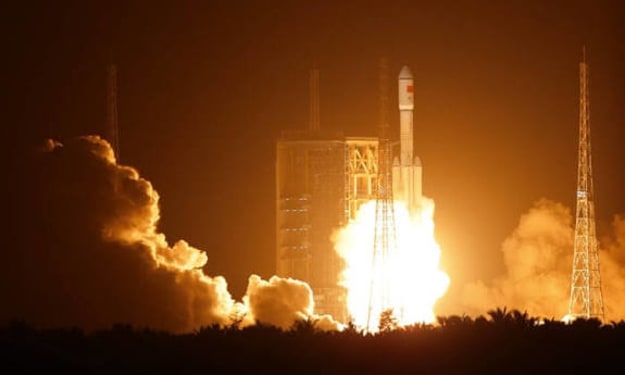
As Beijing’s space ambitions expand, Washington faces an intensifying geopolitical and technological rivalry in orbit and beyond. In the early decades of the 21st century, the United States long stood unchallenged as the dominant space power — a position built on decades of NASA leadership, unmatched launch capability, and a vibrant commercial space economy. But today, a determined China is mounting one of the most consequential strategic challenges in space since the Cold War, pushing to rival — and ultimately surpass — the U.S. in space influence, technology, and strategic advantage. National Strategy and Long‑Term Vision China’s leaders have openly signaled their ambition to become a global space powerhouse. Official space policy documents and state planning envision a broad array of capabilities — from heavy‑lift rockets to lunar exploration — aimed at reshaping the space order that has been U.S.‑dominated for decades. According to analyses of government planning, Beijing intends to establish a full suite of launch vehicles, satellites, and space infrastructure that could surpass current international norms by mid‑century. Underpinning this vision is a belief among Chinese space officials that self‑reliance and indigenous innovation are key to international competitiveness. Recent reports in state media emphasize that China’s aerospace industry is pushing far beyond imitation toward original technological breakthroughs in areas like rocket manufacturing, intelligent space systems, and advanced materials — all with the strategic goal of securing leadership in space. Commercial Space: From Government Giants to Private Innovators China’s rapid ascent isn’t limited to state space agencies. A growing ecosystem of private space companies — much like the commercial boom seen in the U.S. — has taken root, focusing on reusable rockets, satellite networks, and novel space services. A recent South China Morning Post report highlights Beijing’s push to encourage private innovation within its space sector, supporting technologies such as reusable launch vehicles, space debris monitoring, extraterrestrial resource utilization, and even in‑space biomanufacturing — fields long dominated by U.S. firms such as SpaceX or Blue Origin. This commercial expansion broadens China’s capabilities and compresses the technological gap with the U.S., challenging American assumptions that commercial innovation is exclusively an American forte. It also signals a shift in global space economics, where China may soon contend for commercial markets once dominated by Western companies. Military and Strategic Dimensions Alongside civil and commercial ambitions, China’s space strategy has clear military implications. U.S. strategic assessments note Beijing’s efforts to build counterspace capabilities — systems designed to deter, deny, or degrade another nation’s satellite operations — a key advantage in future conflicts. China has already deployed anti‑satellite weapons, jamming technologies, and sophisticated ground‑to‑space radar systems that could threaten U.S. space assets in a crisis. For the United States, which relies heavily on space systems for communication, navigation, and battlefield awareness, these capabilities represent a serious strategic challenge. Beijing’s ability to field space and counterspace technologies could blunt some of Washington’s military advantages in the Asia‑Pacific region and beyond. Lunar and Deep Space Objectives China’s Chang’e lunar exploration program is another marker of its space ambitions. With a series of increasingly complex robotic missions and plans for an International Lunar Research Station by the 2030s, Beijing aims to be a leading voice in lunar science and development — directly challenging the U.S. Artemis program and international partnerships spearheaded by NASA. � Wikipedia Missions like the strategically significant Queqiao‑2 communications relay satellite, which supports lunar missions over long distances, further demonstrate China’s growing sophistication in deep space operations and infrastructure deployment. U.S. Response: Maintaining Leadership Recognizing the challenge, U.S. policymakers are pushing legislative and strategic initiatives designed to preserve American competitiveness in space. A newly passed NASA authorization package includes provisions aimed at reinforcing U.S. lunar presence, strengthening Earth orbit assets, and countering Chinese influence in space science and technology — signaling a bipartisan consensus on the gravity of the space rivalry. A New Era of Cosmic Competition The emerging science and technological competition between China and the United States in space is unlike anything seen since the original Moon race. Today’s contest spans not only national prestige but military advantage, commercial opportunity, and scientific discovery. As each side pursues its vision of space dominance, the outcome will shape global power structures for decades to come — affecting diplomacy, security, and economic leadership both on Earth and beyond. If you’d like alternative versions, transcripts, or a set of headline + subtitle options for this topic, just let me know!
By Fiaz Ahmed 3 days ago in Longevity
Beginner Workout Routine at Home Without Equipment (Step-by-Step Full Body Guide)
Introduction Starting a fitness journey can feel overwhelming, especially for beginners who do not have access to a gym or expensive workout equipment. Many people want to improve their health and strength but are unsure where to begin or worry that working out at home may not be effective. The good news is that you do not need a gym membership or specialized machines to build a strong and healthy body. A well-structured beginner workout routine at home without equipment can help you develop strength, improve endurance, and establish a sustainable fitness habit.
By Core Well Fitabout an hour ago in Longevity



Comments
There are no comments for this story
Be the first to respond and start the conversation.