
Beginner Workout Routine at Home Without Equipment (Step-by-Step Full Body Guide)
A simple step-by-step bodyweight workout plan designed for beginners to build strength, improve fitness, and start a healthy routine at home.
Introduction
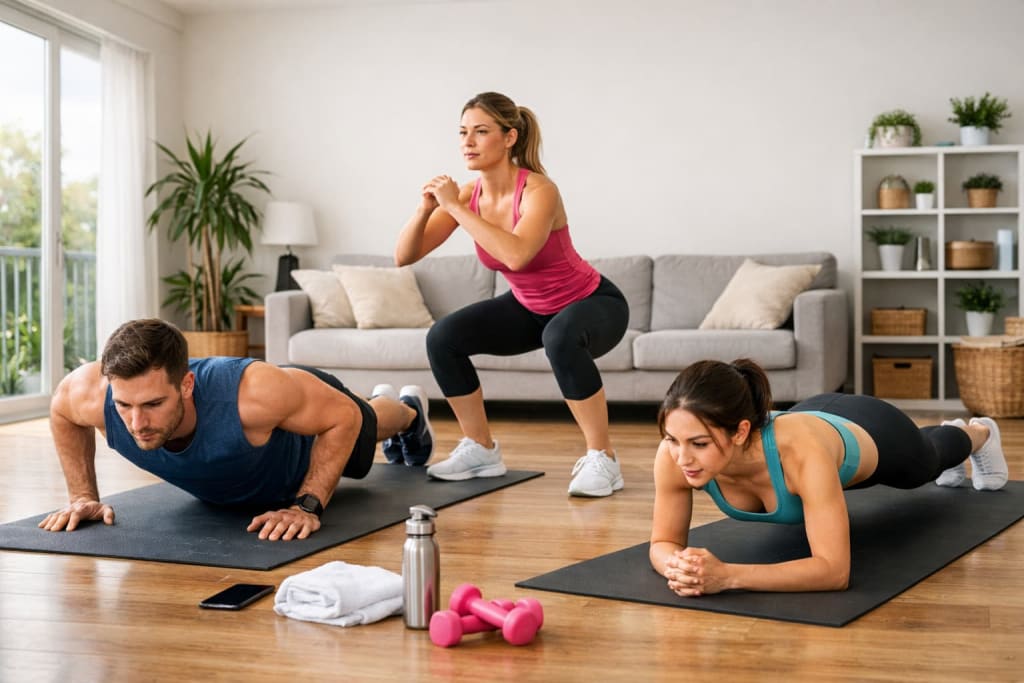
Starting a fitness journey can feel overwhelming, especially for beginners who do not have access to a gym or expensive workout equipment. Many people want to improve their health and strength but are unsure where to begin or worry that working out at home may not be effective. The good news is that you do not need a gym membership or specialized machines to build a strong and healthy body. A well-structured beginner workout routine at home without equipment can help you develop strength, improve endurance, and establish a sustainable fitness habit.
Bodyweight exercises use your own body as resistance, making them simple, safe, and highly effective for beginners. Movements such as squats, push-ups, and planks can activate multiple muscle groups and help improve balance, mobility, and overall fitness. Even short home workouts can produce meaningful results when performed consistently.
In this step-by-step full-body guide, you will learn a beginner-friendly workout routine that requires no equipment and can be done in the comfort of your home. Whether your goal is to get stronger, improve your fitness level, or start a healthier lifestyle, this guide will help you build a solid foundation for long-term success.
Why Home Workouts Are Perfect for Beginners
For many beginners, starting a fitness routine can feel intimidating, especially when gyms seem full of advanced equipment and experienced athletes. Home workouts provide a comfortable and accessible alternative that allows beginners to build confidence while learning the fundamentals of exercise. Working out at home removes many common barriers such as expensive gym memberships, travel time, and the pressure of exercising in a crowded environment.
One of the biggest advantages of home workouts is convenience. You can exercise anytime that fits your schedule without commuting to a gym. This flexibility makes it easier to stay consistent, which is one of the most important factors in achieving long-term fitness results. Even a short 20–30 minute session at home can help improve strength, endurance, and overall health when done regularly.
Home workouts are also beginner-friendly because most bodyweight exercises are simple and safe to perform. Movements like squats, lunges, push-ups, and planks use your own body weight as resistance, reducing the risk of injury while helping you learn proper form and control. As your strength and fitness level improve, these exercises can easily be modified to become more challenging.
Another major benefit is that home workouts require little to no equipment. This makes fitness accessible to everyone, regardless of budget or available space. With just a small area in your living room or bedroom, you can complete an effective full-body workout that targets multiple muscle groups.
For beginners looking to develop a sustainable fitness habit, home workouts offer a practical and comfortable way to start. They allow you to focus on building strength, improving mobility, and developing confidence before progressing to more advanced training methods.
Warm-Up Routine (Very Important)
Before starting any workout, warming up your body is extremely important, especially for beginners. A proper warm-up prepares your muscles, joints, and cardiovascular system for physical activity. It gradually increases your heart rate, improves blood circulation, and helps your muscles become more flexible. This reduces the risk of injury and allows you to perform each exercise with better control and proper form.
Many beginners skip warm-ups because they want to start the main workout immediately. However, doing so can lead to muscle strain, stiffness, or poor performance. Spending just 5 minutes on a simple warm-up routine can make your workout safer and more effective.
Below is a quick beginner-friendly warm-up routine you can do before starting your workout.
1. Arm Circles – 30 seconds
Stand upright and extend your arms out to the sides. Slowly rotate them in small circles forward for 15 seconds, then reverse the direction for another 15 seconds. This exercise helps warm up your shoulders and upper body.
2. Jumping Jacks – 45 seconds
Jump your feet out to the sides while raising your arms overhead, then return to the starting position. Jumping jacks increase your heart rate and activate multiple muscle groups.
3. Bodyweight Squats – 45 seconds
Stand with your feet shoulder-width apart. Bend your knees and lower your body as if you are sitting on a chair, then return to the standing position. This movement activates your legs, hips, and glutes.
4. Hip Circles – 30 seconds
Place your hands on your hips and slowly rotate your hips in a circular motion. This helps loosen the lower body and improve mobility.
5. Light Stretching – 1 minute
Finish your warm-up with gentle stretching for your hamstrings, calves, and shoulders. Avoid deep or intense stretching; keep the movements light and controlled.
Completing this simple warm-up routine will prepare your body for the workout ahead and help you perform each exercise more effectively. Once your body feels warm and active, you are ready to begin the main beginner workout routine.
Beginner Workout Routine
Now that your body is properly warmed up, it is time to begin the main workout routine. This beginner-friendly routine is designed to train your entire body using only your body weight, making it perfect for people who are just starting their fitness journey. The exercises below focus on major muscle groups including the legs, chest, core, and glutes, helping you build strength, improve balance, and increase overall fitness.
If you are a beginner, start slowly and focus on performing each movement with proper form and controlled breathing. It is better to complete fewer repetitions with correct technique than to rush through the exercises with poor posture.
Below is a simple full-body beginner workout routine that can be done at home without equipment.
1. Bodyweight Squats
Bodyweight squats are one of the best exercises for beginners because they strengthen the legs, glutes, and core muscles.
How to do it:
• Stand with your feet shoulder-width apart.
• Keep your chest upright and your back straight.
• Slowly bend your knees and lower your body as if sitting in a chair.
• Push through your heels to return to the standing position.
Beginner recommendation:
10–12 repetitions × 2 sets
2. Push-Ups
Push-ups are excellent for building upper body strength, especially in the chest, shoulders, and arms.
How to do it:
• Start in a plank position with your hands placed slightly wider than shoulder-width.
• Keep your body in a straight line from head to heels.
• Lower your body slowly until your chest is close to the floor.
• Push yourself back up to the starting position.
Beginner tip:
If regular push-ups feel too difficult, start with knee push-ups.
Beginner recommendation:
8–10 repetitions × 2 sets
3. Glute Bridges
Glute bridges help strengthen the glutes, lower back, and hamstrings. This exercise is particularly useful for beginners who sit for long periods during the day.
How to do it:
• Lie on your back with your knees bent and feet flat on the floor.
• Place your arms by your sides.
• Lift your hips toward the ceiling while squeezing your glutes.
• Hold for a second at the top and slowly lower your hips back down.
Beginner recommendation:
12–15 repetitions × 2 sets
4. Forward Lunges
Lunges are great for improving leg strength, balance, and coordination.
How to do it:
• Stand upright with your feet together.
• Step forward with one leg and lower your body until both knees form about a 90-degree angle.
• Push back to the starting position and repeat with the other leg.
Beginner recommendation:
8–10 repetitions per leg × 2 sets
5. Plank
The plank is one of the most effective core exercises for beginners. It strengthens the abdominal muscles, lower back, and shoulders.
How to do it:
• Place your forearms on the floor with elbows under your shoulders.
• Extend your legs behind you and keep your body in a straight line.
• Engage your core and hold the position without letting your hips drop.
Beginner recommendation:
Hold for 20–30 seconds × 2 sets
Simple Beginner Workout Plan
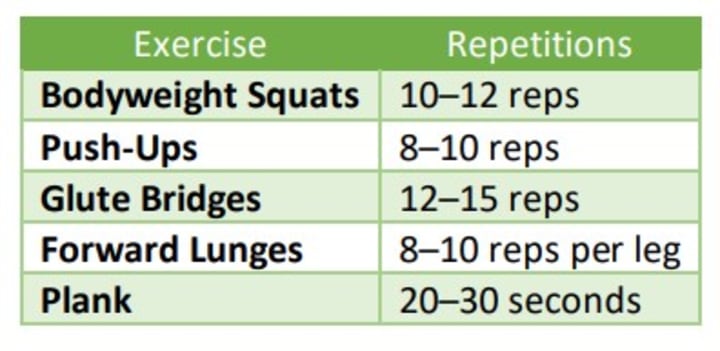
Perform this routine 2–3 times per week, resting for about 30–45 seconds between exercises. As your strength improves, you can gradually increase the number of repetitions or sets.
This simple full-body routine is an excellent starting point for beginners who want to build strength, improve mobility, and develop a consistent workout habit at home.
Weekly Beginner Workout Plan
Creating a simple weekly workout schedule can help beginners stay consistent and build a sustainable fitness habit. Instead of exercising every day, beginners should allow their muscles time to recover and adapt. A 3-day workout plan per week is ideal for those just starting out because it provides enough training stimulus while still giving the body proper rest.
The beginner workout routine introduced above can be performed on non-consecutive days. This helps your muscles recover and reduces the risk of fatigue or injury. On rest days, you can focus on light activities such as walking, stretching, or mobility exercises to keep your body active.
Below is a simple weekly workout plan for beginners.
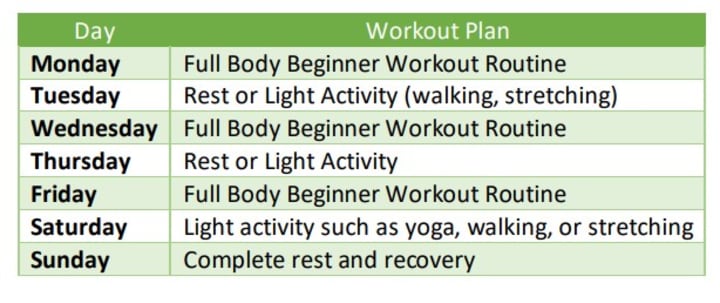
Each workout session should take approximately 20–30 minutes, including the warm-up and the main exercises. If you feel tired or sore, take additional rest and focus on recovery. Consistency is more important than intensity when you are starting your fitness journey.
As your strength and endurance improve over time, you can gradually increase the number of sets, repetitions, or workout days. Following a structured weekly plan will help you stay motivated, track your progress, and develop a long-term healthy exercise routine.
Tips for Beginners
Starting a new workout routine can be exciting, but beginners often make mistakes that can slow progress or lead to unnecessary fatigue. Following a few simple tips can help you stay consistent, avoid injuries, and build a strong foundation for your fitness journey. Remember that progress takes time, and developing healthy habits is more important than pushing your body too hard in the beginning.
1. Start Slowly and Focus on Consistency
Many beginners try to do too much too quickly. Instead of performing long and intense workouts, start with short sessions of 20–30 minutes. Consistency is the key to long-term results. Even three workouts per week can significantly improve your strength and endurance over time.
2. Focus on Proper Form
Maintaining the correct exercise form is essential to prevent injuries and ensure that the right muscles are being targeted. Perform each movement slowly and with control. If you feel discomfort in your joints, stop and adjust your posture before continuing.
3. Listen to Your Body
Your body needs time to adapt to a new workout routine. Mild muscle soreness is normal for beginners, but sharp pain or extreme fatigue may indicate that you are pushing too hard. Take rest days when needed and allow your muscles time to recover.
4. Stay Hydrated
Drinking enough water before and after your workout helps maintain energy levels and supports muscle recovery. Proper hydration also improves overall performance during exercise.
5. Warm Up and Cool Down
Never skip your warm-up before starting the workout. After finishing your routine, spend a few minutes stretching to relax your muscles and improve flexibility.
6. Be Patient with Your Progress
Fitness improvements do not happen overnight. Strength, endurance, and body composition change gradually. Stay committed to your routine and celebrate small improvements along the way.
By following these simple beginner tips, you can create a safe and enjoyable workout experience that helps you build strength, improve fitness, and maintain a healthy lifestyle over the long term.
Common Beginner Mistakes
When starting a new workout routine, beginners often make small mistakes that can slow progress or lead to frustration. Understanding these common errors can help you avoid them and build a more effective and sustainable fitness habit. By focusing on proper technique, consistency, and recovery, you can make steady progress while keeping your workouts safe and enjoyable.
1. Skipping the Warm-Up
One of the most common mistakes beginners make is jumping directly into intense exercises without warming up. A proper warm-up prepares your muscles, joints, and heart for physical activity. Skipping this step can increase the risk of muscle strain and reduce workout performance.
2. Doing Too Much Too Soon
Many beginners feel motivated and try to perform long or intense workouts right away. This can lead to excessive soreness or burnout. It is better to start with shorter sessions and gradually increase intensity as your strength and endurance improve.
3. Using Poor Exercise Form
Incorrect posture during exercises such as squats or push-ups can reduce the effectiveness of the workout and increase the chance of injury. Always focus on slow, controlled movements and proper body alignment.
4. Not Taking Rest Days
Rest is an essential part of any workout routine. Muscles grow and recover during rest periods, not during the workout itself. Beginners should schedule rest days between training sessions to allow their bodies to recover properly.
5. Expecting Immediate Results
Fitness progress takes time and patience. Many beginners become discouraged if they do not see visible changes within a few weeks. Instead of focusing only on physical results, pay attention to improvements in energy, strength, and endurance.
6. Inconsistent Workout Habits
Skipping workouts frequently or changing routines too often can make it difficult to build progress. Consistency is the most important factor in any fitness program. Even short workouts performed regularly can lead to meaningful improvements over time.
By recognizing and avoiding these common beginner mistakes, you can build a safer and more effective workout routine that supports steady progress and long-term fitness success.
Benefits of Bodyweight Workouts
Bodyweight workouts are one of the most effective and accessible ways for beginners to start their fitness journey. These exercises use your own body weight as resistance, eliminating the need for gym machines or specialized equipment. Because of their simplicity and versatility, bodyweight workouts can help beginners build strength, improve mobility, and develop a strong fitness foundation.
1. Builds Functional Strength
Bodyweight exercises such as squats, push-ups, lunges, and planks train multiple muscle groups at the same time. This helps develop functional strength that supports everyday movements like lifting, bending, and climbing stairs.
2. Improves Balance and Coordination
Many bodyweight exercises require you to control and stabilize your body. This helps improve balance, coordination, and overall body awareness, which are important for both athletic performance and daily activities.
3. Suitable for All Fitness Levels
Bodyweight workouts can easily be modified to match different fitness levels. Beginners can start with basic variations such as knee push-ups or assisted squats, while more advanced individuals can increase difficulty with more challenging variations.
4. Reduces Risk of Injury
Since bodyweight exercises use natural movement patterns, they generally place less stress on joints compared to heavy weight training. This makes them a safer option for beginners who are still learning proper exercise technique.
5. Requires No Equipment
One of the biggest advantages of bodyweight workouts is that they can be performed anywhere. Whether you are at home, in a park, or traveling, you can complete an effective workout without needing gym equipment.
6. Supports Weight Management and Overall Fitness
Regular bodyweight training helps burn calories, improve cardiovascular health, and increase muscle endurance. When combined with a balanced diet and consistent routine, these workouts can support long-term weight management and overall well-being.
For beginners who want a simple and effective way to improve their health, bodyweight workouts provide a practical solution that can be easily integrated into daily life.
Start Your Fitness Journey with Simple Home Workouts
Beginning a fitness journey does not require expensive gym memberships or complicated equipment. With a well-structured beginner workout routine at home without equipment, anyone can start building strength, improving endurance, and developing a healthier lifestyle from the comfort of their own home.
The key to success is consistency and patience. Simple bodyweight exercises such as squats, push-ups, lunges, and planks can effectively train your entire body when performed regularly. By following a proper warm-up routine, maintaining correct exercise form, and allowing your body enough time to recover, you can gradually improve your fitness level and avoid common beginner mistakes.
Remember that progress in fitness takes time. Focus on building a sustainable routine rather than pushing yourself too hard in the beginning. Even short workouts done a few times per week can lead to meaningful improvements in strength, mobility, and overall well-being.
Start small, stay consistent, and enjoy the process. With dedication and a positive mindset, your home workouts can become the foundation for a long-term healthy and active lifestyle.
About the Creator
Core Well Fit
Empowering Your Core To Live Well and Fit 🌿
Your trusted guide to home workouts, nutrition tips, mental wellness, and smart fitness routines.
📍Targeting U.S. lifestyle | 💪 Fitness | 🥗 Diet | 🧠 Wellness
Keep reading
More stories from Core Well Fit and writers in Longevity and other communities.
Nutrition for Female Athletes: Fueling Performance, Strength, and Long-Term Health
Female athletes place extraordinary demands on their bodies. Whether competing professionally, training at the collegiate level, or pursuing fitness as a serious lifestyle, women require nutrition strategies that support performance, recovery, hormonal balance, and overall well-being. Nutrition for female athletes is not simply about eating “healthy”; it is about fueling the body with the right nutrients, at the right time, in the right amounts.
By Core Well Fit3 months ago in Longevity
How China Is Challenging the U.S. to Become the Next Great Space Power
As Beijing’s space ambitions expand, Washington faces an intensifying geopolitical and technological rivalry in orbit and beyond. In the early decades of the 21st century, the United States long stood unchallenged as the dominant space power — a position built on decades of NASA leadership, unmatched launch capability, and a vibrant commercial space economy. But today, a determined China is mounting one of the most consequential strategic challenges in space since the Cold War, pushing to rival — and ultimately surpass — the U.S. in space influence, technology, and strategic advantage. National Strategy and Long‑Term Vision China’s leaders have openly signaled their ambition to become a global space powerhouse. Official space policy documents and state planning envision a broad array of capabilities — from heavy‑lift rockets to lunar exploration — aimed at reshaping the space order that has been U.S.‑dominated for decades. According to analyses of government planning, Beijing intends to establish a full suite of launch vehicles, satellites, and space infrastructure that could surpass current international norms by mid‑century. Underpinning this vision is a belief among Chinese space officials that self‑reliance and indigenous innovation are key to international competitiveness. Recent reports in state media emphasize that China’s aerospace industry is pushing far beyond imitation toward original technological breakthroughs in areas like rocket manufacturing, intelligent space systems, and advanced materials — all with the strategic goal of securing leadership in space. Commercial Space: From Government Giants to Private Innovators China’s rapid ascent isn’t limited to state space agencies. A growing ecosystem of private space companies — much like the commercial boom seen in the U.S. — has taken root, focusing on reusable rockets, satellite networks, and novel space services. A recent South China Morning Post report highlights Beijing’s push to encourage private innovation within its space sector, supporting technologies such as reusable launch vehicles, space debris monitoring, extraterrestrial resource utilization, and even in‑space biomanufacturing — fields long dominated by U.S. firms such as SpaceX or Blue Origin. This commercial expansion broadens China’s capabilities and compresses the technological gap with the U.S., challenging American assumptions that commercial innovation is exclusively an American forte. It also signals a shift in global space economics, where China may soon contend for commercial markets once dominated by Western companies. Military and Strategic Dimensions Alongside civil and commercial ambitions, China’s space strategy has clear military implications. U.S. strategic assessments note Beijing’s efforts to build counterspace capabilities — systems designed to deter, deny, or degrade another nation’s satellite operations — a key advantage in future conflicts. China has already deployed anti‑satellite weapons, jamming technologies, and sophisticated ground‑to‑space radar systems that could threaten U.S. space assets in a crisis. For the United States, which relies heavily on space systems for communication, navigation, and battlefield awareness, these capabilities represent a serious strategic challenge. Beijing’s ability to field space and counterspace technologies could blunt some of Washington’s military advantages in the Asia‑Pacific region and beyond. Lunar and Deep Space Objectives China’s Chang’e lunar exploration program is another marker of its space ambitions. With a series of increasingly complex robotic missions and plans for an International Lunar Research Station by the 2030s, Beijing aims to be a leading voice in lunar science and development — directly challenging the U.S. Artemis program and international partnerships spearheaded by NASA. � Wikipedia Missions like the strategically significant Queqiao‑2 communications relay satellite, which supports lunar missions over long distances, further demonstrate China’s growing sophistication in deep space operations and infrastructure deployment. U.S. Response: Maintaining Leadership Recognizing the challenge, U.S. policymakers are pushing legislative and strategic initiatives designed to preserve American competitiveness in space. A newly passed NASA authorization package includes provisions aimed at reinforcing U.S. lunar presence, strengthening Earth orbit assets, and countering Chinese influence in space science and technology — signaling a bipartisan consensus on the gravity of the space rivalry. A New Era of Cosmic Competition The emerging science and technological competition between China and the United States in space is unlike anything seen since the original Moon race. Today’s contest spans not only national prestige but military advantage, commercial opportunity, and scientific discovery. As each side pursues its vision of space dominance, the outcome will shape global power structures for decades to come — affecting diplomacy, security, and economic leadership both on Earth and beyond. If you’d like alternative versions, transcripts, or a set of headline + subtitle options for this topic, just let me know!
By Fiaz Ahmed 3 days ago in Longevity
Why You Crave Junk Food When You’re Stressed
Have you ever noticed that during stressful weeks — especially around exams or deadlines — your cravings for junk food suddenly increase? Chips, sugary drinks, chocolate, instant noodles, and fast food start looking far more tempting than usual.
By Being Inquisitiveabout 21 hours ago in Longevity




Comments
There are no comments for this story
Be the first to respond and start the conversation.