health
Keeping your mind and body in check - popular topics in health and medicine to maintain a long and healthy life.
6 Interesting Facts About Your Mouth
Oral care is by no means a practice reserved for the 21st century. In fact, the use of toothpaste dates back to around 500 B.C. Of course, materials like iron rust and coral powder were used at the time. Fortunately, modern dentistry has shed a lot of insight on how our teeth work, what they are made of, and which products are best for them. As a result, we can enjoy healthy, happy smiles for years and years! Keep reading to learn a few interesting facts about your mouth.
By Hiren Shah4 years ago in Longevity
Effect of Vitamin D Deficiency on COVID-19
In these tough times, we need the right advice; following up on that, vitamins are the substances that help your body grow into a healthy one. Amongst all the vitamins in your body, vitamin D is the most important one.
By Shivam Rajput4 years ago in Longevity
Pistachios' Health Benefits
Pistachios: What Are They? The seeds of the pistachio tree are known as pistachios. They're usually green and have a slight sweetness to them. Pistachios are really seeds, although they're called nuts. They've been consumed for thousands of years.
By Shivali Garg4 years ago in Longevity
What is a Pacemakers Device?
A pacemaker is a small device that is placed near the chest or the abdominal area in order to control arrhythmia. During arrhythmia, the heart can beat too fast or too slow, thus creating an abnormal rhythm of the heart. The pacemakers can be used for sending electrical pulses in order to maintain the normal rhythm and rate of the heart. Pacemakers are also used in order to help the chambers of the heart to beat in sync so that the heart can pump blood efficiently to the rest of the body.
By Denny Dones4 years ago in Longevity
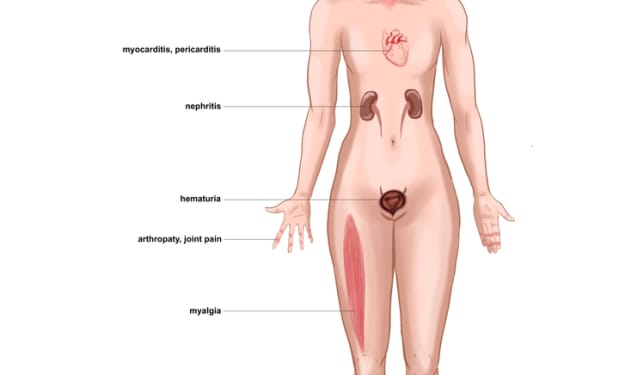
Lupus Nephritis- Symptoms, Causes & Ayurvedic Prevention
What if soldiers start attacking their own civilians? This will not only compromise the security of the nation by keeping many lives at stake but will also give access to external threats that can cause mayhem inside the nation.
By Harish Patel4 years ago in Longevity
Tips to Help You Fall Asleep
Many people struggle to fall to sleep. They spend hours tossing and turning, worrying about things that they can't control. They may lay awake all night, listening to the sounds of their home or outside. Some spend hours listening to their spouse's snoring.
By Shelley Wenger4 years ago in Longevity
Gallbladder Stone Surgery in Pune
Gallbladder stones are solid deposits in the gallbladder, which is a small organ beneath the liver. By storing and releasing bile, this pear-shaped organ aids digestion. An excess of cholesterol in the bile causes Gallbladder stones. The stone's size varies, with some as small as a grain of rice and others as large as a golf ball.
By Mehfooz Shaikh4 years ago in Longevity
Symptoms That Your Hemorrhoids Require Medical Attention
Rectal bleeding is a typical symptom of hemorrhoids, but it could indicate something more serious, like colon cancer. People frequently make and hear jokes about hemorrhoids or piles, a medical ailment characterized by inflammation and swelling of the anal and rectum tissues. One out of every four persons is at risk of developing piles. If you're one of them or your friends or family members have heaps, you know they're not amusing.
By Murshid Paravath4 years ago in Longevity
The Power of the Mind/Brain
The brain has been ascribed many abilities it cannot possibly possess from learning, to seeing, to understanding, to knowing, etc. This is the mereological fallacy writ large. Ascribing attributes/characteristics/behaviors to a part or parts of a thing that can only (logically) be applied to the whole thing. Only of a (mostly) whole human person (and some non human animals) with a (mostly) functioning nervous system including a brain can we say they are capable of doing any of those things. Never forget that a brain divorced from a body is a lump of grey matter capable of nothing save a few basic cellular processes and possibly some low level electrochemical (nerve) activity, for a short period of time at least.
By Everyday Junglist4 years ago in Longevity