
Stomach Ulcers: What You Need to Know
Causes, symptoms, and treatment

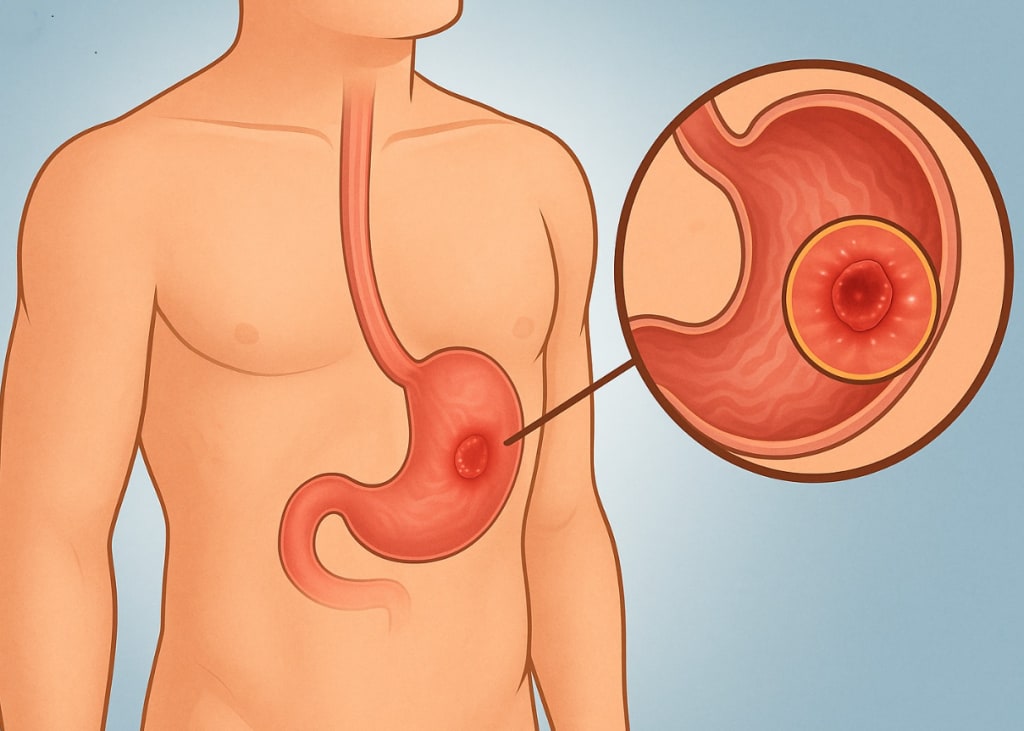
So, let's talk about stomach ulcers. Why, symptoms, curesjust that!
Do you experience stomach pain as well? Is it a sensation that's coming from the stomach, or does it feel like acid? Although this is commonly known as "gastritis", it might be something a bit worse, a stomach ulcer (Stomach Ulcer / Gastric Ulcer). Don't worry, this is a very typical situation, and it can be cured if treated correctly. So, what is the truth behind this ''stomach ulcer'' story?
🤔 So what is a stomach ulcer, anyway?
Picture our stomach as a special bag that is specially made to digest food. There is strong acid (stomach acid / hydrochloric acid) inside it, with the enzymes that are for breaking down our food. So, in order to protect the stomach walls from this corrosive acid, the stomach wall has a special lining, which is thick with mucus (mucus lining / protective stomach lining). It's like spreading a coat of plaster on a wall.
But there can be occasions where, for whatever reason, this protective plaster (mucus lining) is reduced or damaged, and strong acid can eat away at the stomach wall. That's what we call a stomach ulcer when it occurs as a result of acid.
This is very common. The two biggest causes of them are some of the painkillers that many of us commonly take (NSAID pain relievers) and a bacterial infection called H. pylori (Helicobacter pylori). Since both are available in huge amounts in our country, so are the stomach ulcers.
(You might have also heard from "Peptic Ulcer". This is the lay term for ulcers of the stomach or the first part of the intestine (duodenum) that are caused by stomach acid. Stomach ulcers are one form of peptic ulcer.
What are the symptoms of it? (Symptoms and causes)
How do I determine if I have a stomach ulcer?
Key sign - Stomach pain/pain: Many people describe their heartburn as feeling like it's centred in one area- a gnawing or burning pain in one place that may move up one's esophagus, toward their throat, or down their stomach. This can become worse if the stomach is empty. For some people, it doesn't hurt as much when they eat; for others, it hurts more.
Indigestion/Dyspepsia: Symptoms of indigestion, such as fullness, an early feeling of having had enough to eat during a meal, and belching, are common.
Other symptoms: Heartburn, acid reflux, nausea, vomiting and retching, and bloating can all happen.
Ulcers and Serious Symptoms: Some people have ulcers without any pain. They may only realize they have the disease when they bleed or perforate.''
Alarm symptoms: paleness, dizziness, black tarry stool (melena), raspberry jelly vomit (hematemesis), sudden severe pain in the stomach. In such cases, PLEASE GO TO THE HOSPITAL!
Could this be serious? (Complications)
So, yes, there are issues, if not addressed:
Hemorrhage: It may take some time for bleeding to cause anemia, but other times it is life-threatening.
Perforation: A hole in the stomach wall that releases acid and bacteria into surrounding organs, leading to deadly infections (peritonitis, sepsis) and, potentially, death.
So why has this protective wall been breached? (Main causes)
H. pylori bacteria: It's a tiny bacterium that can, and does, live in our stomachs. While it does not cause damage in most individuals, in some people, it can erode the protective lining of the stomach wall, creating inflammation and making ulcers.
NSAID painkillers: NSAID (Nonsteroidal Anti-inflammatory Drugs), including ibuprofen, diclofenac, and aspirin, that many of us take directly destroy the stomach lining, and make less of the chemicals that protect it. And overuse can lead to ulcers. (Paracetamol is not in this group.)
Rare causes: Other infections, Zollinger-Ellison syndrome (a condition where there's too much acid), and severe physical stress can also rarely lead to ulcers.
Does anything I eat, drink, or do have a positive or negative influence? While consuming spicy foods, alcohol, smoking, and daily stress don't directly cause ulcers, they can enhance the symptoms of an already existing ulcer.
How is it diagnosed? (Diagnosis and Tests)
How can a doctor verify this?
First, they will talk to you about your symptoms and what medications you have been using (including NSAIDs). Then they will test to see if you have an ulcer and if you have H. pylori.
Endoscopy (EGD test): This is the most reliable. After administering a sedative, a long, thin tube with a camera at the end (endoscope) is passed through your mouth and into your stomach to view the lining directly. This can examine ulcers and bleeding, take a tiny sample (biopsy) to see whether H. pylori is in your body, and treat the bleeding, if necessary.
Other tests that may be performed include: Barium X-ray, Urea Breath Test for H. pylori, Blood Test, or Stool Antigen Test.
Doping, anything else that could cause this? Yes, even GERD (Acid Reflux) or Functional Dyspepsia can cause these symptoms. Rarely
About the Creator
Keep reading
More stories from Rohitha Lanka and writers in Longevity and other communities.
The Thinking Heart
For ages, the heart has been considered a pump whose main function has been to circulate blood all over the body. Its responsibility for sustaining life through rhythmic contractions and blood flow has mainly been perceived as an automatic function controlled by electrical and other signals from the outside. Recent studies, however, have begun to challenge this view and highlight that the heart is not just a simple pump but an active, self-regulating system with its complex neural network. This concept has led to the heart being considered as a "little brain" which interprets and integrates signals in ways that were once ascribed only to the brain.
By Rohitha Lanka11 months ago in Longevity
Why Our Minds Overthink at Night
Have you ever noticed how your mind suddenly becomes extremely active at night? You lie down to sleep, but instead of resting, your brain starts replaying conversations, worrying about the future, or analyzing things that happened earlier in the day.
By Being Inquisitive5 days ago in Longevity
🥑 7 Superfoods Every Pregnant Woman Should Eat for a Healthy Baby
Pregnancy is a beautiful journey, but it also comes with an important responsibility—nourishing both the mother and the growing baby. During this time, what a woman eats becomes the baby’s main source of nutrients.
By Being Inquisitive4 days ago in Longevity


Comments (3)
Good information 👌♦️♦️
Omg, stomach ulcers sound very painful. I hope I never get one. Thanks for sharing.
Thank you for sharing this helpful info—knowledge like this can truly save lives!