
The Thinking Heart
More than a pump

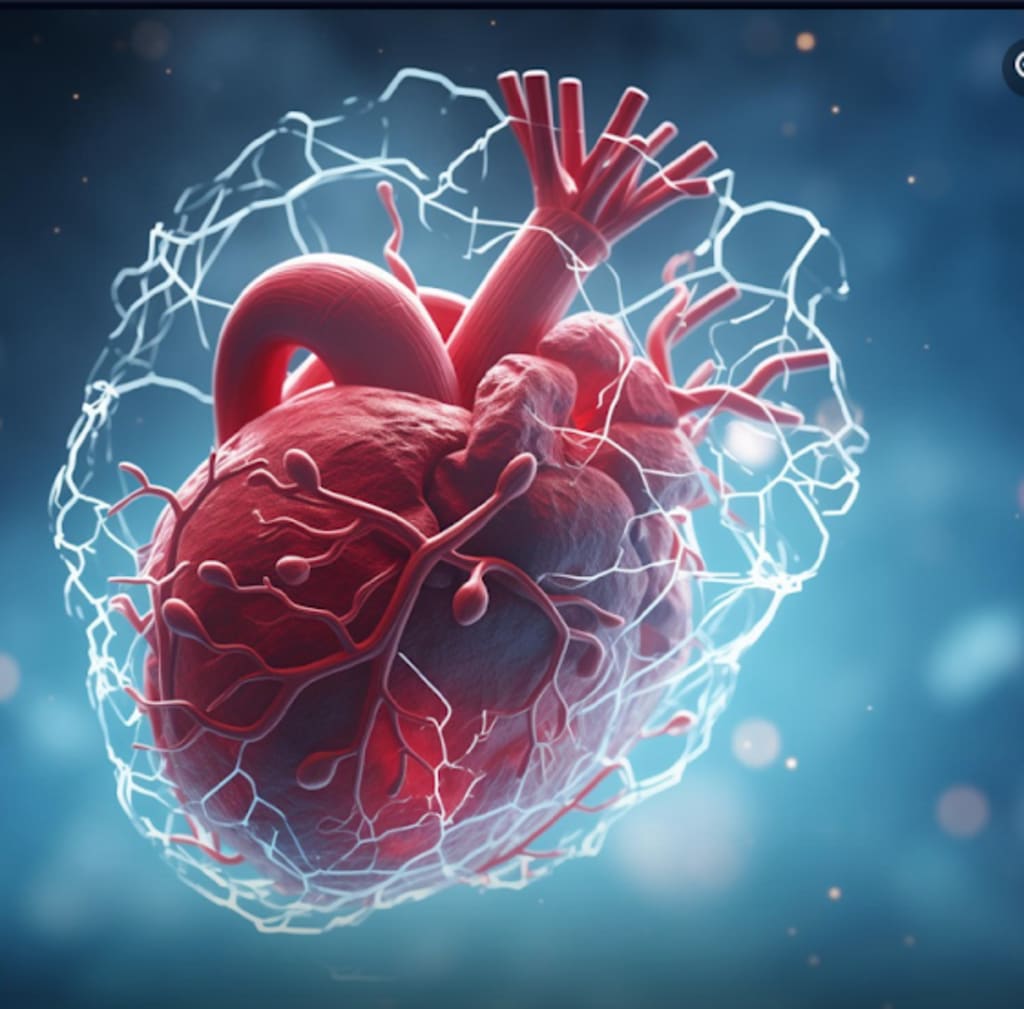
For ages, the heart has been considered a pump whose main function has been to circulate blood all over the body. Its responsibility for sustaining life through rhythmic contractions and blood flow has mainly been perceived as an automatic function controlled by electrical and other signals from the outside. Recent studies, however, have begun to challenge this view and highlight that the heart is not just a simple pump but an active, self-regulating system with its complex neural network. This concept has led to the heart being considered as a "little brain" which interprets and integrates signals in ways that were once ascribed only to the brain.
Studies on the zebrafish, which is one of the most studied model organisms in medical research, have opened new findings on the complexity of the neural system of the heart. These findings not only provide new insight into how the heart adjusts and regulates its rhythm but also raise the possibility of how heart conditions, such as arrhythmias, a condition in which the heart beats with an irregular or abnormal rhythm, can be treated and addressed with human hearts.
The Elaborate Neural Network of the Heart
When we think of the nervous system, we typically think of the brain and spinal cord as central control centers that regulate our bodies. Recent research has now demonstrated that the heart has its own significant nervous system, which plays a crucial role in its functioning and control. This network, sometimes called the ''heart-brain,'' is composed of a small number of neurons that are capable of not only receiving and understanding the inputs they get, but of thinking about the information before making a heartbeat response.
The cardiac neural network is made up of different types of specialized cells, which can also generate electrical impulses just like brain cells. These neurons and pacemaker cells collaborate to execute the heartbeat, tuning the rhythm in response to internal and external signals. This self-regulation is essential to provide a beat that is neither too fast nor too slow; it adapts to the changes in physical or emotional activity or in other conditions of the body.
It was not in the past thought to be the pulp that sets its rhythm, indeed, historically, it was believed that the brain's signals to the heart were the main regulators of its beating. The brain is known to influence how the heart works, especially about stress or exertion, but researchers have now discovered that the heart has its own brain, a much more complex one.
The heart can control its beat, largely because it contains specially adapted pacemaker cells that can produce electrical pulses without any direct instruction from the brain. These are the pacing cells, which are situated in the sinoatrial (SA) node located in the right atrium hay lapposten effects of viagra. The SA node creates electrical signals which spread through the heart's conduction system and make your heart muscles pump in a coordinated manner.
But as straightforward as that pacemaker role may sound, it turns out to be a bit more complicated than that. Scientists are discovering that the heart's pacemaker cells are bound up in a more extensive network of neurons that process incoming signals from the brain and other parts of the body. The interaction is so intricate that it enables the heart to make fine adjustments to its rhythm and rate in response to external factors, such as exercise, stress, or a state of rest. There, in effect, the heart can ''sense'' what is happening with the entire body and adjust its rhythm accordingly, independent of the brain.
Zebrafish studies have largely facilitated the discovery of this property of the heart in recent years. (On the plus side, zebrafish are clear at an early stage of development, so researchers can look right through them to witness the heart's electrical and neural activity.) By using cutting-edge methods, including electrical analysis and RNA profiling, the scientists were able to map out the complex web of neurons that surrounds the heart, and they found several cell types that help to control the organ's function.
Studies on Zebrafish: Clarifying the Neural Network of the Heart
Zebrafish, while distant from humans in evolutionary terms, have many parallel basic physiological processes and are a valuable model for human health research. In one pioneering study, scientists zoomed in on the neural network that enshrouds the heart, employing high-resolution imaging and molecular tools to examine the cells responsible for regulating the function of the heart.
What they found was a dense, complex network of neurons, many of which were similar to the cells found in the brain and spine. These were the neurons interpreting a brain signal and translating it to the heart. In addition, the scientists found a diversity of cell types within the heart’s neural network, some seemed to be involved in functions that are typically applied to organs other than the heart, like the liver or kidneys.
This finding reflects a far more intricate and vital dance between the heart and the body. The heart, rather than simply reacting to the brain, may possess its own intrinsic network of sensory and motor neurons that gives it the ability to act independently and to perform a more complex regulation of its function. This change in perspective goes against a decades-old notion that the brain is the sole disruptor of heart rhythm and offers fresh avenues of investigation into how the heart regulates itself and responds to changes in conditions.
New Treatments on the Horizon
The discovery of the heart's complex neural network has broad implications for the treatment of heart disease, including arrhythmias. Arrhythmias are erratic heartbeats and can be harmless or life. They are often caused by malfunctions in the electrical impulses that control the contractions of the heart. By learning more about the heart's internal wiring, researchers hope to design better therapies that act on the heart's own natural pacemaker system, instead of depending solely on outside interventions like pacemakers or defibrillators.
A more promising line of investigation involves using electrical modulation to refine the heart's neural network. By controlling the electrical signals of the heart, it might be possible to stabilize heart rhythm and prevent arrhythmias from developing. Moreover, the mapping of identified cell types contributing to the modulation of heart's responsiveness to neural inputs could pave the way for the design of novel therapies aimed at the prevention of arrhythmias at the cellular level.
And knowledge about how the heart's nervous system connects to other parts of the body might allow for more personalized treatment strategies. Scientists could, for instance, use their findings to develop therapies to help patients better control their heart health to lower their chances of arrhythmia or other heart problems by better adapting to brain signals when they are startled or working out.
Heart Disease and Beyond
The discovery that the heart has a complex nervous system of its own can offer not only new treatment for arrhythmias but also new insights into broader cardiovascular disease. Disease of the heart continues to be one of the leading causes of death globally, with much of the disease progression being driven by the breakdown of the electrical and neural signaling that regulates heart function. By revealing the word-of-mouth mechanisms through which the heart manages itself, researchers could devise new ways to prevent and treat heart disease and save the lives of tens of millions of people.
And this finding could turn out to have wider relevance to how the brain and body talk to each other. If the heart can process and make sense of information without the physical presence of the brain, it prompts us to wonder how intelligent our other organs are, and to what extent they ''self-regulate'' Do other organs, like the gut or liver, have these kinds of nervous systems? And what does this tell us about the relationship between the mind and the body?
About the Creator
Keep reading
More stories from Rohitha Lanka and writers in Longevity and other communities.
The Vibration Code
Vibration is the fundamental of all simple or complex matter. You see, every living thing, including ourselves, generates vibrations at various frequencies. These waves are also not just energetic abstractions, they are direct reflections of our emotional states and what we attract through experiences into our lives. Each vibration can be +ve or -ve, and the rate at which we vibrate decides what reality we know. Seven such important factors that determine the frequency of your vibration are presented here:
By Rohitha Lanka11 months ago in Longevity
Microsoft's Purposeful Marketing Deception About AI's Ability To Beat Physicians In Diagnosis
When you look at the world of scientific research... If you are not careful... You will be fooled into believing things that are not actually supported by the data.
By Dr. Cody Dakota Wooten, DFM, DHM, DAS (hc)about 6 hours ago in Longevity
Benefits of Hyperbaric Oxygen Therapy
In recent years, hyperbaric oxygen therapy (HBOT) has gained significant interest from both the medical community and wellness enthusiasts. Originally developed to treat deep-sea divers suffering from decompression sickness, hyperbaric chambers are now used for a wide range of medical conditions and recovery purposes. As research continues to expand, many people are discovering how powerful oxygen therapy can be when delivered in a controlled, pressurized environment.
By AnthonyBTV6 days ago in Longevity



Comments (1)
Interesting about Heart pump!