
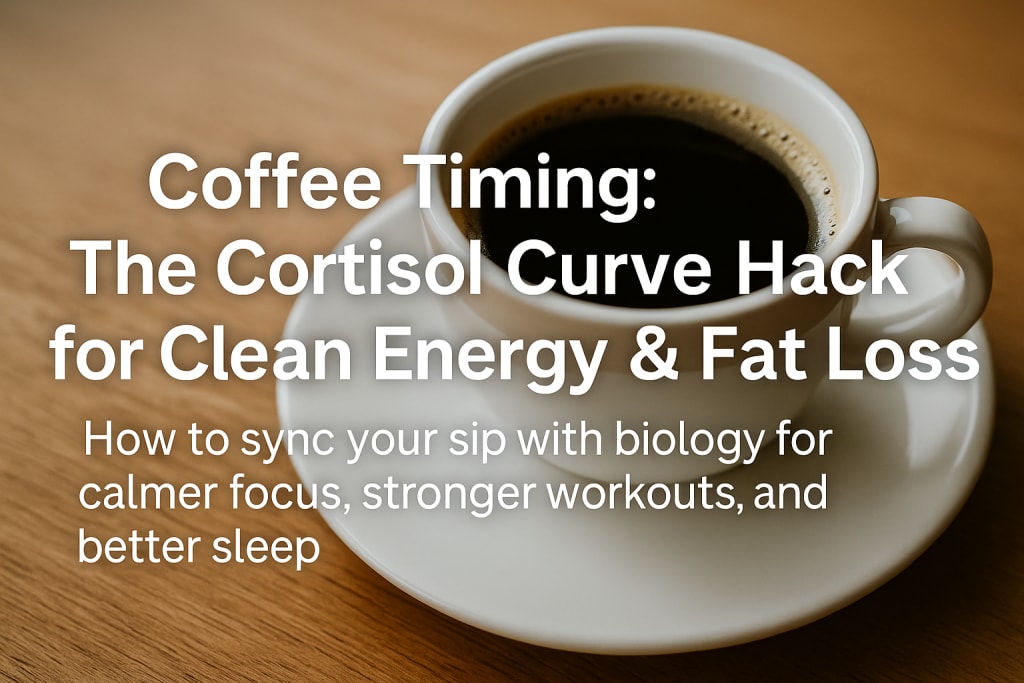
Coffee Timing: The Cortisol Curve Hack for Clean Energy & Fat Loss
How to sync your sip with biology for calmer focus, stronger workouts, and better sleep
Why timing your coffee matters
Coffee isn’t just what you drink, it’s when you drink it. Your energy, appetite, mood, and sleep are all riding on a daily rhythm of hormones (cortisol, adenosine, melatonin). If you learn to place your cup where that rhythm supports you, not fights you, the same beans can feel cleaner, calmer, and more effective.
Meet your morning cortisol peak
Right after waking, your body naturally spikes cortisol to wake you up. If you pour coffee directly onto that peak, you can get a jittery high followed by a crash. Wait 60–90 minutes after waking. By then, adenosine (sleep pressure) is rising again, cortisol is drifting down, and caffeine gives you lift without whiplash.
The first cup: keep it clean
Go mostly black or add a splash of unsweetened milk.
If you love sweetness, aim for low-glycemic add-ins (cinnamon, a dash of vanilla, or a teaspoon of maple rather than syrups).
Hydrate first, a tall glass of water signals your body it’s daytime and prevents “caffeine dehydration” headaches that are really just lack of fluids.
Prime your workout window
Caffeine can increase perceived energy and drive fatty acids into circulation. If you train in the morning or early afternoon, drink your second cup 30–45 minutes before the session. Pair it with protein (a yogurt, a hard-boiled egg, or a small protein shake) to blunt cortisol spikes and support muscle recovery.
The appetite effect (use it strategically)
Coffee can temporarily suppress appetite, handy if you’re managing calories, but use it thoughtfully. If you skip meals and slam caffeine, you can overshoot later and snack your way through the evening. A better play: combine coffee with fiber + protein (like a small Greek yogurt with berries) so you feel satisfied and in control.
Your afternoon energy trap
The 2–4 p.m. dip is real. Many people reach for a big latte that boomerangs at bedtime. Try a half-caf or green tea instead, or switch to decaf if you’re sensitive. Keep a strict caffeine cut-off ~8 hours before bedtime (for most, that’s around 2 p.m.). Protecting sleep is the most powerful fat-loss and longevity “supplement” you have.
Make friends with your adenosine
Here’s the simple model: adenosine builds pressure to sleep; caffeine blocks adenosine receptors. If you chug coffee all day, you never let adenosine signal properly, so night comes and your brain isn’t convinced it’s time to switch off. A clear caffeine-free runway from afternoon to night lets adenosine do its job, so you fall asleep faster and wake up fresher.
Brewing tweaks that reduce jitters
Smaller doses more spaced out (e.g., two 6–8 oz cups vs. one giant 20 oz).
Cold brew or dark roast can feel smoother for some stomachs.
Paper filters lower diterpenes that may nudge LDL in susceptible people.
Choose fresh, single-origin beans; grind just before brewing; store airtight.
Stack the habit with movement
A 10-minute walk after your first cup is magic. It soaks up circulating glucose, eases nervous energy, and primes your brain for focus. If you can add morning daylight during that walk, you’ll anchor your circadian rhythm, which makes both caffeine and sleep work better.
Who should be cautious
If you’re pregnant, have uncontrolled blood pressure or arrhythmias, reflux/ulcer flares, panic disorder, or insomnia, talk with your clinician and consider decaf or lower-caffeine blends. Sensitivity is personal; the right dose is the one that helps and lets you sleep.
A simple, sustainable protocol
Hydrate on waking (300–500 ml water).
Delay first coffee 60–90 minutes.
Second cup pre-workout or late morning.
Cut caffeine 8+ hours before bed.
Pair with protein/fiber to steady appetite.
Cycle down one week every few months to reset sensitivity (use decaf then).
👉 "Just copy and paste the link from my profile bio into your browser (since links aren’t clickable here)"
Why this helps weight loss and longevity
Better sleep quality means better insulin sensitivity and appetite control the next day. Strategically timed caffeine improves training quality without wrecking your nights. Over weeks, that adds up to steadier energy, fewer cravings, more consistent workouts, exactly the inputs that compound into healthier body composition and long-term vitality.
Bottom line
Coffee isn’t a personality trait, it’s a tool. When you sync it to your biology, you’ll feel calm-alert instead of wired, and you’ll make progress that sticks because it’s built on better sleep and saner days.
💬 If you’re curious about the coffee that helped me make this shift, just copy and paste the link in my bio into your browser (since links aren’t clickable here)
Jaxon
About the Creator
Jaxon Reed
I write about small daily habits that make a big difference.
This one change to my morning coffee surprised me, steady energy, less snacking.
If you're curious, here's what I used:
👉 https://tinyurl.com/59jbzxrr
Keep reading
More stories from Jaxon Reed and writers in Longevity and other communities.
The Connection Between ADHD and Genetics.
Commentary An Impulsive Gene? My youngest son jumps from one task to another. Ask him to clean his room, he eventually quits because he becomes fixated on something. He can’t sit still for long. On the other hand, when he’s doing something he likes, he is fixated on it, sometimes barely taking in his surroundings or listening to others.
By Dean Traylor5 days ago in Longevity



Comments
There are no comments for this story
Be the first to respond and start the conversation.