Latest Stories
Most recently published stories on Vocal.
7 Life-changing Books You Can Read In A Weekend. AI-Generated.
We all crave transformation—but not everyone has months to wade through dense tomes or academic theory. The good news? Some of the most powerful, perspective-shifting books in the world can be read in a single weekend. These books don’t just entertain; they challenge how we think, how we act, and how we live.
By Diana Meresc21 days ago in BookClub
Morocco in February: Weather, Travel Tips, and What to Expect
February is one of those months travelers often overlook when planning a trip to Morocco. It doesn’t sound as glamorous as spring, and it doesn’t promise endless summer heat. But after years of welcoming travelers during this time, I’ve learned something important: Morocco in February quietly delivers one of the most balanced and comfortable travel experiences of the year.
By Ariel Cohen21 days ago in Wander
Yearender: U.S. role in Gaza -- not peacemaker, but war-enabler
GAZA, Dec. 21 (Xinhua) -- By the end of 2025, the ceasefire in the Gaza Strip appeared to be holding, a development many credited to the United States. Yet a closer look at the whole year and the two-year war reveals a different reality.
By Dena Falken Esq21 days ago in 01
Snow Totals in North Jersey? Here’s Your Town-by-Town Inch Count. AI-Generated.
A fast-moving winter storm swept across North Jersey, leaving behind a patchwork of snowfall totals that varied sharply from town to town. While some communities woke up to several inches of snow blanketing streets and backyards, others saw only a light coating or slushy remnants. The uneven totals once again highlighted how location, elevation, and temperature differences play an outsized role in winter weather across the Garden State.
By Salaar Jamali21 days ago in The Swamp
Abella Danger Net Worth: The unexpected fortune of the adult film star
Have a look at how the actress is diversifying her portfolio to not fall behind Navigating the hard and controversial world of the adult film cinematography industry we find great examples of how fast the digital entrepreneurship landscape is evolving. Inside these few stories of personalities transcending both environments, not many are as compelling or as frequently misunderstood as that of Abella Danger.
By Dena Falken Esq21 days ago in Filthy
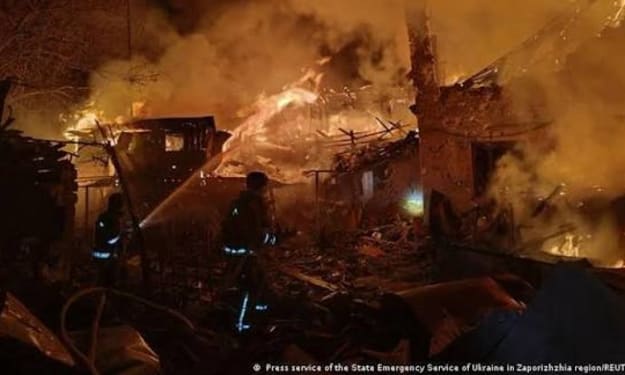
Zelenskyy to Hold Talks with European Leaders Amid Fresh Strikes on Kyiv. AI-Generated.
As fresh strikes once again shake Kyiv, Ukrainian President Volodymyr Zelenskyy is preparing to hold high-level talks with European leaders, signaling that diplomacy remains as critical as battlefield resilience. The timing of these discussions underscores a familiar pattern in the Russia-Ukraine war: moments of intensified military pressure are often followed by renewed diplomatic engagement, as Ukraine seeks both immediate support and long-term security guarantees from its European partners. The latest attacks on Kyiv have reignited concerns about the vulnerability of civilian infrastructure and the sustainability of Ukraine’s air defense systems. Although Ukrainian forces have repeatedly demonstrated their ability to intercept incoming missiles and drones, the psychological and economic impact of repeated strikes on the capital remains profound. For ordinary Ukrainians, air raid sirens and power disruptions have become an exhausting routine, reinforcing the urgency behind Zelenskyy’s diplomatic push. Zelenskyy’s planned talks with European leaders are expected to focus on several core issues: military assistance, air defense reinforcement, financial aid, and the broader political roadmap for ending the war. Europe has been one of Ukraine’s most consistent backers since the conflict began, but shifting political dynamics within the European Union have introduced new challenges. Elections, budget constraints, and war fatigue among voters have made continued support a more complex proposition for some governments. Against this backdrop, the Ukrainian president’s message is likely to emphasize unity and shared security interests. Zelenskyy has frequently argued that Ukraine’s fight is not only about national survival but also about protecting the European security order. Fresh strikes on Kyiv serve as a stark reminder that the conflict’s consequences extend far beyond Ukraine’s borders, affecting energy security, migration patterns, and geopolitical stability across the continent. European leaders, meanwhile, face a delicate balancing act. On one hand, there is broad recognition that abandoning Ukraine would embolden aggression and undermine international norms. On the other, concerns persist about escalation, economic strain, and the long-term cost of sustained military support. Zelenskyy’s diplomacy aims to keep Ukraine’s plight at the forefront of European agendas, especially at a time when global attention is divided among multiple crises. The renewed attacks on Kyiv also highlight the evolving nature of the war. Rather than rapid territorial advances, the conflict has increasingly taken the form of attritional strikes designed to exhaust resources and morale. In this environment, air defense systems, intelligence sharing, and rapid repair of infrastructure have become just as important as traditional battlefield gains. Zelenskyy’s discussions with European partners are expected to address these realities, with a focus on practical measures that can make an immediate difference for civilians. Another key theme likely to emerge in the talks is Ukraine’s long-term integration with Europe. Beyond emergency aid, Kyiv continues to push for deeper political and economic ties with the European Union. For Zelenskyy, these talks are not only about surviving the present crisis but also about shaping Ukraine’s future as a firmly European state. Progress toward EU membership, reconstruction planning, and institutional reforms may all feature in the discussions, even as missiles fall. From a broader perspective, the timing of these talks sends a powerful symbolic message. By engaging European leaders amid active hostilities, Zelenskyy reinforces the idea that Ukraine refuses to be isolated or intimidated. The strategy blends resilience with outreach, projecting an image of a nation that can withstand pressure while actively shaping its diplomatic destiny. For the Vocal Media audience, this moment captures the essence of modern conflict: war and diplomacy unfolding simultaneously, each influencing the other in real time. The strikes on Kyiv are not just military events; they are catalysts for political decisions, alliances, and narratives that will shape Europe’s future. Zelenskyy’s engagement with European leaders reflects a recognition that wars today are fought as much in conference rooms as on the battlefield. Ultimately, the success of these talks will be measured not only by new aid packages or statements of solidarity, but by whether they translate into sustained, coordinated action. As confirmed by recent events, Ukraine’s struggle is far from over. Yet, by turning moments of crisis into opportunities for dialogue, Zelenskyy continues to demonstrate a leadership style defined by persistence, adaptability, and an unwavering appeal to shared values. In the shadow of fresh strikes on Kyiv, these talks stand as a reminder that even in the darkest moments, diplomacy remains a vital weapon—one that Ukraine is determined to wield with purpose and resolve.
By Fiazahmedbrohi 21 days ago in The Swamp
Yemen’s Saudi-Led Coalition Warns STC Against Moves in Hadramout. AI-Generated.
Yemen’s long-running conflict has entered yet another complex phase as the Saudi-led coalition has issued a clear warning to the Southern Transitional Council (STC) over its political and military activities in Hadramout province. The development highlights deep fractures within the anti-Houthi camp and underscores how unresolved rivalries continue to threaten stability in a country already devastated by years of war. Hadramout, Yemen’s largest governorate by area, occupies a strategic position in the country’s east. Rich in natural resources and home to key ports and oil facilities, the province has largely avoided the intense fighting seen in other regions. However, its relative calm has made it a focal point for competing political ambitions. The recent warning from the Saudi-led coalition suggests growing concern that the STC’s actions could destabilize the area and undermine broader efforts to maintain unity among forces opposed to the Houthi movement. The Southern Transitional Council, backed primarily by the United Arab Emirates, has long advocated for southern autonomy or outright independence. While the STC is technically aligned with the internationally recognized Yemeni government and the Saudi-led coalition against the Houthis, its goals often clash with those of Riyadh and President Abdrabbuh Mansur Hadi’s successors. In recent years, the STC has consolidated control over several southern regions, including Aden, and has sought to expand its influence into Hadramout. According to analysts, the coalition’s warning reflects fears that unilateral moves by the STC—such as mobilizing armed units or attempting to assert administrative control—could trigger internal conflict. Hadramout has its own local power structures, tribal networks, and security forces that do not necessarily align with the STC’s southern separatist agenda. Any attempt to impose authority could spark resistance, drawing the province into the broader turmoil engulfing Yemen. Saudi Arabia’s role in Hadramout has traditionally focused on security and counterterrorism, particularly against extremist groups like Al-Qaeda in the Arabian Peninsula. Riyadh has invested heavily in stabilizing the region, viewing it as a buffer against chaos spreading from western Yemen. From this perspective, the STC’s ambitions represent a direct challenge to Saudi interests and to the coalition’s stated goal of preserving Yemen’s territorial integrity. The warning also exposes the delicate balance within the Saudi-led coalition itself. While Saudi Arabia and the UAE remain strategic partners, they have backed different local actors in Yemen, leading to overlapping and sometimes conflicting agendas. The STC’s rise has been widely attributed to Emirati support, whereas Saudi Arabia has continued to endorse the central government framework. Hadramout, therefore, has become a testing ground for how far these differences can be managed without open confrontation. For local residents, the political maneuvering raises serious concerns. Hadramout’s population has enjoyed relative stability compared to other regions, allowing limited economic activity and social life to continue despite the national crisis. Any escalation could disrupt livelihoods, displace communities, and open the door to renewed violence. Civil society voices in the province have repeatedly called for keeping Hadramout neutral, warning that importing external conflicts would only worsen humanitarian conditions. International observers see the situation as emblematic of Yemen’s broader problem: the absence of a unified vision for the country’s future. Even as diplomatic efforts to end the war with the Houthis gain momentum, divisions among anti-Houthi factions threaten to derail progress. The coalition’s warning to the STC may be an attempt to enforce discipline and prevent fragmentation, but it also highlights how fragile existing alliances remain. Looking ahead, much will depend on whether dialogue can prevail over confrontation. The STC faces a choice between pursuing its ambitions through negotiation or risking isolation by defying the coalition’s warning. At the same time, Saudi Arabia and its partners must address southern grievances in a meaningful way if they hope to maintain cohesion. Ignoring these tensions could lead to new fronts of conflict, complicating an already dire situation. In essence, the dispute over Hadramout is not just about territorial control; it is about competing visions of Yemen’s identity and governance. As the Saudi-led coalition cautions the STC against destabilizing moves, the episode serves as a reminder that peace in Yemen will require more than ending battles—it will demand reconciling deeply rooted political aspirations. Until then, provinces like Hadramout will remain at the center of a fragile and uncertain future.
By Fiazahmedbrohi 21 days ago in The Swamp
Winter Weather Hits Northeast as New Storm System Moves Across Country. AI-Generated.
A powerful winter storm system sweeping across the United States has brought snow, freezing rain, and plunging temperatures to the Northeast, while leaving a wide swath of the country grappling with rapidly changing and often dangerous weather conditions. From icy roads in New England to severe thunderstorms in the South and heavy snow in the Midwest, the storm underscores the volatile nature of winter weather and its far-reaching impacts on daily life, travel, and infrastructure.
By Salaar Jamali21 days ago in The Swamp
Somalia Demands Israel Withdraw Somaliland Recognition: A New Flashpoint in the Horn of Africa. AI-Generated.
The Horn of Africa has once again become the center of international attention as Somalia formally demanded that Israel withdraw any recognition or engagement with Somaliland, the self-declared breakaway region in northern Somalia. The move highlights deep-rooted sovereignty disputes, shifting geopolitical alliances, and growing competition among global and regional powers in one of the world’s most strategically important regions. Understanding the Somaliland Question Somaliland declared independence from Somalia in 1991 following the collapse of the central government. Since then, it has maintained its own administration, security forces, and democratic elections. Despite this relative stability, no major international body or state officially recognizes Somaliland as an independent country. Somalia continues to view Somaliland as an integral part of its sovereign territory. For Mogadishu, any foreign recognition or diplomatic engagement with Somaliland is seen as a direct violation of Somalia’s territorial integrity and international law. Why Israel Is at the Center of the Dispute Reports suggesting that Israel may be exploring diplomatic or strategic engagement with Somaliland have alarmed Somalia’s federal government. Although Israel has not publicly announced formal recognition, Somalia fears that even informal acknowledgment could set a dangerous precedent. Somali officials argue that such actions undermine Somalia’s unity and embolden separatist movements. In response, Somalia has issued strong diplomatic messages demanding that Israel respect Somalia’s internationally recognized borders. Strategic Importance of Somaliland Somaliland occupies a highly strategic location along the Gulf of Aden, near one of the world’s busiest maritime trade routes. Control or influence in this region offers access to vital shipping lanes connecting Europe, Asia, and the Middle East. This strategic positioning has attracted growing interest from global and regional players seeking military, economic, and security partnerships. Somaliland’s Berbera port, in particular, has become a focal point for international investment and strategic planning. Somalia’s Diplomatic Stance Somalia’s government has emphasized that recognition of Somaliland violates international norms and African Union principles, which prioritize the preservation of colonial-era borders to prevent instability. Officials warn that external involvement risks reigniting conflict in a country that has spent decades recovering from civil war. Somalia has called on the international community to engage only through Mogadishu and respect its sovereignty, arguing that fragmented diplomacy could weaken regional stability. Regional and Global Implications The dispute extends beyond Somalia and Israel. It reflects broader geopolitical shifts in the Horn of Africa, where countries compete for influence amid fragile political landscapes. Regional tensions have already been heightened by conflicts in neighboring Ethiopia and Sudan, as well as by rival interests of global powers. Any recognition of Somaliland by a state like Israel could encourage other nations to follow suit, potentially redrawing political alliances and triggering diplomatic fallout across Africa and the Middle East. Somaliland’s Perspective From Somaliland’s viewpoint, international engagement is long overdue recognition of its political stability and governance compared to the rest of Somalia. Leaders in Hargeisa argue that their decades-long peace, democratic processes, and economic development justify independent status. Somaliland supporters see foreign engagement as validation of their self-determination, even if formal recognition remains elusive. What Comes Next? The situation places Israel in a delicate position. Balancing diplomatic interests while avoiding destabilization in the Horn of Africa will require careful navigation. Somalia, meanwhile, is likely to intensify diplomatic efforts through regional organizations and international forums. The dispute also raises broader questions about sovereignty, self-determination, and the role of external powers in fragile regions. Conclusion Somalia’s demand that Israel withdraw any recognition of Somaliland underscores the fragile balance of power in the Horn of Africa. As global interest in the region grows, unresolved historical disputes risk becoming flashpoints for wider geopolitical tensions. Whether this issue escalates into a larger diplomatic confrontation or leads to renewed dialogue will depend on how regional actors and international partners respond. What remains clear is that Somaliland’s status continues to shape the political future of Somalia—and the strategic calculations of the world beyond its borders.
By Fiazahmedbrohi 21 days ago in The Swamp
7 Books That Will Make You Think Differently About Life. AI-Generated.
Some books entertain us. Others inform us. But a rare few fundamentally change the way we see life. These are the books that don’t just sit on a shelf—they linger in our minds, reshape our beliefs, and quietly influence our decisions long after the final page.
By Diana Meresc21 days ago in BookClub
We’re Not As Divided As We’re Told
Spend enough time online, and you’d think the country is permanently at war with itself. Every feed scrolls with outrage, every headline screams conflict, every trending topic seems designed to pit one group against another. Opinions are treated like battlefields, and nuance feels like a weakness.
By Megan Stroup21 days ago in Humans