Latest Stories
Most recently published stories on Vocal.
Forget the Great Wall: The Human Landmark Astronauts Actually See from Space. AI-Generated.
For generations, a popular myth has endured: that China’s Great Wall is the only human-made structure visible from space. The idea has been repeated in textbooks, trivia games, and casual conversation, cementing itself as a symbol of humanity’s architectural ambition. Yet astronauts who have actually looked down on Earth from orbit tell a very different story. From hundreds of kilometers above the planet, the Great Wall is nearly impossible to distinguish with the naked eye. Instead, the true human landmarks visible from space are far more modern—and far more revealing of how humanity now shapes the Earth.
By Sadaqat Ali8 days ago in Beat
A New Red Sea Axis: Israel, India, UAE, Ethiopia Converge in Somaliland. AI-Generated.
A quiet but potentially transformative geopolitical alignment is taking shape along the Red Sea and Gulf of Aden, as Israel, India, the United Arab Emirates, and Ethiopia find converging interests in Somaliland, the self-declared but unrecognized state in the Horn of Africa. While each country brings its own motivations, their growing engagement in and around Somaliland points to the emergence of a new Red Sea axis—one that could reshape regional trade, security dynamics, and great-power competition.
By Sadaqat Ali8 days ago in The Swamp
BYD’s $60 Billion Wipeout Points to Deeper Turmoil for China EVs. AI-Generated.
China’s electric-vehicle (EV) industry, long seen as the global leader in the transition away from fossil fuels, is facing a moment of reckoning. The recent $60 billion wipeout in BYD’s market value has sent shockwaves through global financial markets and sparked renewed scrutiny of the foundations underpinning China’s EV boom. Once celebrated as a symbol of China’s technological rise and green ambition, BYD’s sudden stumble suggests that deeper structural challenges may be brewing across the country’s electric-vehicle ecosystem.
By Sadaqat Ali8 days ago in Journal
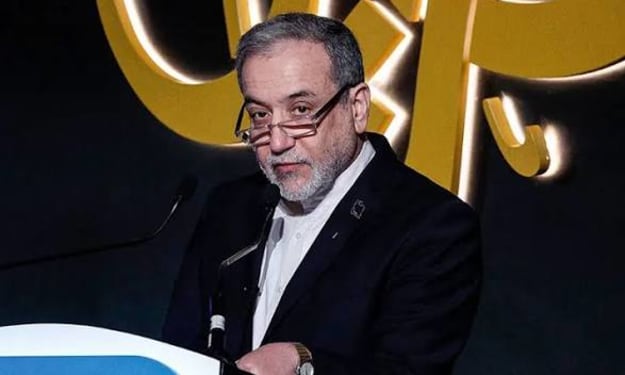
Iran FM Looks to More Nuclear Talks, but Warns US Against Any Attack. AI-Generated.
Iran’s Foreign Minister Abbas Araghchi said this week that Tehran hopes to continue negotiations with the United States over its nuclear programme, while issuing stark warnings that any American military action would trigger retaliation against U.S. bases in the region. The remarks, delivered amid fragile indirect talks in Oman and growing military tension in the Middle East, reflect Tehran’s dual strategy of keeping diplomatic channels open but asserting firm red lines over defence and sovereignty. Geo News Speaking at the Al Jazeera Forum in Doha, Araghchi described the recent indirect talks in Muscat, Oman — the first such engagement since nuclear negotiations collapsed last year — as a “good start” and said both sides had agreed to continue discussions soon. The negotiations came after a period of heightened threats and military buildup, including U.S. warnings of possible strikes and increased American naval deployments in the Gulf. Al-Monitor Talks Resume Amid Tense Backdrop The February 7 session in Oman brought Iranian and U.S. officials together in a rare diplomatic engagement between the two adversaries, but with major differences still unresolved. Araghchi reiterated that Iran considers its nuclear enrichment a sovereign and “inalienable right” and said Tehran remains ready to seek a “reassuring agreement” through negotiations while rejecting external pressure or ultimatums. Al-Monitor U.S. President Donald Trump described the Muscat discussions as “very good” and pledged another round of talks next week, but also signed new sanctions and measures aimed at curbing Iran’s oil exports and economic lifelines. Al-Monitor Despite these diplomatic overtures, Araghchi made clear that Tehran’s ballistic missile programme is “never negotiable” because it relates to national defence, and warned that if the United States were to attack Iranian territory, Tehran would strike U.S. military bases in the Middle East — though not those of host countries — as accessible targets. Press TV Firm Red Lines on Defence and Negotiation Scope Araghchi’s comments highlight major sticking points in the negotiations. Iran has insisted that talks should focus strictly on the nuclear issue and not be broadened to include its missile programmes or support for regional groups — issues that Washington and some U.S. allies want to include in future discussions. Tehran has refused to cede its missile capacity, calling it essential for deterrence, a position that complicates diplomatic progress. Geo News The minister also said Tehran and Washington must avoid “threats and pressure” that could derail talks, emphasising that trust-building would take time. Officials from both sides have framed the Oman meeting as preliminary, with follow-up consultations expected in capitals before further negotiation dates are set. Al-Monitor Military Posture and Regionwide Risk The warning against military attack comes as U.S.–Iran tensions remain high. Recent U.S. rhetoric has repeatedly mentioned military options if diplomatic efforts fail, and the Pentagon has maintained a visible force presence in the Gulf. Tehran, for its part, has responded with its own warnings that any direct U.S. involvement in conflict would trigger swift retaliation. Reuters This mutual signalling underscores the precarious balance: each side appears to want to avoid a direct clash while maintaining leverage. Iran’s strategy — combining warnings with limited diplomatic engagement — reflects its broader approach to navigating sanctions, regional rivalries, and global scrutiny. Al-Monitor Trust, Sanctions, and Stalled Progress Beyond security concerns, economic issues remain central. Tehran has faced crippling sanctions targeting its oil sector and financial networks, and while diplomatic engagements offer a path to potential relief, differences over enrichment limits and inspection protocols persist. Iranian officials repeatedly stress that any deal must respect their right to enrich uranium for peaceful purposes. Geo News Analysts say the current phase of talks is fragile. Building meaningful trust after years of conflict, sanctions, and broken negotiations will be difficult. Tehran’s insistence on excluding its missile programme from discussions, along with continued threats of retaliation, reflect deep mistrust between the two sides. Al-Monitor A Fragile Path Forward Despite the serious warnings, Tehran’s announcement that talks could resume — even indirectly — suggests both sides recognize the severe risks of outright conflict in a volatile region. Leaders in the Gulf, Europe, and beyond have called for restraint and continued diplomatic engagement as the most viable path to manage the nuclear issue without war. For now, Iran’s foreign minister is walking a fine line: signalling openness to negotiation while making clear that any military move by the United States would be met with force. Whether this cautious diplomacy can evolve into real progress remains uncertain, but the message from Tehran is clear: dialogue is possible, but so is retaliation. Geo News
By Fiaz Ahmed 8 days ago in The Swamp
My 400th Story: Celebrating 10 Years of the NES Classic
Greetings, Vocal readers and subscribers! I've reached yet another milestone: 400 stories on Vocal. I'm aiming to reach the 500 stories mark by the end of this year. Is it doable? There's only one way to find out. To celebrate this milestone, I'll be talking about a game console that will turn 10 later on this year, except it's a miniature version of an old game system that everyone wanted to get their hands on. I'm talking about the release of the NES Classic. I'll be sharing the good and the bad of the game console.
By Mark Wesley Pritchard 8 days ago in Gamers
Trump Threatens Tariffs on Countries Trading with Iran — What It Means for Global Trade. AI-Generated.
U.S. President Donald Trump has taken a strikingly assertive turn in U.S. foreign and trade policy by threatening to impose tariffs on countries that maintain economic ties with Iran, signaling a broader strategy to isolate Tehran while escalating economic pressure on nations that engage in commerce with the Islamic Republic.
By Sadaqat Ali8 days ago in Journal
How Artificial Intelligence Is Changing Everyday Life in 2026
A few years ago, artificial intelligence felt like something from science fiction movies. Today, it is part of daily life for millions of people, often without them even realizing it. Whether someone is scrolling through social media, shopping online, or searching for information, AI is working behind the scenes.
By Shafi Khan8 days ago in Journal