
A New Red Sea Axis: Israel, India, UAE, Ethiopia Converge in Somaliland
Strategic interests around trade routes, security, and influence are drawing unlikely partners together at one of the world’s most critical maritime crossroads
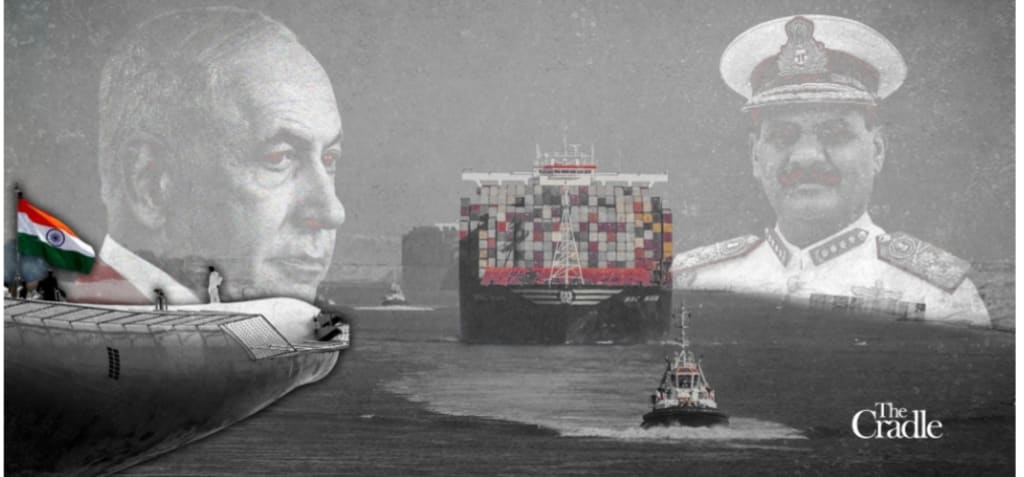
A quiet but potentially transformative geopolitical alignment is taking shape along the Red Sea and Gulf of Aden, as Israel, India, the United Arab Emirates, and Ethiopia find converging interests in Somaliland, the self-declared but unrecognized state in the Horn of Africa. While each country brings its own motivations, their growing engagement in and around Somaliland points to the emergence of a new Red Sea axis—one that could reshape regional trade, security dynamics, and great-power competition.
Situated at the entrance to the Red Sea, Somaliland occupies a strategic position overlooking shipping lanes that carry a significant share of global trade, including energy supplies bound for Europe and Asia. As instability, piracy risks, and geopolitical rivalries intensify across the region, this overlooked territory is increasingly becoming a focal point for external powers seeking reliable partners and strategic footholds.
---
Why Somaliland Matters
Somaliland declared independence from Somalia in 1991 and has since maintained relative stability compared to the rest of the country. Despite lacking international recognition, it has functioning institutions, regular elections, and a comparatively secure environment. For foreign powers wary of instability in the Horn of Africa, Somaliland offers something rare: predictability.
Its Berbera port, located along the Gulf of Aden, is particularly significant. The port sits near one of the world’s busiest maritime chokepoints, where disruptions can ripple across global supply chains. As attacks on shipping in the Red Sea and regional conflicts raise alarms, control and access to secure ports have become a strategic priority.
---
The UAE: Economic and Strategic Anchor
The United Arab Emirates has been the most visibly active external player in Somaliland. Through DP World, Dubai’s global port operator, the UAE has invested heavily in expanding and modernizing the Berbera port and developing a trade corridor linking it to Ethiopia.
For Abu Dhabi, Somaliland fits neatly into its broader strategy of securing maritime trade routes and building influence across key ports from the Red Sea to the Indian Ocean. The UAE also sees Somaliland as a reliable partner in a volatile region, aligning economic interests with security considerations.
---
Ethiopia’s Search for Sea Access
For Ethiopia, Africa’s second-most populous country, Somaliland represents a strategic lifeline. Landlocked since Eritrea’s independence, Ethiopia depends heavily on Djibouti for access to the sea. This reliance has long been viewed as a vulnerability.
By deepening ties with Somaliland and investing in infrastructure linked to Berbera, Ethiopia is seeking diversified access to maritime trade routes. Such a move would reduce dependency on a single corridor and strengthen Addis Ababa’s regional leverage. Ethiopia’s interest is pragmatic, driven by economic necessity rather than ideology.
---
Israel’s Expanding Red Sea Footprint
Israel’s interest in the Red Sea is not new, but recent regional turbulence has sharpened its focus. With shipping routes facing threats and Iran-linked actors expanding influence in nearby waters, Israel is increasingly attentive to security dynamics around the Bab el-Mandeb strait.
Somaliland’s stability and location make it a potentially valuable partner for intelligence sharing, maritime security coordination, and logistical access. While Israel’s engagement remains discreet, analysts see it as part of a broader effort to counter hostile influence and protect trade routes vital to its economy.
---
India’s Indo-Pacific Calculations
India’s involvement adds another layer to this emerging axis. As a major trading nation and a proponent of secure sea lanes, New Delhi has grown more active in the western Indian Ocean and Red Sea region. Concerns about piracy, regional instability, and China’s expanding footprint have pushed India to seek new partnerships.
Somaliland, via Berbera, offers India a potential node in its maritime strategy—one that complements its ties with the UAE and growing security cooperation with Israel. India’s approach remains cautious, balancing engagement without formally endorsing Somaliland’s independence.
---
Shared Interests, Different Motivations
What unites Israel, India, the UAE, and Ethiopia is not a formal alliance, but overlapping strategic interests:
Securing critical maritime trade routes
Countering regional instability and non-state threats
Reducing dependence on single chokepoints or partners
Expanding economic and logistical influence
Each country approaches Somaliland from a different angle—economic, security, or strategic—but the convergence is unmistakable.
---
Regional and Global Implications
The emergence of this Red Sea axis carries significant implications. For Somalia, it raises concerns about sovereignty and the risk of further fragmentation. For Djibouti, it introduces competition to its long-held status as the Horn of Africa’s primary maritime gateway.
Globally, the alignment underscores how middle powers are increasingly shaping regional orders, sometimes independently of traditional Western leadership. It also highlights Somaliland’s growing relevance despite its lack of recognition, challenging assumptions about legitimacy and influence in international politics.
---
A Delicate Balancing Act
Despite growing engagement, all parties are proceeding carefully. Formal recognition of Somaliland remains a red line for many, given concerns about setting precedents elsewhere. Cooperation is therefore unfolding through investments, security coordination, and quiet diplomacy rather than overt political endorsements.
Whether this emerging axis solidifies into a lasting framework will depend on regional stability, international reactions, and Somaliland’s ability to maintain its internal cohesion.
---
Conclusion
The convergence of Israel, India, the UAE, and Ethiopia in Somaliland signals a subtle but important shift in Red Sea geopolitics. As global trade routes face rising risks and traditional power structures evolve, new partnerships are forming in unexpected places.
Somaliland, long on the margins of international politics, now finds itself at the center of a strategic recalculation—one that could reshape the balance of power along one of the world’s most vital maritime corridors.
About the Creator
Keep reading
More stories from Sadaqat Ali and writers in The Swamp and other communities.
U.S. Futures Nudge Higher as Japanese Election Coaxes Investors Back to Risk
U.S. stock futures edged higher in early trading as investors around the world took comfort from the outcome of Japan’s national election, which delivered a decisive result and reduced political uncertainty in the world’s third-largest economy. The clear mandate emerging from Tokyo helped revive global risk appetite, encouraging investors to tentatively rotate back into equities after weeks of caution driven by geopolitical tensions, sticky inflation, and mixed economic data.
By Sadaqat Aliabout 5 hours ago in The Swamp
Why Black History Matters in America?
The United States of America is celebrating their 250th anniversary in 2026. I'm proud to be an American and as someone who was born here, I wouldn't imagine myself living anywhere else. This is a country where opportunities are possible. Where anyone can be successful in anything they desire to do. Equality, community, and togetherness are the backbones of what America is and should be about. However, we have an administration who wants to erase and disregard those who have made positive, meaningful impacts in our country, specifically Black figures, such as Martin Luther King, Jr., Rosa Parks, and Maya Angelou. President Trump and his administration have been constantly complaining and fighting against what they call the "Woke agenda". They use this excuse as a distraction from other issues they refuse to address, such as the high cost of living, climate change, and inflation. That equality is dividing America, when in reality, it's bringing us together. Being woke is not tied to a specific political party. No matter where you stand on the political spectrum, you can still care about other people and their plights. Compassion and empathy for others isn't tied to a political party, either. We were taught as children to treat others the way we want to be treated and not judge others because they're different from us. Caring about others isn't a personal attack on your beliefs. It doesn't make you any less of a person. People who are easily offended over African American figures, past or present, or anything related to it, are grasping at straws. Current and future generations need to know who people like Harriet Tubman and Shirley Chisholm were, especially in the classroom. Black History is part of American History. It should be recognized, not hidden or forgotten. Besides, you can't shield children from everything, just because your feelings are easily hurt.
By Mark Wesley Pritchard 7 days ago in The Swamp
Violent Protests Shake Milan Amid Winter Olympics: Police Arrest Demonstrators
Milan is witnessing tense moments as protests against the Milano-Cortina 2026 Winter Olympics escalated into violent clashes this weekend. On February 7, 2026, several protesters were arrested after confrontations with Italian police, marking one of the most intense demonstrations during Italy’s Olympic hosting in recent years.
By Ayesha Lashariabout 22 hours ago in The Swamp


Comments
There are no comments for this story
Be the first to respond and start the conversation.