
Trump Threatens Tariffs on Countries Trading with Iran — What It Means for Global Trade
How the former U.S. president’s tariff threat aims to isolate Tehran—and why it could reshape global trade relationships
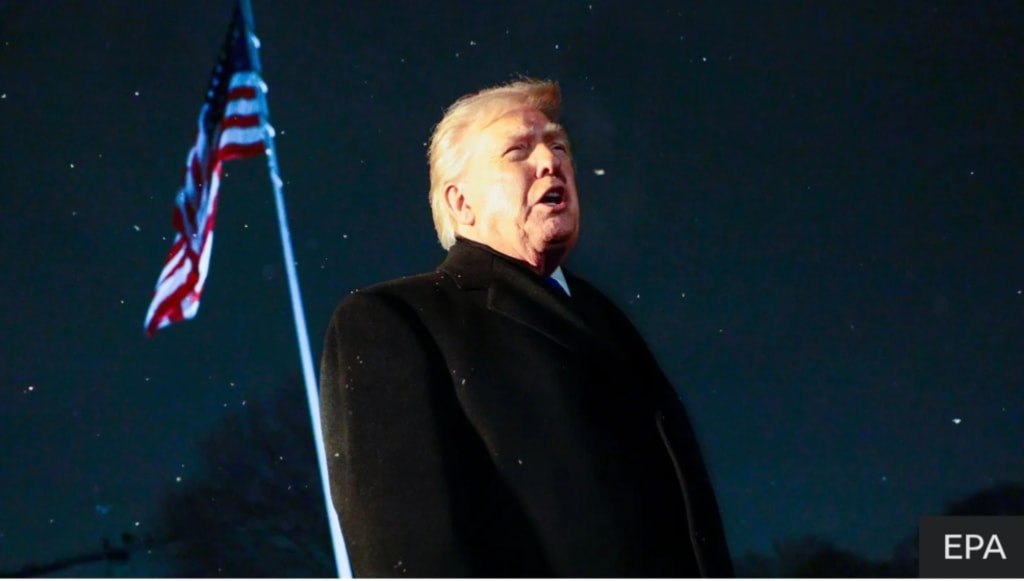
U.S. President Donald Trump has taken a strikingly assertive turn in U.S. foreign and trade policy by threatening to impose tariffs on countries that maintain economic ties with Iran, signaling a broader strategy to isolate Tehran while escalating economic pressure on nations that engage in commerce with the Islamic Republic.
The move has sparked global concern, with major trading partners of both the United States and Iran closely watching how the policy might reshape international markets and diplomatic relations.
---
What the New Tariff Threat Entails
On February 6, 2026, President Trump signed an executive order authorizing U.S. officials to impose tariffs on any nation that “directly or indirectly purchases, imports, or otherwise acquires” Iranian goods or services.
While the order does not immediately impose tariffs, it sets up a framework under which the U.S. can levy duties — potentially as high as 25% — on imports from countries that maintain trade relationships with Iran.
The measures are part of a broader effort to pressure Iran through economic isolation, coming at a time when the United States and Iran have also engaged in talks about longstanding tensions over Tehran’s nuclear program and regional influence.
---
How It Differs from Traditional Sanctions
Unlike previous sanctions that targeted specific companies or industries within Iran or restricted financial transactions, this tariff threat goes a step further:
Secondary Economic Pressure: Instead of just penalizing Iranian entities, the U.S. would penalize the trading partners of Iran by increasing tariffs on them.
Broad Geographic Scope: Any country doing business with Iran — from raw materials to manufactured goods — could be affected.
Undefined Implementation: The order does not yet define precisely how and when tariffs would be applied or how exemptions (for humanitarian goods, for example) would be treated.
This approach represents a blend of economic coercion and geopolitical strategy aimed at deepening Iran’s economic isolation and motivating countries to reconsider their trade ties with Tehran.
---
Which Countries Could Be Impacted?
Iran’s economy, despite decades of sanctions, still maintains commercial ties with many nations. According to recent trade data:
China is by far Iran’s biggest trading partner, accounting for a large share of Iranian oil purchases and other commerce.
The United Arab Emirates, Turkey, Germany, and India are also among the top nations conducting trade with Iran, including energy products, machinery, and agricultural goods.
Under Trump’s threat:
China’s industries could face steep tariffs on exports to the U.S. if they continue buying Iranian oil.
Countries with diversified trade ties — like Germany and Turkey — could face new costs on goods ranging from autos to consumer products.
India, which already engaged in trade talks with the U.S., might see its exports face higher tariffs unless trade patterns with Iran are altered.
Because so many countries have trade links — even indirect ones — with Iran, the potential scope of affected nations is broad and global.
---
Global Reactions and Diplomatic Backlash
Not surprisingly, Trump’s tariff threat has drawn strong reactions from several governments.
China’s Condemnation
Beijing has voiced firm opposition, calling the move coercive, ineffective, and harmful to global trade. The Chinese embassy said that “tariff wars and trade wars have no winners,” stressing that unilateral sanctions violate international norms.
European Concerns
European Union members that trade with Iran — including Germany — have also expressed reservations, emphasizing the need for diplomacy and adherence to World Trade Organization rules.
India’s Calculus
New Delhi has taken a more cautious position, balancing its economic ties with Iran against its increasingly close relationship with the United States. Trade analysts warn that U.S. tariff threats could risk major Indian export sectors, including chemicals and agricultural products, unless agreements are struck.
---
Economic and Market Implications
The potential imposition of tariffs on countries trading with Iran could have far-reaching effects:
Supply Chains
Industries that rely on cross-border supply chains — from automotive to electronics — may face higher costs if tariff barriers make intermediate goods more expensive.
Consumer Prices
Tariffs typically function like taxes on imports. If major exporters face new levies, U.S. importers might pass those costs on to American consumers, potentially pushing up prices.
Impact on Trade Agreements
Countries could accelerate efforts to strike new trade agreements — or deepen existing ones — to mitigate tariff impacts. India and the U.S., for example, have recently been in talks to reduce trade barriers unrelated to Iranian trade, showing the complex interplay between geopolitics and economics.
---
Legal and Policy Questions Ahead
Legal experts say that targeting countries’ external trade relationships with tariffs could face challenges under international trade law, particularly within the WTO framework. Discriminatory tariffs that punish third-party trade are rarely tested and could provoke counter-claims.
Moreover, the executive order leaves many questions unanswered — including timeline, exemptions, and enforcement mechanisms — which will be critical for markets and governments seeking clarity.
---
Looking Forward
Trump’s tariff threat represents a bold attempt to leverage economic policy to achieve geopolitical ends. Whether it succeeds in isolating Iran further — or instead ignites broader trade tensions — remains uncertain. If implemented, the policy could reverberate across trade systems and reshape how countries balance diplomatic ties with economic interests.
The coming months will be crucial to understand how this strategy unfolds and whether major trading partners will adjust their trade patterns, engage in dispute settlement, or opt for diplomatic solutions to avoid punitive tariffs.
About the Creator
Keep reading
More stories from Sadaqat Ali and writers in Journal and other communities.
China Central Bank Keeps Buying Gold as Bull Run Hits Brakes
Beijing’s steady accumulation of bullion underscores a long-term strategy to diversify reserves, hedge geopolitical risk, and bolster confidence in the yuan—even as global gold prices cool after a historic rally.
By Sadaqat Aliabout an hour ago in Journal
~ Fired ~
— Ai Intrusion ~ Are you Next ~ Is Ai Evolution after your job? — Few workplaces haven't been affected. Ai is in supermarkets, at doctors' offices, and even monitoring farms. I just can't think of anything this machine is not getting into, can you? For instance: Education ~ Law and Tech jobs will one day have a major influence or be taken over by these inanimate machines, with accuracy and vigor. From mechanics' diagnoses to a wide variety of everyday jobs, including fast food workers, with this input having the ability to cut their unnecessary work hours. I'm certain all of us have been touched by this with our short stories and colorful headings, have you? Even comments are very questionable 'Non-Robot' insertions.
By Jay Kantor7 days ago in Journal
Is Zopiclone 7.5 Effective for Short-Term Sleep Problems?
Stress, travel, work pressure, worry, or short-term changes in routine can all make it hard to sleep for a short time. When not getting enough sleep starts to get in the way of daily life, doctors may give you short-term drugs to help restart your sleep cycle. A popular prescription sleep aid called Zopiclone 7.5 mg is one of these drugs. This piece discusses whether zopiclone 7.5 can help with short-term sleep issues, how it works, and what people should know before starting it.
By Abbasi Publisher5 days ago in Journal



Comments
There are no comments for this story
Be the first to respond and start the conversation.