Latest Stories
Most recently published stories on Vocal.
Living Faith in Action: The Powerful Role of Volunteers in Church and Community Growth
Faith grows stronger when people choose to serve. The true meaning of faith in action appears when volunteers step up to help others. They do more than attend services. They turn belief into daily work that blesses both church and community. Their service brings comfort, hope, and support to many lives. When people act on their faith, they create change that others can see and feel. They show that faith is not silent or still. It moves through kind deeds and steady effort. Through simple acts of service, volunteers help build stronger churches and healthier neighborhoods.
By Mike Signorelli3 days ago in Confessions
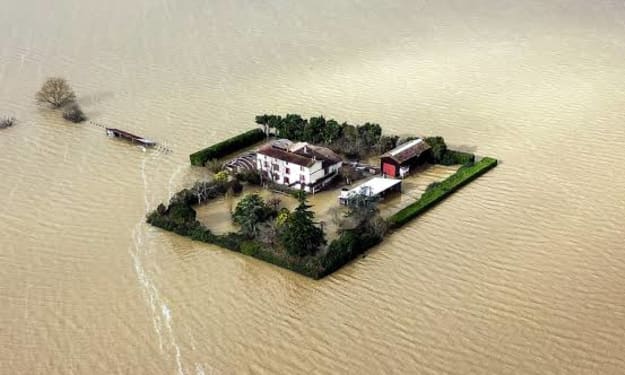
Under Water, in Denial: Is Europe Drowning Out the Climate Crisis?. AI-Generated.
Europe is facing an escalating climate crisis, yet public discourse and policy responses often appear misaligned with the scale and urgency of the challenge. Extreme weather events, flooding, and record temperatures have repeatedly tested the continent’s infrastructure and resilience, but some analysts argue that political hesitation, economic priorities, and media framing are contributing to a subtle form of denial about the severity of climate threats. Extreme Weather on the Rise Over the past decade, Europe has witnessed a notable increase in extreme weather events. From unprecedented heatwaves in southern Spain and Italy to devastating floods in Germany and Belgium, the frequency and intensity of such incidents are rising in ways scientists attribute to climate change. According to recent data from the European Environment Agency (EEA), floods and heatwaves alone have caused tens of billions of euros in damage since 2015. Despite the evidence, many European governments have struggled to translate these warnings into consistent, robust climate action. While countries like Germany and Denmark have invested heavily in renewable energy, others continue to rely on fossil fuels or fail to implement comprehensive mitigation strategies. Political Hesitation and Economic Constraints A recurring theme in European climate policy is the tension between immediate economic concerns and long-term environmental imperatives. Policymakers face pressure to maintain economic growth, protect jobs, and avoid unpopular energy price hikes. This often results in incremental measures rather than bold reforms. “The problem is not ignorance—it’s political inertia,” said a climate policy analyst in Brussels. “Even when governments acknowledge the science, short-term economic and electoral pressures dilute the urgency of their actions.” Recent debates over natural gas reliance illustrate this dynamic. While Europe has pledged to reduce carbon emissions in line with the Paris Agreement, geopolitical events and energy security concerns have led some countries to temporarily increase fossil fuel consumption, undermining broader climate objectives. Media Coverage and Public Perception Media framing also plays a critical role in shaping public awareness of climate risk. Studies show that while extreme events receive coverage, they are often presented episodically rather than as part of a systemic crisis. Headlines may highlight isolated floods or wildfires without connecting them to long-term climate trends, fostering a perception that these events are temporary or exceptional. This framing can feed a subtle denial among the public, even as scientific reports warn of accelerating environmental risks. Surveys indicate that while Europeans generally recognize climate change, there is less consensus on the urgency or the transformative actions required, suggesting a gap between knowledge and engagement. Regional Disparities and Vulnerable Communities The impact of climate change is uneven across Europe. Coastal regions, river valleys, and low-lying urban centers are particularly vulnerable to flooding, while southern areas face intensifying heatwaves and drought. Vulnerable populations, including low-income residents and migrants, are disproportionately affected, raising concerns about social equity and resilience. Cities like Venice, Rotterdam, and Hamburg have implemented flood defenses and urban adaptation measures, yet experts warn that piecemeal efforts are insufficient. Without coordinated, continent-wide strategies, localized responses may fail to protect broader populations from systemic climate risks. Looking Ahead European leaders face a critical crossroads. The continent has the resources, scientific expertise, and technological capability to lead on climate action, yet political caution, economic pressures, and fragmented communication threaten to undermine progress. Analysts emphasize that acknowledging the crisis, integrating mitigation and adaptation strategies, and fostering public engagement are essential to avoid long-term ecological and economic costs. “The question is whether Europe will confront reality before it’s too late,” said an environmental policy researcher. “We are literally under water—politically and environmentally—if we continue to treat climate change as a distant problem.” Without decisive action, Europe risks not only environmental damage but also economic disruption, social inequality, and political instability. The climate crisis is no longer a future threat—it is an immediate challenge, demanding coordinated, bold, and transparent policies across the continent.
By Fiaz Ahmed 3 days ago in Earth
Pratt & Whitney Unveils Possible Design for Sixth-Generation F-47 Fighter Jet. AI-Generated.
Pratt & Whitney has revealed preliminary design concepts for its sixth-generation F-47 fighter jet, signaling a major step forward in next-generation aerial combat technology. The announcement, made at a confidential industry briefing last week, highlights potential advances in propulsion, stealth, and networked warfare capabilities that could redefine air superiority for allied forces in the coming decades. Vision for the F-47 According to Pratt & Whitney engineers, the F-47 is envisioned as a highly adaptable, multi-role fighter capable of dominating both air-to-air and air-to-ground operations. Key design priorities include: Advanced propulsion systems that promise higher thrust-to-weight ratios, improved fuel efficiency, and supersonic cruise capabilities without afterburners. Enhanced stealth features, including radar-absorbing materials and adaptive surface geometry to minimize detection across multiple spectrums. Integrated sensor networks that allow seamless communication with other aircraft, unmanned systems, and ground-based command centers. The aircraft is also expected to incorporate modular systems, allowing for rapid upgrades in avionics, weapons payloads, and electronic warfare suites. This flexibility is seen as essential in a rapidly evolving threat environment where adversaries are deploying increasingly sophisticated anti-air systems. Propulsion Breakthroughs Pratt & Whitney emphasized that the F-47’s propulsion design could leverage next-generation adaptive cycle engines. These engines are designed to switch between high-thrust and high-efficiency modes depending on mission demands, a capability that could significantly extend operational range and loiter time. “Adaptive propulsion is a game-changer,” said a senior engineer at the briefing. “It allows the fighter to maintain performance while optimizing fuel use, reducing the need for frequent refueling and increasing mission flexibility.” Stealth and Survivability Stealth remains a central focus. While exact specifications are classified, Pratt & Whitney indicated the F-47 design integrates both passive and active measures to avoid detection. This includes adaptive coatings, low-observable exhaust management, and smart airframe shaping to minimize radar and infrared signatures. Electronic countermeasures and advanced avionics are also planned to improve survivability against emerging integrated air defense systems. Analysts note that survivability, more than raw speed or armament, is increasingly the determining factor in future fighter effectiveness. Strategic and Operational Implications The F-47 program is seen as critical to maintaining a technological edge over potential peer adversaries in the Asia-Pacific and European theaters. The aircraft is expected to operate in conjunction with unmanned aerial vehicles, satellites, and networked sensor systems to create a highly integrated battlefield picture. Defense analysts suggest that the F-47 could serve both national and allied needs, potentially integrating into NATO or other coalition frameworks. Its modular design could allow customization for specific mission profiles, from high-intensity combat to reconnaissance and electronic warfare. Challenges Ahead Despite the promise of the F-47, experts caution that development faces significant hurdles. Advanced materials, engine technology, and AI-driven sensor networks require extensive testing and validation. Additionally, integrating such capabilities while controlling costs will be a critical challenge. “The technology is feasible, but turning concept into production is a complex, multi-year endeavor,” said an aerospace industry consultant. “There are risks in propulsion, stealth, and avionics integration that must be carefully managed.” Looking Ahead Pratt & Whitney has not announced a formal production timeline, but the briefing indicated that prototypes could be tested within the next decade. The F-47 program reflects the company’s commitment to shaping the future of air combat, offering a glimpse of the next generation of fighter capabilities. “As threats evolve, so must our solutions,” a Pratt & Whitney spokesperson said. “The F-47 represents a bold step forward in ensuring air dominance and operational flexibility for the decades to come.”
By Fiaz Ahmed 3 days ago in The Swamp
At Least 10 Killed in Israeli Strikes on Lebanon, State Media Says
At least 10 people have been killed in a series of airstrikes carried out by Israel on southern Lebanon, according to reports from Lebanese state media. The attacks, which occurred overnight, also left several others injured and caused significant damage to civilian infrastructure, escalating tensions along the volatile border region. Details of the Strikes Lebanese authorities reported that the strikes targeted multiple sites in southern districts near the border with Israel. While the Israeli military has not confirmed the exact number of casualties or specific targets, officials cited “security operations” aimed at militant groups operating in the area. Eyewitnesses described explosions shaking residential neighborhoods, with smoke rising from several buildings. Hospitals in the region reported receiving numerous injured civilians, many of whom were women and children. Rescue teams continue to work to evacuate those trapped under debris. “The devastation is immense,” said a local resident. “Entire streets were damaged, and many families have lost their homes. People are in shock.” Political and Military Context The strikes come amid rising tensions between Israel and armed groups operating in southern Lebanon, particularly Hezbollah. In recent weeks, cross-border incidents, including rocket fire and military maneuvers, have heightened fears of a broader escalation. Analysts note that Israel has repeatedly emphasized its right to preemptively strike targets it perceives as threatening. Lebanese officials have condemned these operations as violations of sovereignty and warned of the potential for retaliation, raising the risk of renewed armed conflict along the border. “The pattern of airstrikes indicates a deliberate attempt to weaken infrastructure linked to hostile elements,” said a Middle East security analyst. “But the presence of civilians near these sites inevitably results in casualties and humanitarian crises.” Humanitarian Impact The Lebanese Red Cross and local aid organizations reported that dozens of families have been displaced by the strikes. Emergency shelters have been set up, but resources remain limited. Power outages and damage to water systems have further complicated relief efforts. International observers expressed concern about the impact on civilians, urging restraint from all parties. The United Nations Interim Force in Lebanon (UNIFIL) has called for “immediate measures to protect non-combatants and prevent further escalation.” International Response Global reactions have been mixed. Some governments reiterated Israel’s right to defend itself against militant threats, while others condemned the strikes and called for diplomatic solutions to prevent additional loss of life. Human rights organizations highlighted the disproportionate impact on civilian populations and stressed the need for accountability in military operations. “The killing of civilians, regardless of the target, is unacceptable under international law,” said a spokesperson for an international NGO monitoring conflicts in the region. “All parties must prioritize the protection of innocent lives.” Looking Ahead The situation along the Israel-Lebanon border remains tense, with both sides reportedly on heightened alert. Lebanese authorities have warned of possible retaliatory actions, and international mediators are reportedly engaging in urgent talks to de-escalate the situation. Observers caution that any further escalation could quickly spiral into a wider conflict, affecting not only border communities but also regional stability. Diplomatic channels are expected to play a critical role in the coming days, as the international community seeks to prevent additional civilian casualties. The latest strikes underscore the ongoing volatility in southern Lebanon and the fragile nature of the ceasefire arrangements in the region. As investigations continue and casualty reports are confirmed, the humanitarian and political ramifications of the attacks are likely to shape the trajectory of the conflict in the near term.
By Fiaz Ahmed 3 days ago in The Swamp
State Department Warns Americans of ‘Extremely Dangerous’ Avalanche Conditions Across Europe. AI-Generated.
The U.S. State Department has issued an urgent travel advisory for Americans planning to visit Europe this winter, warning that unusually heavy snowfall and volatile weather patterns are creating “extremely dangerous” avalanche conditions in multiple alpine regions. Officials stressed that travelers should exercise extreme caution, monitor local advisories, and avoid high-risk areas unless properly trained and equipped. High-Risk Regions According to the advisory, countries particularly affected include France, Switzerland, Austria, and parts of Italy. Ski resorts, alpine passes, and remote mountainous regions have experienced record snowfalls over the past several weeks, dramatically increasing avalanche risk. The department specifically noted that backcountry areas, unpatrolled slopes, and off-piste routes are extremely hazardous. Even experienced mountaineers and skiers face significant risk due to unstable snowpack, unpredictable weather, and rapidly changing conditions. “The combination of recent heavy snow, wind accumulation, and fluctuating temperatures has created layers in the snowpack that are prone to collapse,” said a State Department spokesperson. “Avalanches can occur without warning, making travel in these areas extremely dangerous.” Recommendations for Travelers The advisory outlines several precautions for Americans traveling to Europe during this period: Avoid off-piste skiing or mountaineering unless part of an organized, professional expedition with safety equipment. Check local avalanche forecasts and weather updates daily. Carry appropriate safety gear, including transceivers, shovels, and probes if venturing into snowy terrain. Notify local authorities or resort staff of planned excursions in high-risk areas. Consider postponing travel to mountainous regions until conditions stabilize. The State Department emphasized that the advisory applies not only to winter sports enthusiasts but also to hikers, climbers, and motorists who may encounter avalanche-prone areas. Roads through alpine passes can be blocked or damaged by snow slides, and some villages in remote regions may be temporarily isolated. Regional Authorities Respond European authorities have ramped up warnings and safety measures in response to the snow conditions. In France and Switzerland, avalanche alerts have reached the highest levels in several regions, prompting temporary closures of ski lifts and mountain roads. Austrian officials have deployed additional rescue teams and patrolled popular backcountry areas to monitor snow stability. Meteorologists report that while temperatures are fluctuating across the continent, the current snowpack is particularly vulnerable due to layers of ice and powder accumulation. Experts warn that even minor disturbances, such as wind gusts or small tremors, could trigger significant avalanches. Growing Concerns About Climate and Safety While extreme snowfall can create prime conditions for winter sports, climate researchers note that unpredictable weather and rapid accumulation of snow in some areas have amplified risks. Officials warn that travelers should not underestimate the danger, even in familiar resorts. The advisory also highlights the importance of emergency preparedness, urging travelers to have contingency plans, secure accommodations, and clear communication options in case of isolation or natural disasters. Looking Ahead With forecasts predicting continued snowfall over the next several days in multiple alpine regions, the State Department has urged Americans to remain vigilant. Travelers are advised to maintain situational awareness, respect local safety instructions, and avoid unnecessary exposure to high-risk terrain. As winter progresses, authorities across Europe are expected to continue monitoring avalanche risk closely, implementing preventive measures, and issuing updated warnings. For Americans planning vacations in the Alps or other mountainous regions, vigilance and caution remain essential to ensure safety.
By Fiaz Ahmed 3 days ago in The Swamp