
After the Supreme Court's Ruling on Tariffs, Companies Line Up for Refunds
A landmark decision reshapes trade policy and opens the door to billions in potential repayments
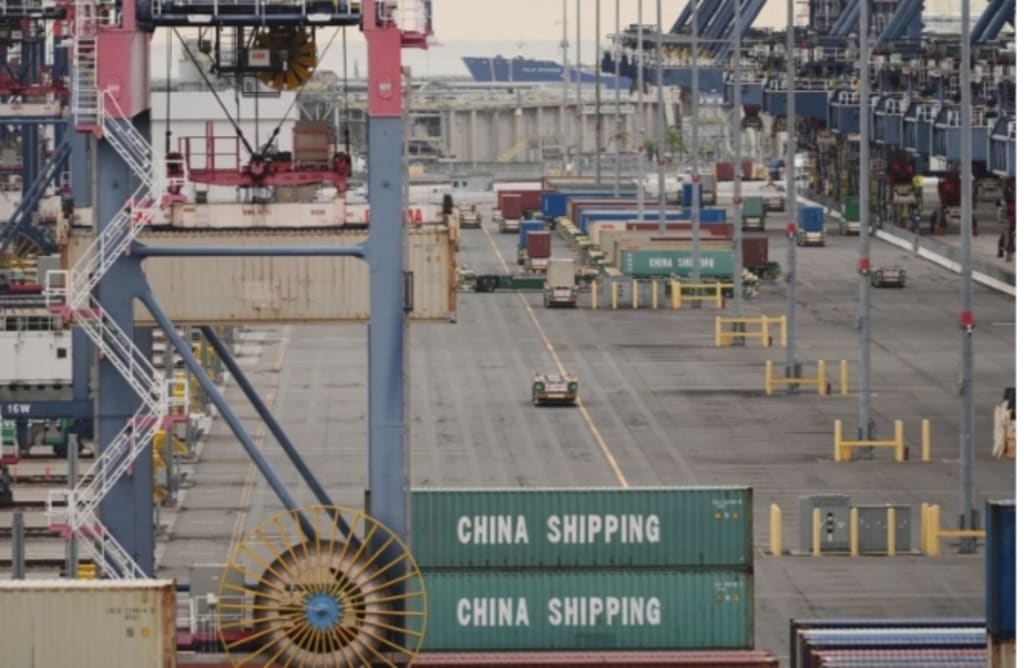
a decision that could ripple through global trade and corporate balance sheets alike, the Supreme Court of the United States has ruled on the legality of certain tariffs imposed in recent years — and the fallout is immediate. Across industries, companies are lining up to seek refunds for duties they argue were unlawfully collected.
The ruling marks a pivotal moment in the ongoing debate over executive authority in trade policy. It also raises practical questions: How much money could be returned? Who qualifies? And what does this mean for future tariff strategy in Washington?
The Background: Tariffs and Executive Power
Over the past decade, tariffs have become a prominent tool in U.S. economic policy. Under the administration of Donald Trump, sweeping tariffs were imposed on goods imported from countries including China, citing national security and unfair trade practices.
Many of these measures relied on statutory authorities such as Section 232 and Section 301 of U.S. trade law. Supporters argued the tariffs protected domestic industries and pressured foreign governments into fairer agreements. Critics countered that they increased costs for American businesses and consumers.
Legal challenges soon followed. Companies that relied heavily on imported steel, aluminum, machinery, electronics and raw materials contended that some tariff actions exceeded statutory authority or were procedurally flawed.
The Supreme Court’s ruling now addresses one of the most consequential of those challenges.
What the Court Decided
While the ruling’s technical language spans dozens of pages, its core finding is clear: certain tariff measures were implemented beyond the scope permitted by Congress.
The Court concluded that executive authority in trade matters, though broad, is not unlimited. When statutory deadlines or procedural safeguards are ignored, tariff actions may be invalid.
In practical terms, that means duties collected under the invalidated provisions may now be subject to refund — provided affected companies file appropriate claims within established deadlines.
The Refund Rush
Within hours of the ruling, trade attorneys reported a surge of inquiries. Importers across sectors are assessing whether they qualify for reimbursement.
Industries likely to be most affected include:
Automotive manufacturing
Construction and infrastructure suppliers
Consumer electronics importers
Machinery and industrial equipment firms
For some companies, tariffs added millions — even billions — to operating costs over several years. Recovering even a portion of those payments could materially affect quarterly earnings.
Trade compliance teams are now combing through years of customs documentation, identifying tariff classifications and calculating potential refund totals. The process is expected to be complex and time-sensitive.
Billions at Stake
Estimates vary, but analysts suggest that total potential refunds could reach into the billions of dollars. The ultimate amount will depend on how broadly the ruling is interpreted and how many companies successfully file claims.
The U.S. Customs and Border Protection is likely to face significant administrative pressure as refund applications flood in. Processing claims may take months — or even years — depending on volume and legal appeals.
For publicly traded companies, the possibility of refunds introduces both opportunity and uncertainty. Some may record anticipated recoveries as contingent assets, while others may wait for confirmed decisions before adjusting financial guidance.
Impact on Trade Policy
Beyond corporate balance sheets, the ruling carries broader implications for U.S. trade strategy.
First, it reinforces judicial oversight of executive trade authority. While presidents retain significant discretion, the Court’s decision underscores that statutory limits matter.
Second, it may make future administrations more cautious when invoking emergency or national security provisions to justify tariffs. Policymakers will likely scrutinize procedural requirements more carefully to avoid similar legal vulnerabilities.
Third, the decision could embolden businesses to challenge future trade actions in court, knowing that judicial review can yield tangible results.
Political Reactions
Reaction in Washington has been divided.
Some lawmakers welcomed the ruling as a necessary check on executive overreach. They argue that Congress, not the White House alone, should shape long-term trade policy.
Others warned that limiting tariff authority could weaken the United States’ negotiating leverage in global trade disputes. Tariffs, they contend, remain a powerful bargaining tool.
The debate touches on a broader constitutional question: how to balance swift executive action with legislative oversight in an interconnected global economy.
Global Ramifications
The ruling may also influence trade relations abroad.
Countries that were subject to the contested tariffs — particularly China and certain European exporters — will watch closely. While refunds primarily affect U.S. importers, the decision signals that American trade measures can be challenged domestically.
International trading partners may view the ruling as evidence of institutional checks within the U.S. system. At the same time, uncertainty over tariff durability could complicate long-term supply chain planning.
What Companies Must Do Now
Businesses seeking refunds must act quickly and methodically. Legal experts advise companies to:
Review past import entries affected by the invalidated tariffs.
Confirm eligibility under the Court’s ruling.
File protests or refund claims within statutory deadlines.
Prepare for potential audits or follow-up inquiries.
Documentation accuracy will be critical. Customs records, payment receipts and classification data must align precisely with legal requirements.
Smaller firms without in-house trade specialists may face challenges navigating the process. As a result, law firms and customs consultants are experiencing a spike in demand.
The Broader Economic Picture
While refunds may provide relief to individual companies, the macroeconomic impact remains uncertain.
If billions are returned to corporate accounts, some firms may reinvest in domestic operations, capital expenditures or hiring. Others may use funds to offset prior losses or strengthen cash reserves.
However, the ruling does not automatically eliminate all tariffs currently in place. Many remain valid under other statutory frameworks. The broader debate over protectionism versus free trade continues.
A Defining Moment for Trade Law
The Supreme Court’s decision represents more than a financial event. It marks a defining moment in the evolving relationship between the judiciary, Congress and the executive branch in shaping trade policy.
For companies, the immediate focus is practical: calculating potential refunds and securing repayments. For policymakers, the challenge lies in crafting durable, legally sound trade measures.
For the global economy, the ruling serves as a reminder that even powerful policy tools like tariffs operate within constitutional boundaries.
Conclusion
After the Supreme Court’s ruling on tariffs, companies are lining up for refunds — and for good reason. The potential recovery of billions of dollars could reshape corporate balance sheets and influence future trade strategies.
Yet the story is larger than reimbursement. It is about the limits of executive authority, the role of judicial oversight and the ongoing tension between economic protection and global integration.
As refund applications mount and policymakers reassess their approach, one thing is certain: the ripple effects of this decision will extend far beyond the courtroom steps in Washington.
About the Creator
Why Black History Matters in America?
The United States of America is celebrating their 250th anniversary in 2026. I'm proud to be an American and as someone who was born here, I wouldn't imagine myself living anywhere else. This is a country where opportunities are possible. Where anyone can be successful in anything they desire to do. Equality, community, and togetherness are the backbones of what America is and should be about. However, we have an administration who wants to erase and disregard those who have made positive, meaningful impacts in our country, specifically Black figures, such as Martin Luther King, Jr., Rosa Parks, and Maya Angelou. President Trump and his administration have been constantly complaining and fighting against what they call the "Woke agenda". They use this excuse as a distraction from other issues they refuse to address, such as the high cost of living, climate change, and inflation. That equality is dividing America, when in reality, it's bringing us together. Being woke is not tied to a specific political party. No matter where you stand on the political spectrum, you can still care about other people and their plights. Compassion and empathy for others isn't tied to a political party, either. We were taught as children to treat others the way we want to be treated and not judge others because they're different from us. Caring about others isn't a personal attack on your beliefs. It doesn't make you any less of a person. People who are easily offended over African American figures, past or present, or anything related to it, are grasping at straws. Current and future generations need to know who people like Harriet Tubman and Shirley Chisholm were, especially in the classroom. Black History is part of American History. It should be recognized, not hidden or forgotten. Besides, you can't shield children from everything, just because your feelings are easily hurt.
By Mark Wesley Pritchard 19 days ago in The Swamp
US Lawmakers Demand Accountability for Palestinian-American Teen Detained in Israel
A bipartisan group of United States lawmakers has formally demanded answers and accountability from the United States Department of State regarding the treatment of a Palestinian-American teenager who was detained by Israeli military authorities for nearly ten months under troubling conditions. The lawmakers’ letter to Marco Rubio highlights concerns over the teen’s treatment, alleged abuses during detention, and broader human rights implications for Palestinian minors held under Israel’s military justice system. Ten Months in Custody The focus of the lawmakers’ concerns was Mohammed Ibrahim, a U.S. citizen from Florida who was 15 when he was arrested in the West Bank in mid-February 2025 by Israeli soldiers during a pre-dawn operation. According to the letter and consular reports, Mohammed was held for almost ten months without trial and -- while in custody – suffered significant physical and psychological hardship. His family and U.S. consular officials raised alarms about his condition, saying he lost a large portion of his body weight and developed untreated skin conditions. In their letter, the lawmakers said that while detained, Mohammed and other Palestinian minors in his cell were “beaten, threatened, pepper-sprayed in the face, and denied adequate food and medical care.” One of his cellmates, 17-year-old Walid Ahmad, died during detention, with his autopsy showing signs of prolonged malnutrition and untreated injury. Mohammed was finally released on November 27, 2025, and was immediately hospitalized due to his deteriorated health following his detention. Lawmakers’ Demands Led by Peter Welch, Chris Van Hollen, and Kathy Castor, the group of 15 senators and representatives wrote to Secretary Rubio asking for detailed answers about how Ibrahim’s case was handled by U.S. officials and what steps have been taken to hold accountable any Israeli personnel responsible for abuses. Specifically, the lawmakers asked whether U.S. consular officers had met with Ibrahim since his release, whether the United States had requested an impartial investigation by the State of Israel into the alleged mistreatment, and whether any members of the Israel Defense Forces or the Israel Prison Service had faced consequences. In their letter, the lawmakers also raised concerns about systemic practices they say deny basic rights to Palestinians, especially children, in military detention — a critique that goes beyond a single case to question broader treatment standards under Israel’s military judicial and detention systems. Broader Concerns Over Juvenile Detention Human rights groups and civil rights advocates have long criticized the treatment of Palestinian minors in Israeli detention, citing frequent use of administrative detention (detention without charge) and military court proceedings that do not meet civilian legal standards. Reports have documented cases of harsh interrogation methods, limited access to legal counsel, and poor detention conditions. The lawmakers’ letter underscores these broader concerns while centering the case of a U.S. citizen whose welfare allegedly deteriorated significantly during custody. By elevating the issue to the highest levels of U.S. foreign policy oversight, members of Congress are signaling that they expect more robust engagement by the U.S. government when American citizens abroad face potential violations of due process or basic protections. U.S. Government and Diplomatic Context The Biden administration and previous U.S. governments have generally maintained close defense and diplomatic relations with Israel while sometimes expressing concern over individual cases involving American citizens detained overseas. In response to similar cases, the State Department has occasionally dispatched consular officials to monitor conditions and advocate for citizens’ rights. At the same time, lawmakers’ frustrations expressed in the letter reflect a belief among some U.S. officials that prior responses were inadequate and that more assertive diplomacy is warranted. The letter explicitly requests information on what steps the State Department has taken to ensure accountability and prevent recurrence. Persistent Human Rights Questions The case of Mohammed Ibrahim has drawn attention from civil rights advocates, faith-based groups, and international law observers, who argue that the treatment of detainees — especially minors — must meet international standards. The involvement of U.S. lawmakers underscores how individual detentions can become diplomatic flashpoints, particularly when they involve allegations of mistreatment and the health or afety of citizens abroad. As the letter awaits a response from the State Department, the case continues to illuminate tensions between U.S. foreign policy priorities, legal protections for its citizens, and ongoing human rights concerns within the broader context of the Israeli-Palestinian conflict.
By Fiaz Ahmed 2 days ago in The Swamp
Goodbye, Mr. Duvall
It is turning out to be an interesting year. I was in the middle of teaching a class when a pop-up appeared on the screen announcing the death of Mr. Robert Seldon Duvall (yes, that was his full name). I was in the middle of a discussion on the obsession we have with winning when it comes to sports (the Winter Olympics was a theme), and I felt as though things were coming full circle. We had already lost Gene Hackman last year, and along with that titan, it feels though one particular golden age has closed off to be replaced by...?
By Kendall Defoe 5 days ago in Geeks




Comments
There are no comments for this story
Be the first to respond and start the conversation.