literature
Best corporate culture and workplace literature to better your workplace experience. Journal's favorite stories.
Drive Success in School Marketing with a Trusted UK Schools Database
Introduction to School Marketing Challenges In the evolving landscape of educational marketing, reaching the right audience requires precision and strategic planning. Schools have unique needs and priorities, demanding marketers to tailor their approaches carefully. Navigating fragmented data and ensuring outreach efforts connect with the right institutions poses significant challenges. Marketers must sift through vast amounts of information to identify relevant contacts, making it crucial to have a dependable source of data. A streamlined approach is necessary to bridge the gap between marketing efforts and educational institutions, enabling marketers to connect effectively with schools and deliver messages that resonate. By addressing these challenges head-on, marketers can enhance their strategies and achieve greater success.
By Olivia Davis9 months ago in Journal
Will Love Today be in OTT?
The Indian film industry continues to ride the digital wave, with audiences increasingly turning to OTT platforms for their dose of entertainment. One of the most talked-about romantic dramas in recent times is Love Today, a Tamil-language film that garnered attention for its refreshing storyline and relatable performances. With the buzz surrounding this movie, one question remains on everyone’s mind—will Love Today be available on OTT platforms?
By Zency somke9 months ago in Journal
What Islam says about Water
Water, in the Islamic worldview, is far more than a physical substance used to quench thirst or grow crops—it is a symbol of life, mercy, purity, and spiritual significance. The religion of Islam, through the Qur'an and the teachings of the Prophet Muhammad (peace be upon him), places immense value on water. It is considered a blessing from Allah, a vital source of life, and a sacred trust that must be protected and shared.
By Murad Ullah9 months ago in Journal
Unveiling the True Light: Beyond Myths and Fairy Tales
In the gentle glow of the Christmas season, we find ourselves enveloped in the warmth of tradition and the promise of new beginnings. As we transition from the joy of Christmas to the solemnity of the pre-Lenten and Passion seasons, we are reminded of the divine journey that culminates in the resurrection—a testament to the undying nature of life. Yet, amidst the celebration, a question lingers: Is the story of Jesus Christ merely a myth, or is it the cornerstone of our faith?
By Minding Fred9 months ago in Journal
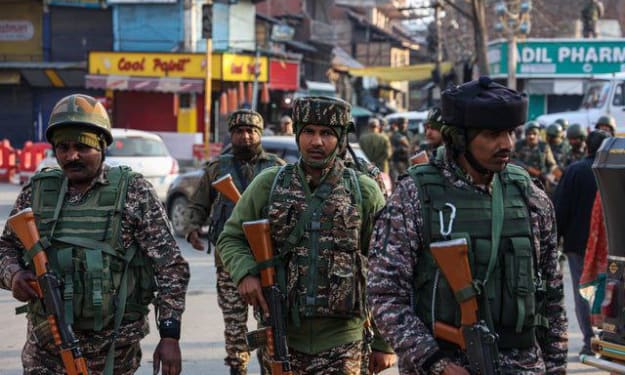
Israel–Gaza Conflict Escalates
The conflict between Israel and Hamas in the Gaza Strip has intensified dramatically, following a declaration by Israeli Prime Minister Benjamin Netanyahu that his government plans to launch a large-scale military operation. The proposed campaign, which includes the relocation of civilians within Gaza “for their protection,” has raised alarm globally and sparked heated debate across diplomatic and humanitarian circles.
By Masood Zahid9 months ago in Journal
When the Wine Runs Out: The Transformative Glory of Jesus at Cana
Imagine a wedding celebration in full swing, the air filled with laughter and the clinking of glasses, when suddenly, the wine runs dry. This scene, set at Cana in Galilee, marks the beginning of a profound narrative that transcends a simple miracle. It is here, at this wedding, that Jesus performs His first sign, turning water into wine, not merely to replenish the festivities but to unveil His divine glory. This story, as recounted in John 2, is not about the wine itself but about the revelation of Jesus' glory and the faith it inspires. The purpose of this narrative is clear: to show that Jesus came to transform lives, to bring fullness and joy, and to call us to recognize His glory and believe in Him. This is the essence of the biblical message, as relevant today as it was then.
By Minding Fred9 months ago in Journal
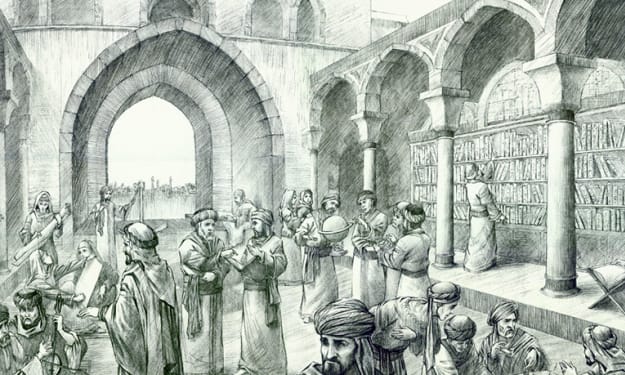
Bayt al-Hikmah: Where Stars of Knowledge Once Shone
During the Abbasid Caliphate, Baghdad emerged as a center of intellectual and economic excellence. One of the most iconic examples of their support for scientific advancement was the famous library of Baghdad, Bayt al-Hikmah—known in English as the House of Wisdom. From around the 5th to at least the 9th century, its collection was considered the largest in the world. The halls of this institution were always abuzz with the presence of prominent scholars of the time.
By Riham Rahman 9 months ago in Journal
The Untold Aspects of The Lord of the Rings Trilogy Pt.1
Imagine a group of friends deep in discussion about the greatest fantasy franchises in the world. Naturally, names like Harry Potter, The Witcher, Game of Thrones, Star Wars, Narnia, Pirates of the Caribbean, and Marvel/DC Comics would come up. However, one name that must also be mentioned is J.R.R. Tolkien's immortal creation — The Lord of the Rings. Whether in books or on the silver screen, this franchise remains unforgettable. Formed with a unique blend of friendship, love, vengeance, lust for power, magic, and diverse races, the fantasy of this franchise can easily rival reality. In 2001, renowned director Peter Jackson brought this trilogy to the big screen with the first installment The Fellowship of the Ring. It garnered immense acclaim from critics and audiences alike, essentially immortalizing the franchise. This article dives into some lesser-known aspects of The Lord of the Rings trilogy. 1. The Production Struggle Initially, it was decided that the film would be produced under the Miramax production house, split into two parts. However, due to budget constraints, the studio informed Peter Jackson that the entire story must be condensed into a single film. Knowing this would result in a disaster due to the vast plot, Jackson stood firm. Eventually, New Line Cinema, under Warner Bros., came forward to realize the dream, greenlighting the full trilogy. 2. Casting Surprises Christopher Lee, who played Saruman, originally wanted to play the powerful wizard Gandalf. He was the only cast member who had read the entire book series multiple times—every year, in fact—and even memorized large portions. A true fan of the franchise, he was also the only cast member to have ever met J.R.R. Tolkien. Upon hearing that a film adaptation was in the works, he personally wrote to Peter Jackson requesting to play Gandalf. However, Jackson suggested he take the role of Saruman instead. Interestingly, Scottish actor Sean Connery was offered the role of Gandalf and even promised 15% of the total box office revenue. But he declined, saying he couldn't grasp the complexity of the character. Eventually, the role went to Sir Ian McKellen, who brought Gandalf to life brilliantly. For the role of Aragorn, actors like Nicolas Cage, Stuart Townsend, and Russell Crowe were approached but declined. Ultimately, it went to Viggo Mortensen. American actor Jake Gyllenhaal auditioned for Frodo, but Elijah Wood was chosen instead. 3. Helicopter Fear on Set Sean Bean, who played Boromir, had a severe fear of helicopters. The mountain scenes in the first film were shot in New Zealand, and most cast and crew were flown in by helicopter. But Bean refused to fly, so he would hike for nearly two hours to reach the shooting location. As a result, the entire crew had to wait for him every day on the mountain. 4. Differences Between the Book and the Film While four hobbits accompany Frodo in the films, there were five in the book. The missing one was Fredegar “Fatty” Bolger, who stayed behind in the Shire. He played a role in defending the Shire when Saruman attacked later. He briefly appears in the extended cut. Sauron is only shown as a giant eye atop a tower in the films, but in the book, he has a full physical description. His hunt for the One Ring was aimed at world domination. While the film shows Frodo setting out shortly after Bilbo gives him the ring, in the book, his journey begins 17 years later. Saruman’s death also differs. In the book, after the ring is destroyed in Mount Doom, the hobbits return to find that Saruman has taken over the Shire. They fight him, and eventually, Gríma Wormtongue kills Saruman by slitting his throat in a place called the Scouring of the Shire. 5. Epic Runtime Binge-watching this trilogy is no easy task. Each movie runs for nearly 3.75 hours on average. The original theatrical cuts total 9 hours and 18 minutes, while the extended editions stretch to an astounding 11 hours and 55 minutes — a record-setting runtime for a trilogy. 6. Groundbreaking Effects When the first film was released in 2001, CGI and VFX were just emerging technologies. Many new techniques debuted in this trilogy. To maintain realism, the director heavily used practical elements. Astonishingly, around 18,000 costumes were used, with 30–40 duplicates for each main character. There were also 2,000 unique weapons and about 10,000 arrows used, along with nearly 300 horses. The differences in character heights were achieved using clever camera angles and new visual effects. 7. Editing Nightmare The three films were released in 2001, 2002, and 2003, respectively. The editing team was pushed to their limits managing such large-scale productions. At one point, editing for The Fellowship of the Ring had just finished while The Two Towers was in production, and footage for The Return of the King was already being cut. Even after the theatrical release of the final movie, Peter Jackson shot additional scenes for the extended edition.
By Riham Rahman 9 months ago in Journal