career
Careers in the industry; from corporate to middle management, food service, media, political figures, and beyond. All workplace careers.
The Economics of Scale and Trust: Lessons from Digital Marketplaces
INTRODUCTION From Amazon to Airbnb, every major digital marketplace operates on two invisible currencies: scale and trust. The World Economic Forum’s 2024 Digital Trust Index reports that more than 70 percent of online users consider trust to be their deciding factor when engaging on a platform. At the same time, OECD data shows that network-driven firms now account for over half of global market capitalization. Scale accelerates growth, but trust sustains it. Without credible systems for fairness, transparency, and reliability, even the most efficient digital markets can collapse under their own information burden. Today’s economist must therefore study not just supply and demand, but also credibility, connection, and the human behavior that powers digital interactions.
By Vamakshi Chaturvediabout a month ago in Journal
Student Success Guide: Key Soft Skills for the Workplace. AI-Generated.
Introduction Soft skills determine how well a person communicates, collaborates, solves problems, and adapts in professional settings. Employers assess these skills early because they affect team productivity, client relations, and an organization’s ability to respond to change. For students, building soft skills before starting a job shortens the onboarding curve and improves performance in entry-level roles.
By Nimra kanwalabout a month ago in Journal
The Role of Soft Skills in Accelerating Your Career. AI-Generated.
Introduction In today’s fast-paced professional world, technical expertise alone is no longer enough to secure career growth. While hard skills are essential for performing job-specific tasks, soft skills play a crucial role in shaping how individuals interact, lead, and adapt in the workplace. Employees who cultivate strong soft skills often experience smoother career progression, improved workplace relationships, and greater opportunities for advancement.
By Nimra kanwalabout a month ago in Journal
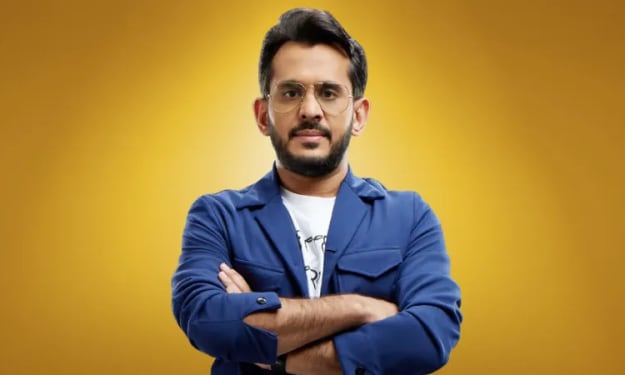
Forget Nvidia: boAT’s Aman Gupta Earns 33,000% Return in Four Years from Shark Tank Snack Bet
boAT co founder Aman Gupta has witnessed hundreds of pitches on Shark Tank India, but one small snack company from the very first season has now emerged as his most extraordinary win. A simple and almost overlooked investment of Rs 12 lakh has turned into a stake valued at around Rs 40 crore. What makes this story remarkable is that the deal was originally rejected by every other Shark on the panel. Aman has now described it as the most profitable and insightful investment he has ever made on the show.
By Manish Bhatiaabout a month ago in Journal
The Silent Killer of Sales: Why Your “Networking” is Really Just Pitch-Slapping
In the modern business landscape, we’re constantly told to “network” and “build our pipeline” to “get more leads.” In the quest for growth, many entrepreneurs fall into the trap of mistaking transactional interactions for genuine relationship building, and this can sabotage their efforts before they even begin.
By Aarti Arora-McLeanabout a month ago in Journal
Strategic Intelligence in a Data Driven World:. AI-Generated.
The Growing Importance of Analytical Leadership As more organizations move deeper into digital operations, data has shifted from a useful asset to something closer to a necessity. Leaders want to understand changing markets, predict risks, and make smarter decisions, and they need clear analysis to do that. This is why professionals who can sort through large amounts of information and explain what it really means have become so valuable. Among those shaping this landscape, Nathan Haslick has built a reputation for steady, thoughtful work that supports reliable decision making.
By Nathan Haslickabout a month ago in Journal
The Biggest Mistake American Companies Make When Hiring; And How It’s Costing Them Millions
Hiring should be one of the easiest parts of running a business. You find someone qualified, you meet them, you evaluate their fit, and you bring them onboard. But today, in companies across America, hiring has become a slow, confusing, and expensive process. Applicants wait weeks for responses.
By Zeenat Chauhanabout a month ago in Journal
America’s New Work Trend: The Rise of the ‘Bare Minimum Employee’ And What It Really Means for Companies
For decades, American work culture has been built on hustle, loyalty, and the idea that going “above and beyond” is the path to success. But something significant has shifted in recent years something employers can no longer ignore. A growing number of workers are no longer willing to stretch themselves thin, skip lunch breaks, answer late-night emails, or sacrifice personal well-being for jobs that feel unstable, unappreciative, or underpaid.
By Zeenat Chauhanabout a month ago in Journal
Tori Kelly: From YouTube Prodigy to Award-Winning Vocal Powerhouse
American singer-songwriter Tori Kelly has spent more than a decade carving out a place for herself as one of contemporary music’s most versatile voices. Born Victoria Loren Kelly on December 14, 1992, in Wildomar, California, she grew up in a musically blended household that exposed her to gospel, R&B, pop and soul long before those influences shaped her own sound. Her parents, Laura and Allwyn, encouraged curiosity across genres, something Kelly often credits as the foundation of her artistic identity.
By Manish Bhatiaabout a month ago in Journal
Ustad Md. Yunus Khan: The Malda Maestro Who Shaped a Musical Generation
More than two decades after his passing, the contributions of Hindustani classical vocalist Ustad Md. Yunus Khan continue to echo across Malda’s cultural landscape. This week, musicians, students and cultural organisations gathered to commemorate his legacy, reflecting on the enduring influence he had in nurturing classical music in the region and preserving the Kasur Patiala gharana tradition.
By Aarohi Mehtaabout a month ago in Journal
Renewed Interest in Terry Fisher's Leadership Approach as Organizations Reassess Post-Crisis Priorities
As companies adjust to post-crisis economic conditions, business leaders with experience in operational restructuring are receiving renewed attention. One of the figures drawing interest is Terry Fisher, whose career spans travel, technology, hospitality, property, and professional sports. The focus on Fisher is driven less by personality and more by a consistent pattern of involvement in organizations facing structural, financial, or performance challenges. His work is being reassessed as many companies prioritize operational clarity during prolonged market volatility.
By Manish Bhatiaabout a month ago in Journal