
Ustad Tari Khan – A Maestro of the Tabla
Ustad Tari Khan is widely recognised for his exceptional tabla artistry, consistently engaging and captivating audiences.


Ustad Tari Khan’s artistry is often described as boundless. Renowned for his mastery of the tabla, he has the rare gift of holding audiences spellbound through the sheer command and emotion of his performances.
Ustad Tari Khan was born in 1953 in Lahore, Pakistan, into a family deeply rooted in musical tradition. His father, a classical vocalist, introduced him to music at an early age and taught him the foundations of singing. Although this early exposure shaped his musical sensibilities, it was the sound of the tabla that ultimately captivated him.
At just six years old, Tari heard the mesmerising rhythms of Ustad Shaukat Hussain Khan. The encounter left an indelible impression, and from that moment he immersed himself in the world of tabla. For the next eight years, he closely observed Mian Shaukat Hussain’s performances—whether in concerts, intimate gatherings, or on radio broadcasts—studying every nuance of his style.
His dedication was so intense that he absorbed Mian Shaukat Hussain’s technique to near perfection. When his mentor finally heard him play, he was astonished by the young musician’s precision and musical maturity. Recognising Tari’s potential, he formally accepted him as a disciple when Tari was just fourteen. Reflecting on those years, Tari often says that his guru not only taught him music but also instilled in him humility and compassion.
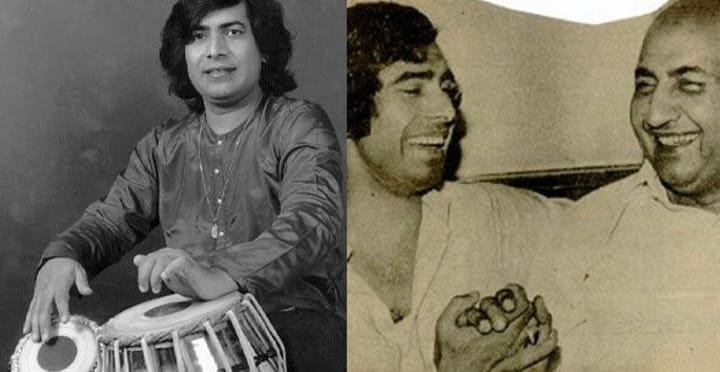
Under Mian Shaukat Hussain’s guidance, Tari spent several years sharpening his skills before accompanying legendary ghazal performers such as Ustad Mehdi Hassan. His sensitive and innovative approach transformed the experience of live ghazal concerts, giving the genre a renewed energy.
During this period, Tari Khan also began developing distinctive solo compositions that would later become his signature. Pieces like “The Train” and his well-known “International Kherwa” set him apart as an inventive musician with a global sensibility. His first major solo appearance came at age seventeen, on the death anniversary of Mian Qadir Baksh. Performing before the most respected tabla artists of the time, he played for two and a half uninterrupted hours. That single performance established him as one of the foremost tabla players of his generation—a reputation that has remained intact ever since.
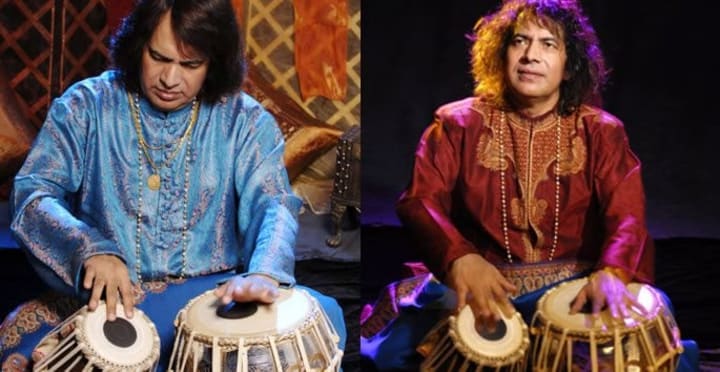
Over the decades, Ustad Tari Khan has performed across the world, earning devoted followers wherever he goes. He also spent sixteen years in California, where he founded an academy to train the next generation of tabla players. His ability to blend rhythmic elements from diverse regions—Punjab, the Middle East, Africa, Europe, America, and Australia—gave rise to his celebrated “International Kherwa,” a rhythmic fusion admired by musicians worldwide.
For Tari, music is a universal language that transcends boundaries. He has often emphasised that the work of an artist should rise above politics, religion, or division:
“An artist is not a politician. An artist simply creates, and that creativity is rooted in love, humanity and peace.”
What distinguishes his tabla playing is not only technical brilliance but also emotional depth. Using his hands to shape sur (tone) and ras (essence), he crafts each bol—the fundamental unit of tabla composition—with clarity and intention. His speed, accuracy, sense of timing, and control are all impeccable. Yet it is the flow of uninterrupted rhythm and the unexpected variations he introduces that transport listeners into an almost meditative experience.
A solo tabla recital, as he explains, demands far more than virtuosity. It requires rigorous discipline, a deep grasp of rhythmic structures, and the ability to build a performance gradually, guiding the audience through a journey of peshkars, qaidas, relas, parans, guts, tihais, and chakradars. Tari Khan does this with a combination of spontaneity and mastery that few can match.
His contributions to music have been recognised with numerous awards. He has been honoured as the “Tabla Prince” of both India and Pakistan and received Pakistan’s highest civil honour for the arts, the President’s Pride of Performance. His work as a composer includes contributions to films such as Mira Nair’s Mississippi Masala (1991), starring Denzel Washington. He has also collaborated with some of the greatest voices of South Asian music, including Ustad Mehdi Hassan, Ustad Nusrat Fateh Ali Khan, Parvez Mehdi, and Shafqat Ali Khan.
Ustad Tari Khan has graced many prestigious stages, from the National Festival in Harballah and the All Pakistan Music Conference, to the Kennedy Center in Washington DC, the Royal Albert Hall in London, and the Lincoln Center in New York. He has even performed for the First Lady of the United States.
Today, Ustad Tari Khan is celebrated worldwide as one of the most influential tabla maestros of his time. His music speaks across cultures, reminding audiences that rhythm is a universal language. Through his work, he continues to touch hearts and uphold the idea that true artistry emerges from sincerity, humanity, and deep devotion to one’s craft.
About the Creator
Aarohi Mehta
Aarohi is an independent journalist and art enthusiast who covers culture, creativity, and modern digital trends. She brings a fresh, expressive voice to her stories, blending clear reporting with a strong artistic perspective.
Keep reading
More stories from Aarohi Mehta and writers in Journal and other communities.
Ustad Md. Yunus Khan: The Malda Maestro Who Shaped a Musical Generation
More than two decades after his passing, the contributions of Hindustani classical vocalist Ustad Md. Yunus Khan continue to echo across Malda’s cultural landscape. This week, musicians, students and cultural organisations gathered to commemorate his legacy, reflecting on the enduring influence he had in nurturing classical music in the region and preserving the Kasur Patiala gharana tradition.
By Aarohi Mehta3 months ago in Journal
Becca
"Everything is so... flat." Denille said stupidly as she looked around her new neighborhood. She looked around at the muted desert where even the smallest sign of life seemed to have given up. The plant life was shrubs that were half cooked by the heat and where there should have been a lawn, a mess of white rocks laid glistening in the sun. Even the sky looked stretched thin, like the sun had ironed it smooth. She’d moved from Riverside, where at least there were hills, but here in Barstow, everything felt baked and brittle.
By Sara Wilson7 days ago in Fiction



Comments