
🎰 Japan’s Unique Gambling World: Pachinko, Anime Collaborations, and the Hidden Dangers
Discover the flashy side of Japan’s entertainment industry—and its darker risks

🎯 Introduction
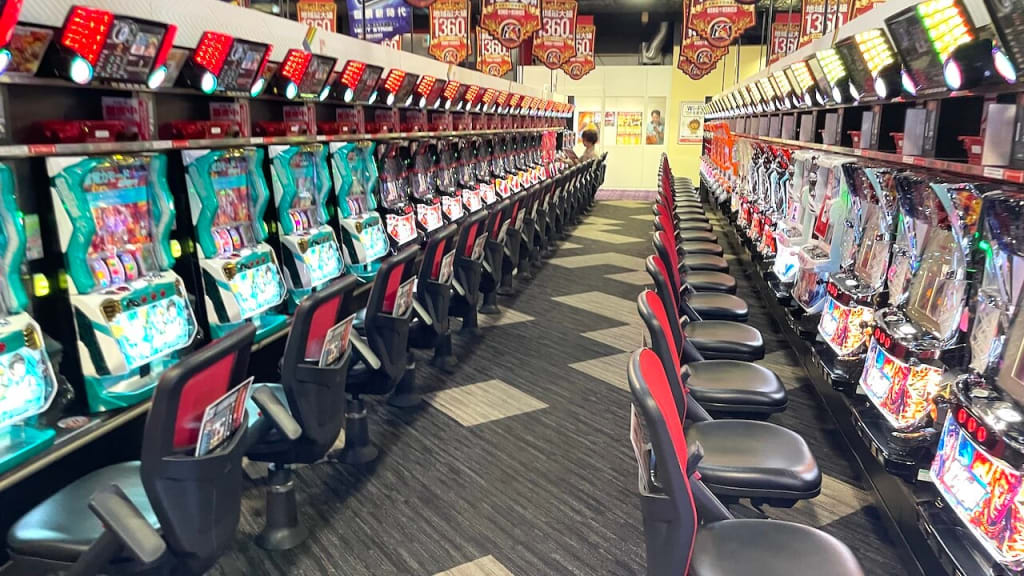
If you’ve ever visited Japan, chances are you’ve seen neon-lit parlors filled with noise, flashing lights, and intense concentration. These aren’t casinos or arcades—they’re pachinko parlors, one of Japan’s most unique and controversial forms of entertainment.
⸻
1. What Is Pachinko?
Pachinko is a vertical pinball-like machine where players shoot small silver balls into a maze of pins, hoping they’ll fall into the right slot to trigger a jackpot. While it may look like a game, pachinko operates in a legal gray zone that makes it function similarly to gambling.
Unlike casinos, where money is directly wagered, pachinko uses an indirect exchange system:
Balls → Prizes → Cash at a separate shop.
This legal workaround allows pachinko to avoid being classified as gambling under Japanese law.
⸻
2. Pachislot vs. Pachinko
While “pachinko” uses physical balls, “pachislot” machines are similar to Western-style slot machines but with a distinctly Japanese twist—anime-style graphics, dramatic storylines, and high-speed visuals.
• Pachinko relies more on chance and the path of bouncing balls.
• Pachislot combines flashy reels and interactive timing to create more “skill-based” engagement.
Both are loud, colorful, and incredibly immersive.
⸻
3. Anime and Gaming Collaborations
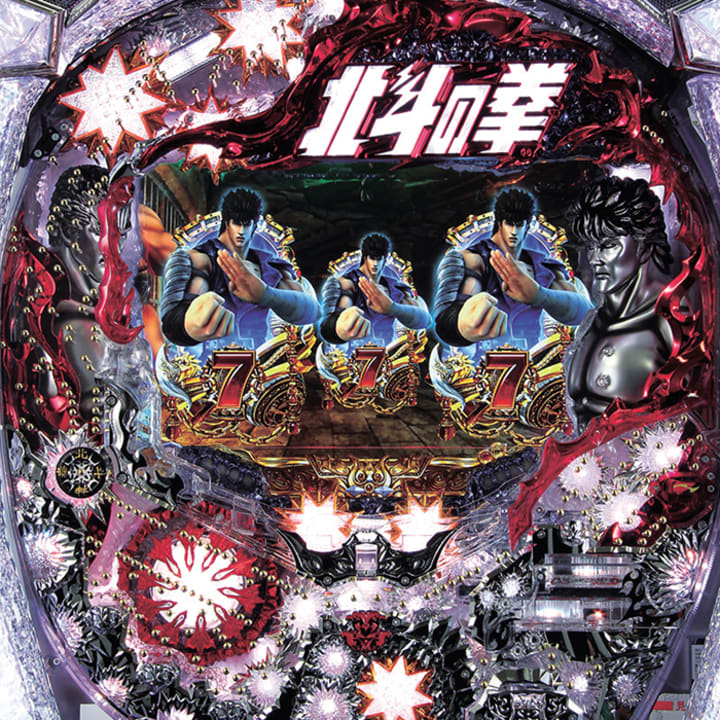
Here’s where things get especially interesting—pachinko and pachislot machines frequently collaborate with hit anime and game franchises.
You’ll find machines themed after:
• Evangelion
• Fist of the North Star
• Re:Zero - Starting Life in Another World
• Lupin III
• Monster Hunter
These machines often feature brand-new animation sequences, voiceovers by the original actors, and music from the series. For many fans, these machines offer a completely new side of their favorite titles—so much so that some play just to enjoy the anime content!
4. Why Is Pachinko So Popular?
• It’s easily accessible and located everywhere in Japan.
• It’s considered a “leisure game,” not gambling—legally.
• Flashy, anime-themed machines are highly appealing.
• It’s become part of local culture, particularly among middle-aged and elderly men.
Estimates say the pachinko industry once generated over 30 billion USD annually, making it one of the largest forms of entertainment in the country.
⸻
5. The Hidden Risk: Gambling Addiction
Behind the flashy screens and upbeat music lies a serious issue—addiction.
Many regular players visit pachinko parlors daily, spending large sums in hopes of winning. Some fall into financial trouble, even using savings or borrowing money to keep playing. The psychological mechanics—small wins, randomized rewards, immersive stories—make pachinko highly addictive.
Japanese authorities have introduced advertising restrictions and entry regulations in recent years to curb excessive play.
⸻
6. Can Tourists Try It?
Yes—but here are a few things to keep in mind:
• Noise levels are intense. Bring earplugs!
• Most machines and instructions are in Japanese.
• The prize-exchange system can be confusing.
• You likely won’t win, so treat it as a cultural experience.
Still, it’s a fascinating window into a world most tourists never encounter—especially if you’re an anime fan.
⸻
🌍 Why You Should Care
For fans of Japanese culture and anime, pachinko is more than a game. It’s a reflection of Japan’s unique intersection of entertainment, legality, and tradition.
Where else in the world can you see a full anime episode—made exclusively for a slot machine?
But understanding the underlying social impact, including addiction and legal ambiguity, adds a layer of depth to Japan’s glossy surface. If you truly want to understand modern Japan, this is a chapter you shouldn’t skip.
⸻
💡 Final Thoughts
Pachinko represents both the innovation and contradictions of modern Japan. It merges cutting-edge anime aesthetics with traditional gambling mechanics—all while operating in a legal gray zone.
Whether you’re an anime lover, cultural explorer, or curious tourist, Japan’s pachinko scene is worth learning about—not just for the lights and sounds, but for what it reveals about Japanese society beneath the surface.
About the Creator
Takashi Nagaya
I want everyone to know about Japanese culture, history, food, anime, manga, etc.
Keep reading
More stories from Takashi Nagaya and writers in Journal and other communities.
The Town That Banned Wi Fi. A 10 Year Case Study on Electrosensitivity.
A small European town took a radical step. Local leaders banned public Wi Fi. They removed routers from schools, libraries, and offices. Private hotspots faced strict limits. The decision followed complaints from residents who reported headaches, fatigue, and sleep problems. They linked these symptoms to wireless signals. Officials labeled the condition electrosensitivity.
By Wilson Igbasi5 days ago in Journal
Silver Screen Magic with Mae West
American actress and singer Mae West became a popular film actress during the Great Depression. She started entertaining in vaudeville, then performed on Broadway, and finally went to Hollywood. She signed up with Paramount Pictures and made her debut in the 1932 film “Night After Night.” She also starred in musicals, comedies, and crime dramas. The American Film Institute named her one of the best classic Hollywood actresses.
By Rasma Raisters5 days ago in Geeks


Comments
There are no comments for this story
Be the first to respond and start the conversation.