
Top 3 Japanese Festivals You Must Experience Once in Your Lifetime
“Where Lanterns Roar and Drums Shake the Night”

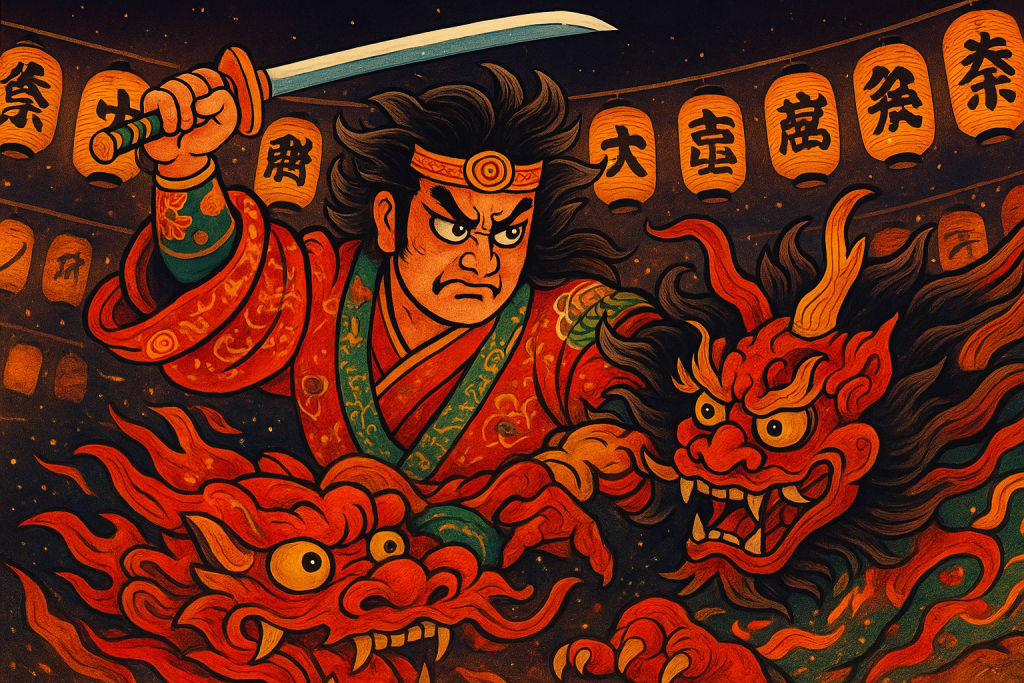
A Journey Through Japan’s Most Dazzling Celebrations of Culture and Spirit
Japan’s festivals—called “matsuri” (祭り)—are more than just events.
They are living stories, carrying centuries of tradition, spirituality, and community pride.
From the thunder of taiko drums to rivers of glowing lanterns, each festival reflects the soul of Japan in a unique way.
Here are three of the most iconic festivals you can’t miss—each a breathtaking window into the country’s heart.
⸻
🎆 1. Gion Matsuri — The Pride of Kyoto
When: The entire month of July
Where: Kyoto, Japan
The Gion Matsuri is not only Kyoto’s largest festival—it’s one of the oldest and most famous in all of Japan, dating back over 1,100 years. Originally a purification ritual to appease the gods during a plague, it has evolved into a grand celebration of Kyoto’s cultural heritage.
The highlight is the Yamaboko Junko, a magnificent parade featuring towering wooden floats (some over 25 meters tall) adorned with intricate tapestries and ornaments. These floats, known as “moving art museums,” are pulled through the narrow streets by chanting locals dressed in traditional yukata.
At night, the streets transform into a lively yoiyama—a pre-parade festival atmosphere filled with food stalls, sake, and music. The warm glow of lanterns and the hum of celebration make it one of Japan’s most photogenic events.
Don’t miss:
• The illuminated floats on July 16th’s night parade
• Traditional Kyoto street foods like yuba and takoyaki
• The sound of gionbayashi—festival music echoing through the alleys
⸻
🔥 2. Nebuta Matsuri — The Festival of Light and Fire
When: August 2–7
Where: Aomori City, Aomori Prefecture
Far in Japan’s northern Tohoku region, the Aomori Nebuta Matsuri lights up summer nights like a dream on fire.
Massive illuminated floats—some over 9 meters tall—depict legendary samurai, dragons, and gods. These glowing sculptures, made of paper and wire, are carried and danced through the streets by hundreds of energetic locals called haneto, who shout “Rassera! Rassera!” as drums and flutes thunder around them.
The energy is wild and contagious. It’s said that the Nebuta festival drives away evil spirits, burning away the darkness of the year with light and sound.
Each float takes months to design and construct, often based on ancient myths or kabuki stories. Watching them move under the night sky feels like witnessing living legends marching through time.
Don’t miss:
• Joining as a haneto dancer (visitors can rent costumes!)
• The final night’s fireworks show over Aomori Bay
• Tasting Aomori’s famous apple cider and hotate scallops at local stalls
⸻
🎐 3. Tanabata Festival — The Star-Crossed Celebration
When: Early August (varies by region)
Where: Sendai, Miyagi Prefecture
Based on a Chinese legend about two lovers separated by the Milky Way, the Tanabata Festival celebrates the one day each year they are allowed to meet—on the seventh night of the seventh month.
Sendai’s version is Japan’s most famous, turning the city into a sea of color.
Giant paper streamers, some over 10 meters long, hang from bamboo poles, swaying gently in the summer breeze. Each streamer represents a wish—love, success, or peace—and people write their hopes on small strips of paper called tanzaku.
During the festival, the streets are filled with performances, live music, and fireworks. It’s a celebration of hope and connection, reminding everyone that even across great distances, the heart can still reach.
Don’t miss:
• The tanzaku wish-making corners around Sendai Station
• The Tanabata Fireworks on the eve of the festival
• Colorful festival food like kakigori (shaved ice) and yakitori
⸻
🌸 The Meaning Behind the Matsuri
Each of these festivals—Gion, Nebuta, and Tanabata—reflects a core Japanese value:
community, respect for nature, and the beauty of impermanence (儚さ, hakanasa).
They remind us that celebration is not just joy—it’s gratitude.
Gratitude for the harvest, for the gods, and for the fleeting, radiant moments that make life worth living.
Whether you’re walking under a shower of lanterns in Kyoto, dancing to drums in Aomori, or whispering your wish to the stars in Sendai, you’ll feel it—
that deep, quiet heartbeat of Japan that connects past and present, gods and people, you and the world.
⸻
About the Creator
Takashi Nagaya
I want everyone to know about Japanese culture, history, food, anime, manga, etc.
Keep reading
More stories from Takashi Nagaya and writers in Journal and other communities.
Shohei Ohtani and the Quiet Strength of Japan
How Humility, Discipline, and Heart Made Him a Global Icon In today’s sports world, where athletes often become larger-than-life celebrities, Shohei Ohtani stands out not only for his superhuman talent but for his unmistakable humanity.
By Takashi Nagaya3 months ago in Journal
The Quiet Link Between Evening Light and Restless Sleep
For a long time, I believed my restless sleep was caused by what happened in my head. Too much thinking. Too much stress. Too many unfinished thoughts that followed me into the night. I tried calming routines, earlier bedtimes, and stricter boundaries around work. Some nights improved. Many did not.
By illumipure4 days ago in Journal




Comments
There are no comments for this story
Be the first to respond and start the conversation.