social media
Social Media for modern lovers in the digital age.
Just start by forgiving and forgetting
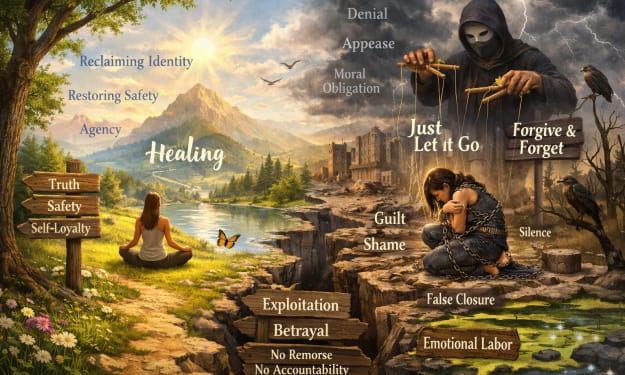
How many times have you heard the words forgive and forget? As far back as I can remember, my mother (God rest her soul) always talked about forgiveness that it is important because it is what our Lord and savior Jesus Christ did for those who betrayed him to be honest I have a real difficulty trying to forgive I mean it's so easy you let go of the hate you let go of the hurt that has been inside your heart your head your soul and you're able to move on I've seen people do it I've heard people talk about how they can just easily forgive those who have betrayed them I have a real difficulty trying to forgive especially those who stabbed me in the back betrayed me and figuratively speaking just left out to die. I have so many former friends that I hold so much hatred towards them, and I don't wanna hold it anymore. I try to let it go, I try to move on, but out of nowhere those memories just come back, and they ignite that fire that I thought I put out.
By stephanie borges18 days ago in Humans
The One Habit That Quietly Changed My Entire Life
There are many habits people talk about waking up at 5 AM, journaling, meditation, exercising daily, reading books, cold showers, and more. I tried many of them. Some worked, some didn’t. But there is one habit that quietly changed my entire life, and surprisingly, it is not something dramatic or trendy.
By Sathish Kumar 18 days ago in Humans
Gen Z Is No Longer Getting their Driver’s License
For decades, learning how to drive was a rite of passage. Turning 16 meant freedom, independence, and your first taste of adulthood behind the wheel. But something has shifted. A growing number of young people — especially Gen Z — are delaying getting their driver’s licenses or skipping it entirely. Instead, they’re tapping a screen, booking an Uber, and letting someone else handle the road.
By AnthonyBTV18 days ago in Humans
The Power of Indifference
It is fascinating how some people dedicate so much energy to watching, commenting, and reacting to the lives of others. They laugh at small missteps, analyze routine actions, and find entertainment in the discomfort or mistakes of others. In many communities, workplaces, and social circles, this behavior can feel normal or even encouraged. It becomes a subtle culture of observation and commentary that most people do not even realize they are participating.
By Eunice Kamau19 days ago in Humans
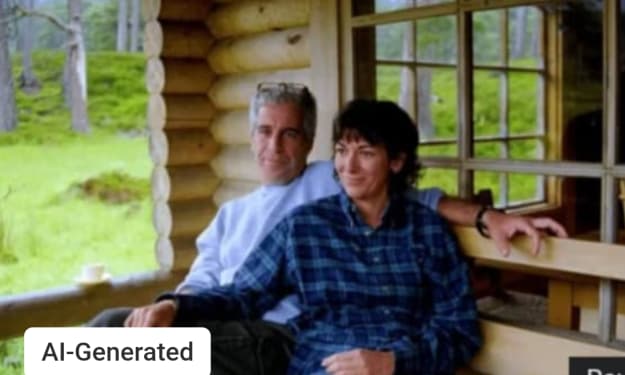
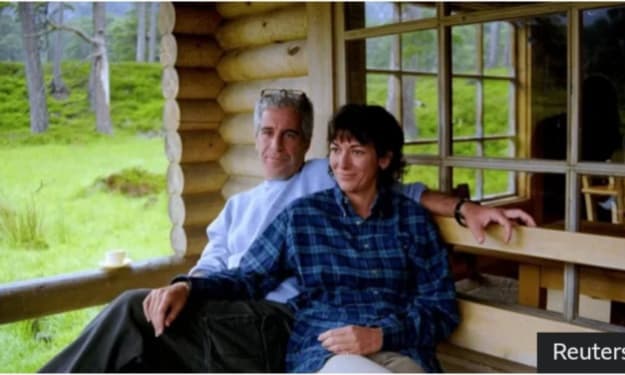
Maxwell Won’t Answer Questions From Congress, Lawyer Says. AI-Generated.
Ghislaine Maxwell’s refusal to answer questions from Congress, as confirmed by her lawyer, has reignited public debate over accountability in one of the most disturbing abuse scandals of modern times. The decision has drawn sharp reactions from lawmakers, survivors’ advocates, and the public, many of whom see her silence as another barrier to uncovering the full truth behind Jeffrey Epstein’s criminal network.
By Ayesha Lashari19 days ago in Humans
Keon and Kavon Herbert. AI-Generated.
Keon Gerard Herbert and Kavon Sherard Herbert are twin brothers from Hampton, Virginia who have gradually built an online presence through humor, fashion, and everyday moments shared on social media. Over time, their content has attracted a steady audience across platforms such as Instagram, Facebook, and TikTok, where followers engage with their photos, short videos, and personality-driven posts.
By Kavon Herbert20 days ago in Humans
“Why Being ‘Strong’ Is Destroying a Generation”. AI-Generated.
I learned how to be strong before I learned how to ask for help. And by the time I realized those two things weren’t the same, I was already exhausted. We praise strength like it’s a cure-all. Be strong. Stay strong. You’re so strong—I don’t know how you do it. We say it at funerals. We say it after breakups. We say it to children who are learning too early that crying makes adults uncomfortable. Strength has become our favorite compliment and our most dangerous lie. Because no one ever explains what it costs. I grew up believing that being strong meant swallowing pain quietly. It meant not burdening others. It meant smiling through the worst moments because someone else always had it worse. Strength was silence. Strength was endurance. Strength was survival without witnesses. So I perfected it. When my world cracked, I didn’t scream. I didn’t collapse. I didn’t reach out. I showed up to work on time. I answered texts with “I’m good.” I posted photos where I looked fine. I carried my grief like a private weight strapped to my chest, invisible and crushing. People admired me for it. “You’re so strong,” they said, as if that settled everything. But strength, the way we define it, doesn’t heal you. It just teaches you how to bleed without making a mess. Somewhere along the line, we turned resilience into repression. We taught an entire generation that feeling deeply is a flaw and needing help is a failure. We turned coping into a performance and pain into something you manage quietly so it doesn’t inconvenience anyone else. We don’t tell people to rest. We tell them to push through. We don’t ask how they’re really doing. We accept “fine” and move on. We don’t sit with discomfort. We label it weakness and scroll past it. And the result? Burnout that looks like ambition. Anxiety that masquerades as productivity. Depression hiding behind jokes, overworking, and “I’m just tired.” We’re raising people who don’t know how to fall apart safely. People who can survive almost anything—except themselves. I’ve watched friends disappear slowly, not in dramatic ways, but in quiet ones. They became less expressive. Less present. Less alive. They mastered the art of functioning while numb. They wore strength like armor until they forgot how to take it off. And when they finally cracked, everyone was shocked. “But they were so strong.” That’s the problem. We confuse strength with the absence of visible pain. We trust people who don’t complain. We reward those who endure silently. We miss the warning signs because we’ve trained ourselves to admire them. Strength has become a trap. Especially for men, who are still taught that vulnerability is a liability. Especially for women, who are expected to carry emotional labor without collapsing. Especially for young people, who are navigating a world that demands resilience without offering support. We tell them to toughen up while the ground keeps shifting beneath their feet. Economic pressure. Social comparison. Constant visibility. Endless crises. The message is always the same: adapt, endure, keep going. No wonder so many feel like they’re failing at life while doing everything right. I used to think strength meant never breaking. Now I think it means knowing when you can’t hold yourself together alone. Real strength looks like admitting you’re overwhelmed before you’re destroyed by it. It looks like asking for help without apologizing. It looks like resting without earning it. It looks like saying, “I’m not okay,” and letting that be enough. But we don’t model that. We glorify hustle and stoicism. We romanticize struggle. We clap for survival stories and ignore the cost paid in private. We teach people how to push through pain—but not how to process it. So it stays. It settles in the body. It shows up as chronic stress, emotional distance, insomnia, anger that feels misplaced, sadness without a clear cause. It leaks into relationships. It shapes how we love, how we parent, how we treat ourselves. And then we wonder why so many feel empty, disconnected, and exhausted. This generation isn’t weak. It’s overburdened. It’s tired of carrying everything alone. Tired of being praised for strength when what it really needs is permission to be human. I don’t want to be strong anymore in the way I was taught. I don’t want to be admired for how much I can endure. I want to be supported for how honestly I can live. I want a world where we stop telling people to be strong and start asking what they need. Where we normalize softness alongside resilience. Where breaking isn’t a failure—it’s a signal. Where healing isn’t something you do quietly in the background while life keeps demanding more. Strength didn’t save me. Being seen did. And maybe that’s what this generation is really fighting for—not the right to be unbreakable, but the right to fall apart and be held instead of judged. If we keep teaching people to survive without support, we shouldn’t be surprised when survival feels like all they’re capable of. But if we redefine strength—if we make room for vulnerability, rest, and connection—we might finally raise a generation that doesn’t just endure life… …but actually lives it.
By Faizan Malik20 days ago in Humans
Celebrity Deaths of 2026 And Why the World Is Paying Attention, Remembering, and Reflecting
Some news stops you mid-scroll. Not because it’s shocking—but because it feels personal. In 2026, an ongoing list of celebrity deaths has continued to trend across Google searches, news platforms, and social media timelines worldwide. Each announcement ripples through the internet like a sudden hush in a crowded room. Fans pause. Tributes appear. Old interviews resurface. Songs, films, and performances are replayed as if memory itself is pressing rewind.
By Omasanjuwa Ogharandukun21 days ago in Humans