science
The Science Behind Relationships; Humans Media explores the basis of our attraction, contempt, why we do what we do and to whom we do it.
Cancer deaths continue to decline, according to the nation's annual report.
According to the 2024 Annual Report to the Nation on the Status of Cancer, overall cancer death rates decreased steadily for both men and women from 2001 to 2022, even during the first two years of the COVID-19 pandemic. From 2001 to 2013, men's overall cancer incidence, measured as the rate of new cancer diagnoses, decreased, then stabilized until 2021. Among women, overall cancer incidence increased slightly every year from 2003 through 2021, with the exception of 2020. Cancer, on April 21, 2025, published the study. Progress in reducing cancer deaths overall is largely the result of declines in both incidence and death rates for lung cancer and several other smoking-related cancers, the researchers noted. Over the past two decades, for instance, both male and female lung cancer new diagnoses and deaths have decreased. In the meantime, the prevalence of cancers linked to obesity has been rising. Cancers of the female uterus, pancreas, kidney, and liver are among these. During the study period, new breast cancer diagnoses gradually increased, but the overall death rate from breast cancer decreased, according to the report. Over the course of the study, cancer death rates for children decreased steadily, as did rates for adolescents and young adults, until recently, when the decline slowed and stabilized. From 2018 to 2022, cancer deaths decreased for each major racial and ethnic population group. The incidence of cancer among men in each major racial and ethnic population group remained stable from 2017 to 2021 (excluding 2020), but it increased among women in each major racial and ethnic population group. During the same time period, among men, incidence was highest in non-Hispanic Black men, whereas among women, incidence was highest in American Indian and Alaska Native women.
By sadia Ripa10 months ago in Humans
Rajkot’s Leading Non-Ferrous Metal Die Casting Machine Manufacturers
Rajkot is prominent for its engineering prowess and manufacturing capabilities. Rajkot is one of the leading manufacturers of non-ferrous metal die-casting machines in India. Rajkot has also become a center for trade due to the ample supply of advanced die-casting equipment for the automobile, aerospace, electrical, and consumer goods industries.
By Radheindustries seo10 months ago in Humans
Shock and Anger After Gunmen Kill More Than 20 Tourists in Kashmir
The scenic valleys of Kashmir, frequently referred to as 'Paradise on Earth,' were marred by violence and sorrow when gunmen executed a vicious attack on tourists, resulting in the deaths of over 20 individuals in one of the most lethal assaults in recent history. This tragic event has reverberated throughout India and beyond, igniting outrage, condemnation, and heightened worries regarding safety in this troubled area.
By Tech Alamin10 months ago in Humans
10 Habits of People Who Always Seem to Have It Together
We all know that person. The one who somehow manages to stay on top of their work, make time for self-care, remember everyone’s birthday, and still show up looking like they got eight hours of sleep and drank enough water.
By Jeno Treshan 10 months ago in Humans
Cosmic Bloom: The Awakening Within
Mis-splicing of ASD-risk genes in DM1 prefrontal cortex Executive functions are coordinated by the prefrontal cortex, which undergoes transcriptome-wide changes in individuals with ASD25,34. We looked at RNA sequencing (RNA-seq) data from Brodmann area 10 (BA10) of the human DM1 brain to see if the DMPK-CTGexp mutation causes ASD-risk gene RNA mis-splicing in the prefrontal cortex. To reduce age and sex biases, unaffected control samples were matched (Fig. 1a)35,36,37. We calculated the change in "percent spliced in" (PSI) for five AS event types for differential AS analysis (Fig. 1b). 1 percent (1,844) of the 184,000 AS events and 16,000 genes in DM1 met our mis-splicing criteria (PSI > 0.1, FDR 0.05) out of the total pool of 7 percent (1,261) of mis-spliced genes (Extended Data Fig. 1a). All mis-spliced events, including retained intron (RI) events, had a strong positive correlation between CTGexp repeat length and mean PSI values (Fig. 1c and Extended Data Fig. 1b). Consistent with previous research, we observed a negative correlation between the level of intron inclusion and the steady-state level of the host transcript (Extended Data Fig. 1c)38,39, despite the fact that not all RIs introduce a premature termination codon that causes nonsense-mediated decay. We retrieved 38 gene sets and available databases to assess the relevance of DM1 mis-splicing to ASD (Supplementary Table 1), and found that some mis-spliced RI events represented additional RNA species, such as an elevated circular intronic RNA level in DM1 (Extended Data Fig. 1d). After applying more stringent mis-splicing criteria (|PSI| > 0.2), we discovered a significant enrichment of mis-spliced events in 61% of the gene sets (Extended Data Fig. 1e), indicating a consistent trend (Pearson's r = 0.79, P 0.0001). Negative control gene sets (such as genes related to the immune system or metabolism) did not show any enrichment. Notably, the Simons Foundation Autism Research Initiative (SFARI) database and two large Autism Speaks MSSNG-based whole-genome sequencing studies, MSSNG-2017 (ref. 40) and MSSNG-2022 (ref. 40), both showed significant enrichment of ASD-risk genes. 41) (Fig. 1d and Fig. 1e of the Extended Data). SCN2A, ANK2, and SHANK2 were misspliced in DM1 out of 36 overlapping high-confidence ASD-risk genes in both the MSSNG-2017 and MSSNG-2022 studies (Fig. 1e, f, and Extended Data Fig. 1f). In addition, we discovered missplicing in the DMD gene, which is known to be the cause of Duchenne muscular dystrophy and ASD42,43. In addition, we found a strong positive correlation between misspliced events in ASD-risk genes and CTGexp length (Fig. 1g and Extended Data Fig. 1g). These findings, taken as a whole, suggested that the DMPK-CTGexp in the DM1 prefrontal cortex alters the splicing of genes associated with ASD risk.
By Mahafuj Alam10 months ago in Humans
MBNL Sequestration Links Myotonic Dystrophy to Autism via RNA Mis-Splicing
Abstract Autism spectrum disorder has been linked to enrichment of gene-specific tandem repeat expansions across the genome. The CTG tandem repeat expansion in the DMPK gene's 3′ untranslated region, which is known to cause myotonic muscular dystrophy type 1, is one such mutation. Myotonic dystrophy and autism have a clear clinical connection, but the molecular basis for this connection is unknown. During brain development, the RNA splicing patterns of autism-risk genes, particularly a class of autism-relevant microexons, are altered when mutant DMPK RNAs with expanded CUG repeats sequester MBNL splicing factors. We show that both DMPK-CTG expansion and Mbnl null mouse models replicate autism-relevant mis-splicing profiles, as well as altered responses to novelty and social behavioral deficits. Our hypothesis that developmental mis-splicing of autism-risk genes causes myotonic dystrophy-associated autism is supported by these findings.
By Mahafuj Alam10 months ago in Humans
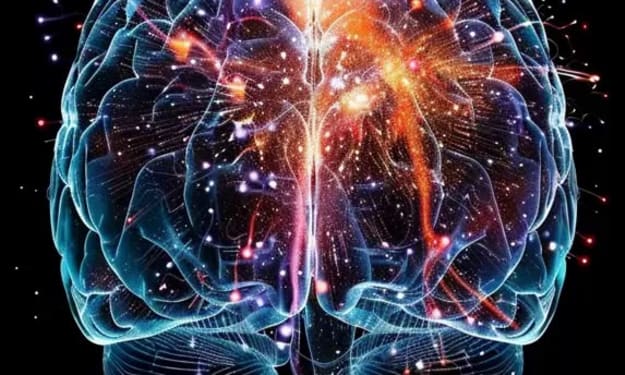
The Human Brain Is Rewiring Itself Faster Than Ever
In recent years, scientists have begun to uncover something astonishing: the human brain is changing—fast. Thanks to rapid developments in technology, information overload, and the demands of modern life, researchers are discovering that our brains are not just adapting, but actually rewiring themselves in ways we’ve never seen before.
By Saad Ullah Khan10 months ago in Humans
The Role of Technology in Cultural Evolution . Content Warning.
Thoughout history, technology has dramatically shaped human culture in various ways. From the earliest tools we relied on to the advanced systems we have today, technology has profoundly influenced how we communicate, express ourselves, and connect with each other. Let’s take a closer look at how technology has affected different aspects of human culture.
By Shariful Haque 10 months ago in Humans