
Your Brain Doesn’t Learn the Way We Thought, According to New Neuroscience Breakthrough
"Exploring the Power and Potential of the Human Brain"
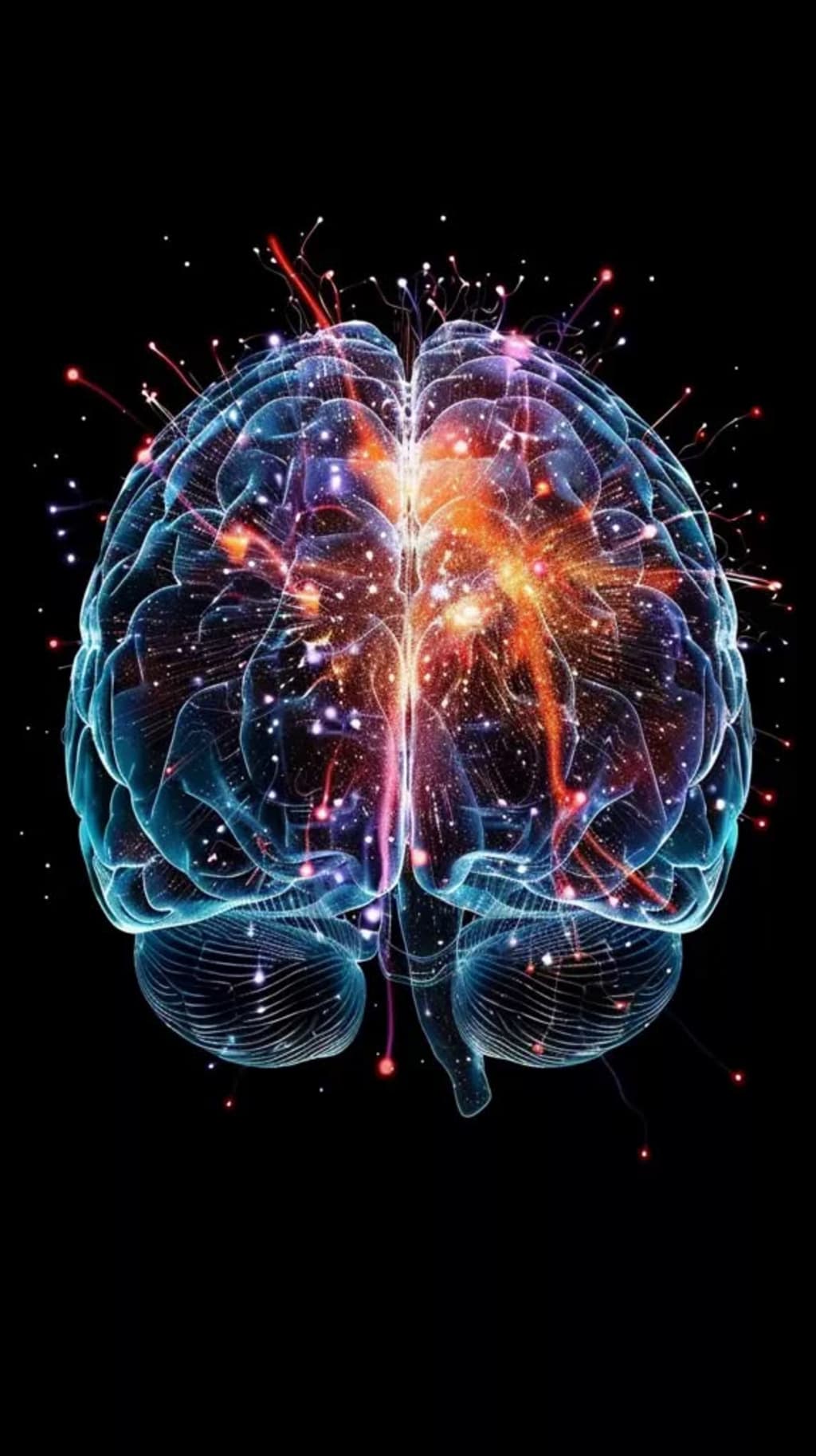
A recent breakthrough in neuroscience reveals that your brain does not learn in the same way we thought. Scientists and educators have relied on a few presumptions about how the brain learns for decades. Repetition, reinforcement, and the strengthening of neural pathways with use have dominated our understanding of learning and memory. However, a novel finding in neuroscience is challenging these assumptions and demonstrating that the brain learns in a manner that is significantly more dynamic and unpredictable than was previously thought. Pathways and Plasticity: The Traditional View. The concept of "synaptic plasticity," or the process by which connections between neurons (synapses) become stronger or weaker depending on how they are used, has been embraced by neuroscience for a long time. The expression "neurons that fire together wire together" is a well-known way to simplify this idea, which has been the foundation of everything from brain training apps to school curriculums. Repetition and feedback were thought to strengthen neural connections and gradually shape learning. The New Miracle: Learning by Surprise and Prediction. However, recent research suggests that the brain actively anticipates and adjusts in response to surprise rather than merely strengthening established neural pathways. The brain learns by constantly making predictions about incoming information and updating those predictions when they are incorrect, according to a Cambridge and MIT research team. Predictive processing is the name of this new model, which challenges the conventional concept of passive learning. The brain is more focused on errors, specifically the difference between what it expects to happen and what actually happens, rather than just strengthening connections through repetition. Learning is sparked by these "prediction errors." What This Means: Learning Is Driven by Error. The repercussions are significant. Exposure to novelty, challenge, and even mistakes could be more beneficial than rote repetition if learning is primarily driven by prediction errors. This could change the way we think about education, training, and even brain injury rehabilitation. AI modeling and cutting-edge imaging of the brain were used by researchers to study how neurons respond to unexpected information. The brain appears to selectively respond to moments of surprise rather than uniformly activating when learning something new, updating internal models to reduce errors in future predictions. Learning is iterative rather than linear. Additionally, the predictive model more closely resembles the iterative, non-linear nature of real-world learning. Think about how children learn to speak—not by memorizing words, but by hearing language, guessing, adjusting, and repeating. According to this finding, learning environments ought to be constructed in a way that not only reinforces but also challenges expectations. In a nutshell, the best way for us to learn is to be right when we are wrong. The Future of Brain Training and Education. It's possible that educational approaches will soon embrace surprise and productive failure. It's possible that environments that foster curiosity and experimentation, game-based learning, and adaptive testing are more in line with how our brains naturally function. In addition, this human insight may inspire more advanced learning algorithms, such as those that learn from deviation and expectation in addition to data. Last Thoughts. This breakthrough forces us to reevaluate not only our teaching methods but also our way of life and development. If the brain thrives on the unexpected, then maybe accepting the unknown, the challenging, and the unexpected is not a weakness; rather, it is how our brains are wired to learn. One of the researchers put it this way: "Our brains aren't just reacting to the world; they're also predicting it." Additionally, we learn the most when we make mistakes.
About the Creator
Keep reading
More stories from writers in Humans and other communities.
Autonomy Is The Real Privilege
Good morning, freedom-seekers! Today we’re gonna be looking at autonomy. A strange word, I know; one many would probably look at blankly and run away from on sight. We’re gonna figure out what it actually means, consider how it’s achieved, and decipher just how deeply most of us are tangled up in dependence without realising it.
By That ‘Freedom’ Guy6 days ago in Humans
The Path to Salvation
The late autumn evening air filled the monk's lungs, but it wasn't the season that chilled his bones. The heavy-handed presence of evil he had sensed upon entering the woods surrounding this mountain village had not bothered to conceal itself from him.
By Made in DNA4 days ago in Fiction




Comments
There are no comments for this story
Be the first to respond and start the conversation.