breakups
When it comes to breakups, pain is inevitable, but Humans thinks that suffering is optional.
The Woman Who Learned Silence After Marriage
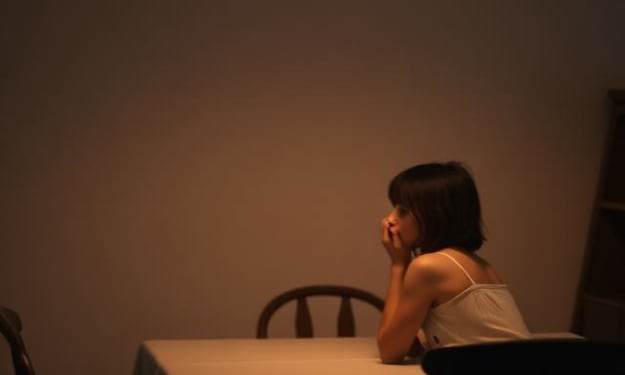
The Woman Who Learned Silence After Marriage She used to believe marriage would give her a voice. Not louder—just clearer. A place where questions would land somewhere, where sentences could finish without apology. She imagined conversation as a table set for two, words placed carefully between them, shared and understood. What she learned instead was that silence doesn’t begin at marriage. It only becomes visible there. On their first morning as husband and wife, she asked him how he took his tea. It was an ordinary question, the kind that carries no weight until you realize it is never asked again. He told her, distracted, already scrolling through his phone. She repeated it the next morning, then the next week. Eventually, she stopped asking. She remembered. Silence, she learned, often starts as efficiency. At dinner, she spoke in halves. She had always done that—learned it early, learned it well. Sentences shaped carefully, edges rounded, nothing sharp enough to disturb the room. When she paused, waiting for him to ask her to continue, he didn’t. He filled the space with weather updates, work complaints, observations about the food. Her unfinished thoughts learned to fold themselves away neatly, like unused napkins. She noticed how often she nodded. It became a reflex, a punctuation mark. Nods replaced opinions, smiles replaced disagreement. She wasn’t lying; she was editing. There is a difference, though it takes years to admit it. People assume silence is learned through suppression, through cruelty or fear. That was never her story. He wasn’t unkind. He didn’t tell her to be quiet. That would have been easier to name. Instead, he listened just enough to appear attentive, just enough to avoid accusation. Her words didn’t bounce back to her altered or enriched; they simply vanished, absorbed without trace. She remembered being a child at family gatherings, sitting between louder cousins, learning early that speaking required competition. She remembered teachers who praised her for being “easy,” “well-behaved,” “no trouble at all.” Silence, she realized, had always been mistaken for grace. Marriage didn’t invent it. Marriage rewarded it. Sometimes, late at night, she rehearsed conversations in her head. Not arguments—she had no appetite for drama—but clarifications. Explanations. Simple statements like I don’t like that or I need more than this. In her mind, the words were clean and calm. Out loud, they never arrived. They dissolved somewhere between intention and breath. He often asked what was wrong when she grew quiet, unaware of the irony. She would say “nothing,” not as a lie but as a translation. There was no vocabulary for what she felt that wouldn’t sound excessive or inconvenient. Silence became the most accurate language she had. At social gatherings, he would tell stories about her—harmless ones, affectionate even. She laughed at the right moments, nodding along as if hearing herself for the first time. The version of her he spoke about was agreeable, patient, uncomplicated. She wondered when that version had been signed into existence, and why no one asked if she consented. Once, during an argument that never fully formed, she interrupted him. Just once. The room fell into a strange pause, as if something unfamiliar had entered it. He looked at her, surprised, not angry. She apologized immediately. The interruption lingered longer than the apology ever did. She learned to measure her thoughts by their usefulness. Would saying this change anything? Would it improve the mood? Would it be worth the effort of explanation? Most thoughts failed the test. Silence was economical. Yet silence has weight. It accumulates. It presses inward. There were moments—small, sharp ones—when she almost spoke. When a casual remark cut closer than intended. When a decision was made without her. When her name was used to agree to something she had never been consulted about. Each time, she felt the words rise, heavy and urgent. Each time, they sank back down, choosing peace over presence. She wondered, sometimes, who would notice if she changed. Not drastically—just enough to matter. If she spoke without softening, disagreed without smiling, finished her sentences even when no one asked her to. The thought frightened her more than continued silence ever had. One afternoon, alone in the house, she spoke out loud just to hear herself. The sound startled her. Her voice was steady, unfamiliar, like a room she hadn’t entered in years. She practiced saying her own name, then a sentence, then another. Nothing revolutionary. Just complete thoughts. That night, at dinner, she began a sentence and finished it. He looked up, mildly surprised, then continued eating. No reaction. No resistance. No revelation. She realized then that silence had never been demanded of her. It had been assumed. Maintained. Upheld by habit and her own careful compliance. Marriage didn’t make her quiet. It only gave her silence a place to live. And once named, it could no longer pretend to be invisible.
By Abdul Muhammad 17 days ago in Humans
The Foundation for Order in a Collapsing Culture
This is a systems-level framework, not a polemic or a list of opinions. It lays out a sequence of foundational truths about how societies maintain order, how that order erodes, and why collapse follows when truth, accountability, and consequence are selectively suspended. Each point builds on the last, tracing a logical path from epistemology and moral agency to politics, institutions, and cultural outcomes.
By Peter Thwing - Host of the FST Podcast18 days ago in Humans
Contamination Of A Narcissist In A Community during holidays
December 19, 2025, I got woken up around 10:15 pm in my city. 100 cops' cars were racing across the city. I went to look out my window while my daughter slept during her college school break visit with me.
By Mariann Carroll19 days ago in Humans
Iran And Israel War (When the Middle East Shook Again)
When the Middle East Shook Again On the night of 29 December, the world once again held its breath. News screens glowed in dark rooms, radios whispered urgent updates, and phones vibrated with breaking alerts. The words were heavy and frightening: Iran and Israel—conflict begins again.
By Wings of Time 20 days ago in Humans
The Difference between Solitude and Loneliness.
Solitude and loneliness are like the same knife resting in the same drawer same sharp edge, same shine, and same ability to cut. The difference is never in the metal. It’s in the hand that holds it and in the reason it’s being used. In the right hands, solitude becomes a precise tool it trims the noise, shapes the mind, and gives the soul room to breathe. In the wrong conditions, loneliness becomes a quiet wound it bleeds meaning out of a person while they’re still standing, still talking, still functioning, still smiling for the world.
By Sayed Zewayed20 days ago in Humans
Tips For Handling Relationship Stress Without Causing Tension
Stress is a part and parcel of life and its consequences may spill over to the romantic lives. Household life, work, money or problems can become a stressor between the partners. Unattended stress may result in miscommunication, irritability and emotional detachment. The analysis of stress effects on relationships is the initial step to managing stress effectively. The awareness that stress will impact both partners will enable couples to treat each other with compassion and not blame to build a ground of effective coping to endure tough times.
By Hayley Kiyoko23 days ago in Humans
Ways To Support Each Other During Difficult Emotional Moments
A strong and good relationship is based on emotional support. Partners turn to each other when they are faced with hard emotional situations to be comforted, reassured and understood. Such experiences may break or heal the emotional connection that is binding the relationship. Couples learn to manage emotional issues in a patient and emphatic manner, which develops a level of trust between the couple. The realization of the significance of emotional support makes couples solve difficult moments not as a threat but as a chance to improve their relationship and develop together.
By Hayley Kiyoko23 days ago in Humans
When Love Turns to Labor
Life feels different now without him. Quiet. Almost like the nights we would spend whispering as the starlight spilled in through the fifth-story window of his apartment. Only this silence is hollow. It carves a piece of me out like the first fall pumpkin. Gutted. Spilled out for the world to see. Its seeds represent the very act of what it means to be a lover girl. Often our words are eaten and forgotten, too.
By The Darkest Sunrise24 days ago in Humans