Abdul Muhammad
Stories (44)
Filter by community
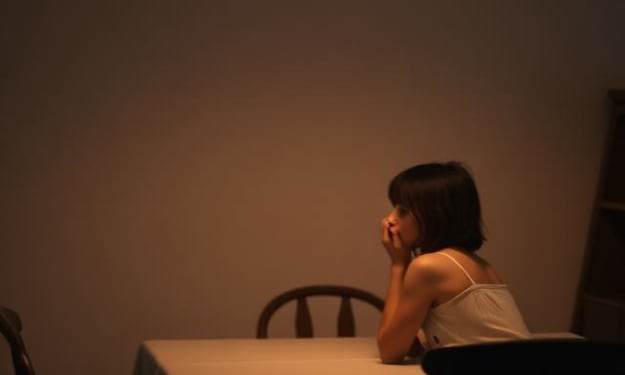
The Woman Who Learned Silence After Marriage
The Woman Who Learned Silence After Marriage She used to believe marriage would give her a voice. Not louder—just clearer. A place where questions would land somewhere, where sentences could finish without apology. She imagined conversation as a table set for two, words placed carefully between them, shared and understood. What she learned instead was that silence doesn’t begin at marriage. It only becomes visible there. On their first morning as husband and wife, she asked him how he took his tea. It was an ordinary question, the kind that carries no weight until you realize it is never asked again. He told her, distracted, already scrolling through his phone. She repeated it the next morning, then the next week. Eventually, she stopped asking. She remembered. Silence, she learned, often starts as efficiency. At dinner, she spoke in halves. She had always done that—learned it early, learned it well. Sentences shaped carefully, edges rounded, nothing sharp enough to disturb the room. When she paused, waiting for him to ask her to continue, he didn’t. He filled the space with weather updates, work complaints, observations about the food. Her unfinished thoughts learned to fold themselves away neatly, like unused napkins. She noticed how often she nodded. It became a reflex, a punctuation mark. Nods replaced opinions, smiles replaced disagreement. She wasn’t lying; she was editing. There is a difference, though it takes years to admit it. People assume silence is learned through suppression, through cruelty or fear. That was never her story. He wasn’t unkind. He didn’t tell her to be quiet. That would have been easier to name. Instead, he listened just enough to appear attentive, just enough to avoid accusation. Her words didn’t bounce back to her altered or enriched; they simply vanished, absorbed without trace. She remembered being a child at family gatherings, sitting between louder cousins, learning early that speaking required competition. She remembered teachers who praised her for being “easy,” “well-behaved,” “no trouble at all.” Silence, she realized, had always been mistaken for grace. Marriage didn’t invent it. Marriage rewarded it. Sometimes, late at night, she rehearsed conversations in her head. Not arguments—she had no appetite for drama—but clarifications. Explanations. Simple statements like I don’t like that or I need more than this. In her mind, the words were clean and calm. Out loud, they never arrived. They dissolved somewhere between intention and breath. He often asked what was wrong when she grew quiet, unaware of the irony. She would say “nothing,” not as a lie but as a translation. There was no vocabulary for what she felt that wouldn’t sound excessive or inconvenient. Silence became the most accurate language she had. At social gatherings, he would tell stories about her—harmless ones, affectionate even. She laughed at the right moments, nodding along as if hearing herself for the first time. The version of her he spoke about was agreeable, patient, uncomplicated. She wondered when that version had been signed into existence, and why no one asked if she consented. Once, during an argument that never fully formed, she interrupted him. Just once. The room fell into a strange pause, as if something unfamiliar had entered it. He looked at her, surprised, not angry. She apologized immediately. The interruption lingered longer than the apology ever did. She learned to measure her thoughts by their usefulness. Would saying this change anything? Would it improve the mood? Would it be worth the effort of explanation? Most thoughts failed the test. Silence was economical. Yet silence has weight. It accumulates. It presses inward. There were moments—small, sharp ones—when she almost spoke. When a casual remark cut closer than intended. When a decision was made without her. When her name was used to agree to something she had never been consulted about. Each time, she felt the words rise, heavy and urgent. Each time, they sank back down, choosing peace over presence. She wondered, sometimes, who would notice if she changed. Not drastically—just enough to matter. If she spoke without softening, disagreed without smiling, finished her sentences even when no one asked her to. The thought frightened her more than continued silence ever had. One afternoon, alone in the house, she spoke out loud just to hear herself. The sound startled her. Her voice was steady, unfamiliar, like a room she hadn’t entered in years. She practiced saying her own name, then a sentence, then another. Nothing revolutionary. Just complete thoughts. That night, at dinner, she began a sentence and finished it. He looked up, mildly surprised, then continued eating. No reaction. No resistance. No revelation. She realized then that silence had never been demanded of her. It had been assumed. Maintained. Upheld by habit and her own careful compliance. Marriage didn’t make her quiet. It only gave her silence a place to live. And once named, it could no longer pretend to be invisible.
By Abdul Muhammad 2 months ago in Humans
The Love We Forgot to Water
The Love We Forgot to Water The peace lily on our kitchen windowsill used to bloom twice a year. When we first bought it, I remember how proud I was to keep something alive together — a symbol of our new marriage. You’d joke that if the plant thrived, we’d thrive too. For the first couple of years, it did. The leaves were glossy, the blooms white as promise.
By Abdul Muhammad 4 months ago in Humans
The Empty Side of the Bed
The Empty Side of the Bed It’s been one hundred and thirty-seven nights since you left, Amir. I know because I’ve written to you every single one. I still can’t stop counting—days, nights, breaths—everything feels like a measurement of the time I’ve spent learning to exist without you.
By Abdul Muhammad 4 months ago in Psyche
The Silence Between Our Words
The Silence Between Our Words I used to believe that silence meant peace. That if the shouting stopped, we had finally found a way to live gently with one another. But I was wrong. The quiet that fills our home now doesn’t soothe—it suffocates.
By Abdul Muhammad 4 months ago in Marriage
The Girl Who Painted the Silence
The Girl Who Painted the Silence The first time Amina held a paintbrush, the world finally made sense. The world she lived in was filled with sounds she could never hear — laughter that came as moving lips, thunder that flashed without warning, and songs that danced in the air beyond her reach. Amina was born deaf, but she didn’t see it as a curse. She believed silence had colors — she just had to find them.
By Abdul Muhammad 4 months ago in Humans
The Mask I Wore at Home
The Mask I Wore at Home By Abdul Muhammad On screen, I was the picture of happiness. “Good morning, everyone!” I’d chirp into the camera, hair tied neatly, kitchen bathed in sunlight. Behind me, breakfast sizzled and coffee steamed. My followers would flood the comments with hearts and praise — “Couple goals!”, “You’re glowing, girl!”, “Teach me how to be this happy!”
By Abdul Muhammad 4 months ago in Confessions
The Sunrise Pact
The Sunrise Pact By Abdul Muhammad When we first married, we promised to never miss a sunrise together. It was a silly vow, really — made in the pink haze of honeymoon mornings when everything felt possible and eternal. On our last day in the seaside cottage, while the sky was still bruised with night, you wrapped your arms around me and whispered, “Let’s always meet the sun together. No matter where we are, we’ll watch it rise.”
By Abdul Muhammad 4 months ago in Humans
The Photographer’s Last Frame. Content Warning.
The Photographer’s Last Frame Elliot Price believed that photographs could steal time. He said it once, half-jokingly, during a street photography exhibit years ago. But as the years passed, that joke began to sound more like a confession.
By Abdul Muhammad 4 months ago in Horror