
Fourth Kalma in Islam – Importance, Meaning, and Benefits
“Kalma Tauheed – The Declaration of Allah’s Oneness and Power”

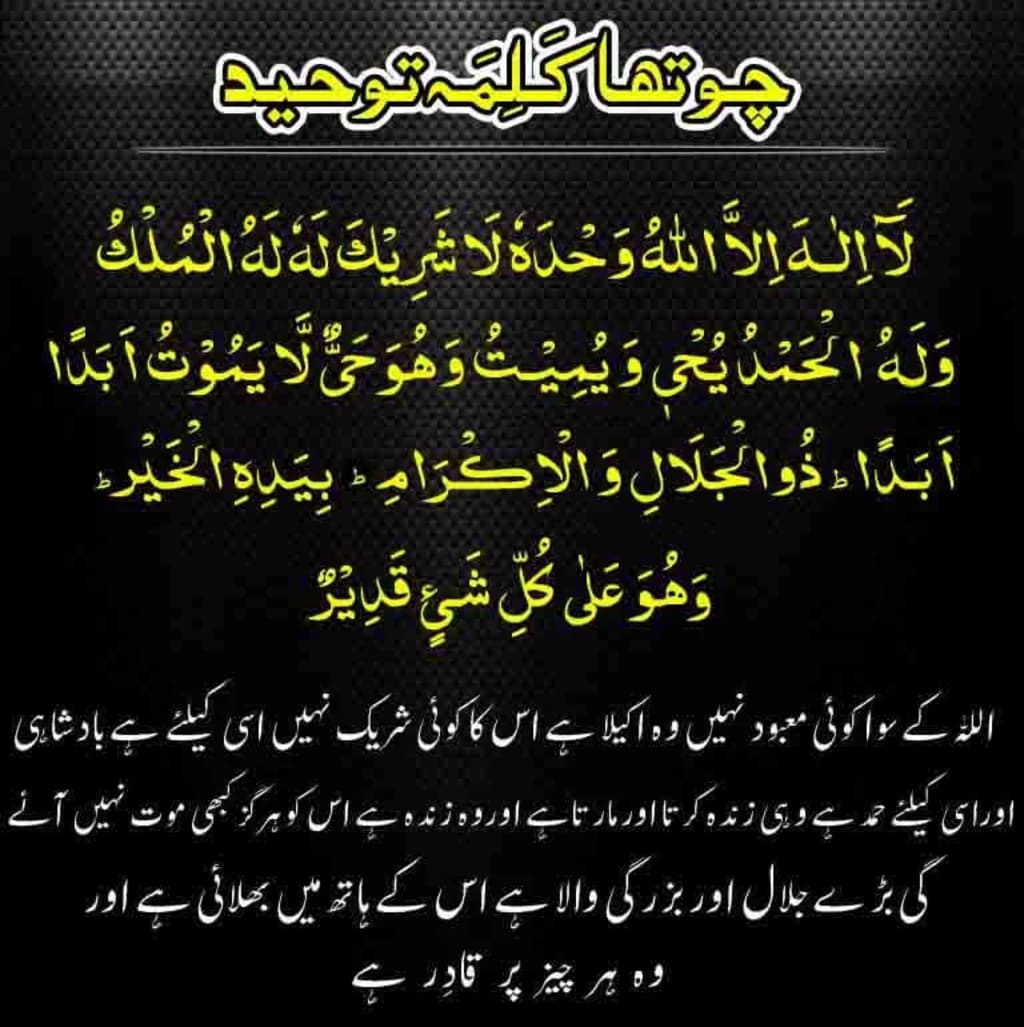
Introduction to the Fourth Kalma
Islam is a complete code of life that guides Muslims in every aspect of their faith and daily actions. Among the most essential foundations of Islam are the Six Kalimas, which summarize the basic beliefs and declarations of a Muslim. Each Kalma holds deep spiritual significance, and the Fourth Kalma, also known as Kalma Tauheed, is one of the most important. It emphasizes the oneness of Allah and the rejection of all forms of shirk (associating partners with Allah).
In this blog, we will explore the Arabic text, translation, meaning, importance, and benefits of the Fourth Kalma in Islam, along with its role in strengthening a Muslim’s Iman (faith).
The Arabic Text of the Fourth Kalma
The Fourth Kalma is recited in Arabic as follows:
Translation of the Fourth Kalma
The English translation of the Fourth Kalma is:
“There is none worthy of worship except Allah. He is alone and has no partner. His is the Kingdom, and for Him is all praise. He gives life and causes death. He is alive and will never die. Possessor of Majesty and Honor. In His Hand is all good, and He has power over everything.”
Meaning of the Fourth Kalma (Kalma Tauheed)
The meaning of the Fourth Kalma is centered on the concept of Tauheed (the Oneness of Allah). It declares that:
Allah is the only true God, with no partners or equals.
He is the Owner of everything in the heavens and the earth
Life and death are in His control alone.
Allah is eternal, self-sufficient, and never dies.
All goodness and blessings come from Him.
He is All-Powerful over everything.
This Kalma reminds Muslims to purify their faith and submit fully to Allah without associating anyone with Him.
Importance of the Fourth Kalma in Islam
The Fourth Kalma Tauheed is of great significance in Islam because it highlights the core belief of every Muslim — the Oneness of Allah (Tauheed). Some key points of its importance include:
Foundation of Faith – Tauheed is the very first pillar of Islam. Without it, faith is incomplete.
Protection from Shirk – By reciting this Kalma, a Muslim reaffirms that no one has power except Allah.
Reminder of Allah’s Sovereignty – It reminds us that everything belongs to Allah, including our life and death.
Strengthening Iman – Regular recitation increases one’s faith and reliance upon Allah.
Connection to Worship – It emphasizes that worship should only be directed to Allah, not to idols, people, or other creations.
Benefits of Reciting the Fourth Kalma
The recitation of the Fourth Kalma has many spiritual, emotional, and mental benefits for Muslims. Some of the key benefits include:
1. Strengthening Faith (Iman)
By reciting it regularly, Muslims develop a stronger sense of faith and remain firm in their belief in Allah’s Oneness.
2. Gaining Inner Peace
The Kalma Tauheed reminds believers that Allah alone controls everything, which reduces stress and anxiety about worldly problems.
3. Protection from Evil
It protects a Muslim from falling into shirk (associating partners with Allah) and other sins.
4. Attaining Allah’s Pleasure
Regular recitation pleases Allah and brings countless blessings into one’s life.
5. Preparing for the Hereafter
This Kalma is a powerful reminder that life and death are in Allah’s hands. Believing and practicing Tauheed helps a Muslim prepare for the Day of Judgment.
Fourth Kalma and the Concept of Tauheed
The Fourth Kalma is directly linked to the concept of Tauheed, which is the most important belief in Islam. Tauheed means acknowledging that:
Allah is the sole creator and sustainer.
No one shares His authority.
Worship should only be done for Allah.
Attributes like giving life, taking life, and controlling destiny belong only to Allah.
Believing in Tauheed makes a Muslim humble, obedient, and grateful toward Allah.
Fourth Kalma in Daily Life
The Fourth Kalma is not just a recitation; it is a guiding principle for a Muslim’s daily life. By believing and practicing Tauheed:
A Muslim learns to trust Allah in every situation.
It develops patience and gratitude.
It encourages Muslims to avoid arrogance, as everything belongs to Allah.
It helps maintain sincerity in worship and good deeds.
Difference Between Fourth Kalma and Other Kalmas
Whileall the Six Kalimas are interconnected, each has a specific focus:
First Kalma (Tayyabah): Declaration of faith in Allah and His Messenger ﷺ.
Second Kalma (Shahadat): Testimony of belief.
Third Kalma (Tamjeed): Glorification of Allah.
Fourth Kalma (Tauheed): Emphasis on Allah’s Oneness and sovereignty.
Fifth Kalma (Astaghfar): Seeking forgiveness.
Sixth Kalma (Radd-e-Kufr): Rejection of disbelief.
The Fourth Kalma specifically emphasizes Tauheed, making it the foundation of all other Kalimas.
Lessons from the Fourth Kalma
Muslims can learn several life-changing lessons from the Fourth Kalma:
Allah is One and Eternal – We must worship Him alone.
Power of Allah – He alone controls life, death, and destiny.
Gratitude – We must always thank Allah for His blessings.
Humility – No one has power without Allah’s will.
Obedience – A true believer submits only to Allah’s commands.
Conclusion
The Fourth Kalma (Kalma Tauheed) is a powerful declaration of the Oneness of Allah and His complete authority over life and death. It is a reminder for Muslims to worship Allah alone, avoid shirk, and live a life full of faith, humility, and gratitude. By reciting this Kalma regularly, a believer strengthens their connection with Allah and prepares for success in both this world and the Hereafter.
The essence of the Fourth Kalma lies in Tauheed — the belief that there is no god but Allah. This belief is the foundation of Islam and the ultimate key to salvation.
About the Creator
Bisma
✨ Faiz-e-Islam is a platform dedicated to spreading the true spirit of Islam. We strive to promote Islamic values, organize educational and spiritual programs
Silver Screen Magic with Mae West
American actress and singer Mae West became a popular film actress during the Great Depression. She started entertaining in vaudeville, then performed on Broadway, and finally went to Hollywood. She signed up with Paramount Pictures and made her debut in the 1932 film “Night After Night.” She also starred in musicals, comedies, and crime dramas. The American Film Institute named her one of the best classic Hollywood actresses.
By Rasma Raisters3 days ago in Geeks


Comments
There are no comments for this story
Be the first to respond and start the conversation.