movie review
Movie reviews for horror fans; from gruesome bone-chillers to dark horror thrillers, a showcase for frightful films that seek to entertain and to terrify.
The Exorcist (1973): A Cinematic Masterpiece of Horror
Introduction Few films have left as indelible a mark on the horror genre as The Exorcist (1973). Directed by William Friedkin and based on William Peter Blatty’s 1971 novel of the same name, The Exorcist is widely regarded as one of the greatest and most terrifying horror films ever made. Its shocking imagery, intense performances, and profound exploration of faith and evil have cemented its place in cinematic history. Upon its release, The Exorcist became a cultural phenomenon, sparking controversy, inspiring countless imitations, and leaving audiences traumatized. Even decades later, its power to unsettle remains undiminished. This article delves into the film’s production, themes, impact, and legacy, examining why it continues to haunt viewers to this day. The Origins of The Exorcist William Peter Blatty’s Inspiration The story of The Exorcist was inspired by a real-life 1949 exorcism case involving a young boy (referred to as "Roland Doe" in records). William Peter Blatty, a novelist and screenwriter, came across the story while studying at Georgetown University and was fascinated by the themes of demonic possession and the battle between good and evil. His novel The Exorcist became a bestseller, blending horror with deep philosophical and theological questions. From Page to Screen Blatty adapted his own novel into a screenplay, and Warner Bros. enlisted William Friedkin, fresh off the success of The French Connection (1971), to direct. Friedkin approached the film with a documentary-like realism, insisting on authenticity in performances and special effects. This commitment to realism would contribute to the film’s visceral impact. Production: A Grueling and Controversial Process Casting and Performances Ellen Burstyn as Chris MacNeil – The actress brought emotional depth to the role of a desperate mother. Linda Blair as Regan MacNeil – Only 12 years old during filming, Blair delivered a performance that was both innocent and horrifying. Her physical and psychological transformation remains one of cinema’s most disturbing portrayals. Jason Miller as Father Damien Karras – A struggling priest grappling with faith, Miller’s performance added profound emotional weight. Max von Sydow as Father Lankester Merrin – Though only 44 at the time, von Sydow was aged with makeup to play the veteran exorcist. His presence brought gravitas to the film. Mercedes McCambridge as the Demon’s Voice – Her guttural, otherworldly vocal performance heightened the terror. Challenges on Set The production was plagued by rumors of a "curse," including injuries, fires, and even deaths among crew members. Whether coincidence or superstition, these incidents added to the film’s mystique. Friedkin pushed his actors to extremes: Burstyn suffered a permanent back injury during a violent scene. Blair endured grueling makeup sessions and psychological strain. The infamous "spider-walk" scene (cut from the original release but restored in later versions) required a stunt double to crawl backward down stairs. Groundbreaking Special Effects Special effects artist Dick Smith created some of the most iconic horror imagery: Regan’s spinning head, levitation, and vomit scenes. The grotesque makeup for her possessed state. Practical effects like freezing breath and furniture moving on its own. These effects were revolutionary for their time and remain disturbing even by modern standards. Themes: More Than Just a Horror Film Faith and Doubt At its core, The Exorcist is a story about faith. Father Karras, a psychiatrist and priest, struggles with his belief in God after his mother’s death. His crisis mirrors the film’s central question: How can evil exist in a world governed by a benevolent God? The exorcism becomes not just a battle for Regan’s soul but a test of Karras’s own faith. Science vs. Religion The film contrasts medical and supernatural explanations for Regan’s condition. Doctors initially diagnose her with neurological disorders, but as her condition worsens, science fails to provide answers. The exorcism ritual, though archaic, becomes the only solution—suggesting that some evils lie beyond human comprehension. Innocence Corrupted Regan’s possession represents the ultimate violation of innocence. Her transformation from a sweet child into a profane, violent entity is deeply unsettling, tapping into primal fears about the corruption of youth. Release and Cultural Impact Initial Reception Upon its release on December 26, 1973, The Exorcist became a box office sensation, earning over $441 million worldwide (adjusted for inflation). It was nominated for 10 Academy Awards, including Best Picture—a rarity for a horror film. Audiences reacted viscerally: Reports of fainting, vomiting, and panic attacks in theaters. Religious groups protested, accusing the film of being blasphemous or Satanic. Some theaters provided "barf bags" for viewers. Legacy and Influence The Exorcist reshaped horror cinema: Demonic possession films became a subgenre (The Omen, The Conjuring universe). Foundational for psychological horror—its slow buildup and realism influenced later films like Hereditary and The Babadook. Enduring popularity—multiple re-releases, director’s cuts, and a franchise (sequels, prequels, TV series). Why The Exorcist Still Terrifies Psychological Horror Unlike modern jump-scare-heavy horror, The Exorcist relies on dread and psychological torment. The idea of an unseen, malevolent force violating a child taps into deep-seated fears. Religious Terror For believers (and even non-believers), the film’s depiction of demonic forces challenges the safety of the spiritual world. The exorcism scenes feel like a genuine confrontation with evil. Uncanny Realism Friedkin’s documentary-style direction makes the supernatural events feel plausible. The lack of overt CGI (compared to modern films) enhances the horror. Conclusion More than 50 years after its release, The Exorcist remains the gold standard of horror cinema. Its masterful blend of psychological terror, groundbreaking effects, and profound themes ensures its place in film history. Whether viewed as a terrifying supernatural tale or a deep meditation on faith, The Exorcist continues to shock, disturb, and captivate audiences—proving that true horror never dies. Final Thought The Exorcist isn’t just a movie; it’s an experience. And like all great horror, its true power lies in what it makes us believe—even after the credits roll.
By Silas Blackwood8 months ago in Horror
Buried Alive: The Echoes Beneath
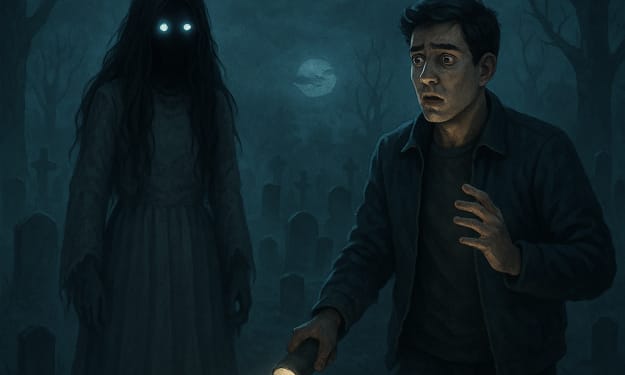
The sun had just slipped behind the horizon, draping the village in shades of rust and violet. A cold wind brushed past me, whispering secrets through the dry leaves, as I walked briskly along a seldom-used path. My shortcut home passed dangerously close to the graveyard — a place even the bravest avoided once the sky darkened.
By Noman Afridi8 months ago in Horror
When I Died in My Dream
The story begins on a cold, gloomy night when I felt my chest tighten and my breath grow shallow. I was alone in my apartment, silence screaming around me. I tried to call for help, but my voice cracked into whispers. Darkness started to blur the edges of my vision until everything went black.
By Noman Afridi8 months ago in Horror
The House That Wasn't Meant for Humans
I was never the superstitious type. Tales of jinns, haunted houses, and cursed places? Just myths people used to scare children—or so I believed. That changed the night I took a wrong turn during a hiking trip in northern Pakistan.
By Noman Afridi8 months ago in Horror
The Cursed Doll. Content Warning. AI-Generated.
In the dim corner of an abandoned Victorian house lies a doll with hollow eyes, a cracked porcelain face, and a faded dress that whispers of forgotten times. To most, it’s just a discarded toy. But to those who know the legend, this doll is a vessel of darkness, a cursed artifact that brings death and despair to whoever dares awaken it. This is the tale of the cursed doll — a story steeped in mystery, fear, and supernatural horror.
By RIDOY AHAMMED8 months ago in Horror
The Bloodstained Silk
Chapter 1: Festival and Blood In the heart of an ancient mountainous region, nestled in a valley wrapped in mist and shadow, stood the crumbling remains of a once-glorious palace. It had belonged to the Larma family, an old Chakma lineage that once ruled these parts with grace and pride. But now, the estate stood abandoned—haunted by whispers of betrayal, bloodshed, and a silk handkerchief soaked in death.
By Kevin Hudson8 months ago in Horror