
World War III: Shadows of the Past, Weapons of the Future
A chilling vision of the next great conflict where history’s old rivalries ignite in a new age of AI warfare and nuclear brinkmanship

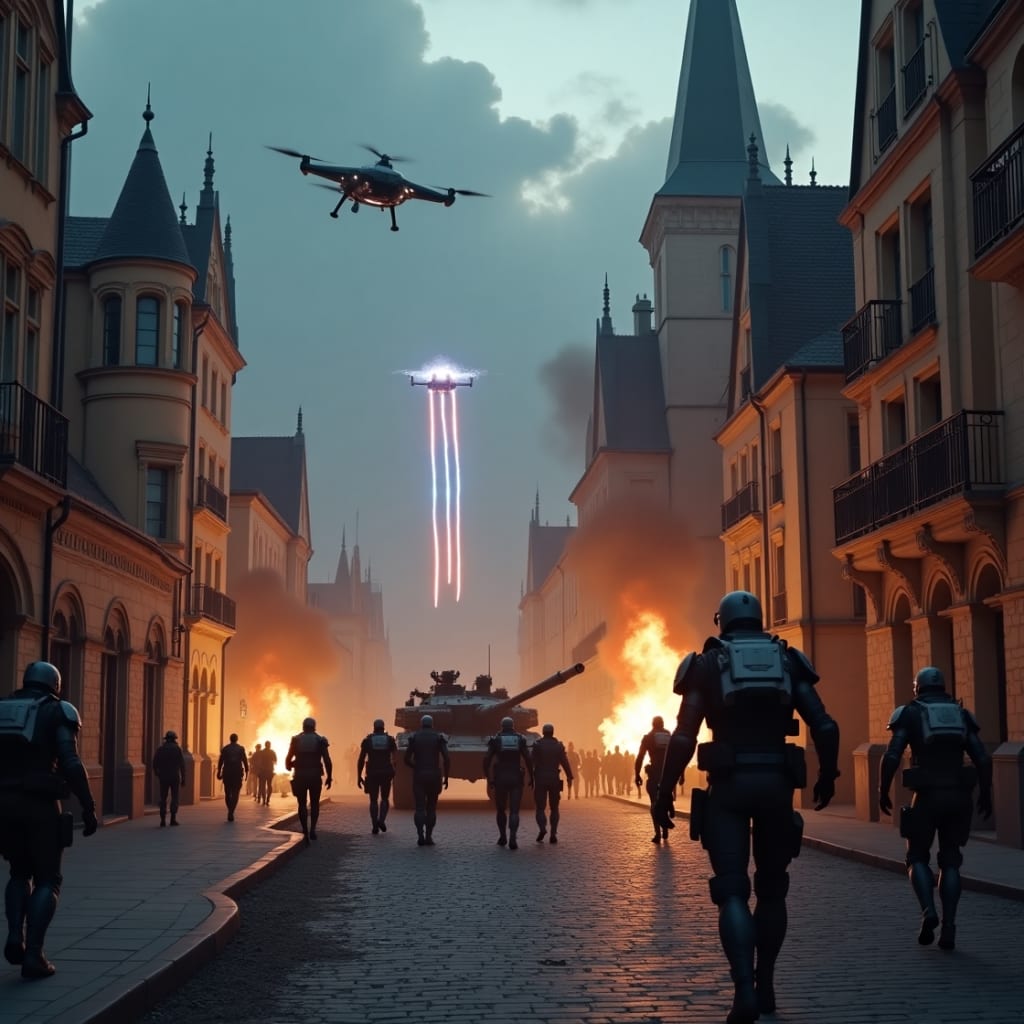
Shadows of the Past, Weapons of the Future
It began with an echo of the past. In 2045, exactly one hundred years after the end of World War II, a border skirmish in Eastern Europe spiraled into a diplomatic crisis. Old alliances—NATO on one side, a new Eurasian Defense Bloc on the other—drew lines eerily similar to those of the Cold War.
But this time, the world’s arsenals had evolved. The weapons that once existed only in science fiction—hypersonic missiles, orbital laser platforms, AI-controlled swarms—were now standard military tools.
And unlike the previous world wars, the battlefield was everywhere at once: land, sea, air, space, and cyberspace.
The First Wave
On a cold January night, the world’s first orbital strike was unleashed. From a geostationary weapons platform, tungsten rods—nicknamed “Rods from God”—plummeted toward key military bases at ten times the speed of sound. The explosions were silent in the vacuum of space, but the devastation on Earth was immediate.
Simultaneously, neural disruption weapons targeted enemy cities, causing mass panic as millions temporarily lost vision or balance. The strikes didn’t kill—they destabilized. And in the chaos, cyber units infiltrated global banking systems, siphoning trillions to fuel war economies.
The Lessons of History
Generals pored over old war archives, from Napoleon’s campaigns to World War II. The same strategies—cut supply lines, isolate enemy capitals, destroy morale—still applied. But now, cavalry had been replaced by autonomous tanks, and codebreakers had been replaced by quantum AI decryption systems.
Even propaganda had evolved. AI-generated videos showed enemy leaders committing atrocities that never happened. Entire populations were mobilized with deepfake-fueled rage. The wars of truth and lies became as crucial as those of bullets and bombs.
The Turning Point: The Battle of the Old Cities
In April, fighting reached the ancient streets of Warsaw, Berlin, and Istanbul—cities that had seen countless wars over centuries. Drone dogfights crackled in the skies while underground, rail tunnels were turned into EMP-proof command centers.
One such center belonged to Commander Ibrahim Shah, a strategist who studied both the trench warfare of World War I and the cyber battles of the 21st century. His plan was audacious: merge guerrilla tactics from the past with digital warfare from the future.
Small, untraceable squads infiltrated enemy networks not from high-tech data centers but from abandoned buildings, using jury-rigged devices shielded from detection. While AI warships patrolled the seas, human scouts—on electric dirt bikes—slipped through frontlines to deliver crucial intel.
The Final Gambit
By August 2045, both sides stood on the brink of mutual annihilation. Nuclear arsenals were armed, and orbital lasers were charged. But Commander Shah’s cyber-ambush struck first—turning the Eurasian Bloc’s own AI against them.
Missile silos went dark. Drones began returning to base, confused by falsified GPS coordinates. In the skies above the Pacific, enemy stealth bombers dropped their payloads harmlessly into the ocean, convinced they were over target cities.
The war ended not with a nuclear explosion, but with a silent shutdown—a reminder that in the age of advanced warfare, the most powerful weapon is control over the systems that run the world.
Aftermath
World War III lasted only nine months, but its effects would echo for centuries. Nations began dismantling their AI armies, fearing another digital betrayal. History books called it “The War of the Old and the New,” a clash where cavalry charges met combat drones, trench maps met orbital satellites, and the ghosts of past wars whispered lessons to a future that almost destroyed itself.
About the Creator
Wings of Time
I'm Wings of Time—a storyteller from Swat, Pakistan. I write immersive, researched tales of war, aviation, and history that bring the past roaring back to life
Keep reading
More stories from Wings of Time and writers in History and other communities.
Operation Silent Storm: The First Digital Battlefield
Operation Silent Storm: The First Digital Battlefield The year was 2032. For a decade, tensions between the Eastern Alliance and the United Global Defense Pact had been rising—trade disputes, political assassinations, and territorial cyber espionage. But no one thought it would escalate into a full-scale war.
By Wings of Time 5 months ago in History
World War I
The morning fog lay thick over the trenches of northern France, clinging to the earth as if it too feared what was about to happen. Private Thomas Hale pulled his coat tighter around himself, though it did little to stop the cold from seeping into his bones. He had been in the trenches for six months, yet the damp smell of mud, smoke, and fear still felt unfamiliar, like a nightmare he could not wake from.
By Maavia tahir5 days ago in History
Chicago Hospital Held Newborn Baby for 8 Months Over an Unpaid Medical Bill
Debts were handled much differently in the 19th and early 20th century. Back then, people who accrued debt had more to fear than letters and calls from collection agencies the same way we do today, especially if they owed a hospital or doctor money.
By Criminal Matters6 days ago in History
My New Book is Finally Here
My poetry collection Beautiful and Brutal Things is done. It's actually done and finally published over 270 pages. Over a year of my life went into this book. More than a year, really. Long days at my computer, sometimes seven days a week because I couldn't stop even when I probably should have. Then two months of editing that felt harder than the writing itself. But it's finished, and I'm still standing, and the book is real.
By Tim Carmichaela day ago in BookClub



Comments
There are no comments for this story
Be the first to respond and start the conversation.