
Why is radiation considered one of the worst ways to die?
Radiation exposure is one of the most horrible ways to die, and maybe the worst of all. It causes a long and agonizing death, as it slowly destroys the human body from the inside. You won’t die fast, but you’ll wish you did. Find out more about the ultimate nightmare of dying from radiation. ☢😷🚫

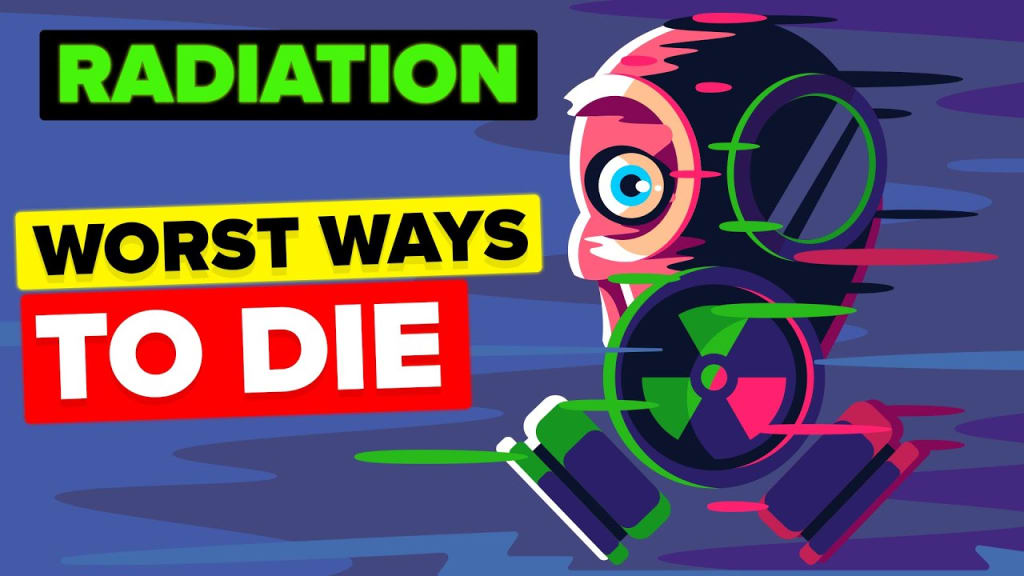
Radiation exposure is one of the most horrible ways to die, and maybe the worst of all. It causes a long and agonizing death, as it slowly destroys the human body from the inside. You won’t die fast, but you’ll wish you did. Find out more about the ultimate nightmare of dying from radiation. ☢😷🚫
- It's almost 2 a.m. on April 26, 1986. Vasily Ignatenko, a 25-year-old firefighter, is among the first responders battling a fire at the Chernobyl Nuclear Power Station. Unbeknownst to them, the site is littered with highly radioactive graphite fragments. Ignatenko and his comrades handle the debris, unknowingly sealing their fate. Despite their commendable and heroic efforts, Ignatenko and his team are just hours away from falling gravely ill.
- In a grim moment of levity, one firefighter jests, "There must be an incredible amount of radiation here. We'll be lucky if we're all still alive in the morning." Unfortunately, his words prove eerily prophetic. Days later, Ignatenko's pregnant wife must bribe hospital staff to see her dying husband, as he is too radioactive to be near. His once-vibrant skin turns almost translucent and takes on an unrecognizable appearance. From within, his body is being consumed.
- Months after his passing, Ignatenko's daughter is born with a malformed heart and cirrhosis of the liver. Tragically, she dies mere hours after birth. What you've just heard is a condensed version of one of the most agonizing ways to die, a painfully brutal departure from our world. Ignatenko's demise is an extreme example, as he was one of the first responders to the worst nuclear plant disaster in history. However, death by radiation takes on various forms, each carrying its own horror.
- Let us delve deeper into Ignatenko's story for now. When he and his fellow firefighters arrived at the power plant on that fateful morning, they were unaware of the true extent of the situation. While one firefighter made a joke about potential high radiation exposure, it remained just that—a joke. However, reality soon set in. Twenty-seven firefighters perished from acute radiation sickness (ARS), commonly known as the sickness resulting from exposure to massive amounts of radiation. The actual number of radiation-related deaths was closer to 4,000, many of which were slow and agonizing.
- Other deaths were caused by gruesome factors, such as a fireman succumbing to external and internal radiation burns, as well as a "blistered heart." May you never have to hear those two words together again in your lifetime. Let's now explore ARS in more detail. It typically progresses through four stages, beginning with the prodromal stage, which manifests shortly after exposure. During this stage, the affected individual experiences vomiting and diarrhea, often with bloody loose stools. In Ignatenko's case, he excreted bloody loose stools around 25 times a day. In addition, he occasionally regurgitated bits of his internal organs. As horrifying as this may sound, the situation worsens from here.
- Ignatenko's wife, Lyudmila, helplessly watches her husband slowly deteriorate. Despite risking her own life by being near him, she witnesses the struggles of hospital staff as they attempt to put slippers on his swollen feet, another symptom of the sickness. She sees them struggle to dress him in a hospital gown. His body undergoes a grotesque transformation, taking on different shapes. In her own words, she describes it as encountering a brand-new person every day. Burns begin to surface, and lesions spread across his body, giving his skin a glossy white film-like appearance.
- To Lyudmila's surprise, Ignatenko experiences a period of apparent improvement, as if the sickness is subsiding. However, this respite is short-lived. It is actually the latent stage of ARS, which can last from hours to weeks. Those who do not recover during this stage are bound to experience literal hell on Earth.
Thank you so much for viewing our narrative today! We would love to hear your thoughts and feedback in the comment section below.
And don’t forget to subscribe to us for new narratives, probably every day. We appreciate your support and interest. Have a wonderful day!
About the Creator
Worst Mid-Air Crash in Aviation History
It was evening over Delhi, and two airplanes carrying a total of 349 people were moving toward each other in the sky. One aircraft was preparing to land at Indira Gandhi International Airport, while the other had just taken off from the same airport.
By Imran Ali Shahabout 20 hours ago in History


Comments
There are no comments for this story
Be the first to respond and start the conversation.