
why Alaxnder The Great is Single most important man is history?
The reign Of Alaxnder The Great
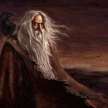

In the annals of history, the legendary figure of Alexander the Great emerges, supposedly born from Zeus himself, a demi-god in human form. The tales recount his remarkable feats, like taming an untamable wild stallion at the tender age of 12, a steed that would carry him to numerous military triumphs until his premature death at 32. Guided by one of the ancient world's intellectual giants, Aristotle, young Alexander, a name synonymous with greatness, had a destiny – to conquer the mighty Persian empire.
However, in the midst of the heroic narrative, skepticism arises. Was Alexander truly the offspring of Zeus, or merely the son of the Macedonian king, Phillip II, and Olympias? The Greeks, with a flair for mythology, often suggest divine parentage. Phillip II, a formidable figure, transformed Macedonia into a cultural and military powerhouse, aspiring to see his son fulfill the dream of conquering Persia.
At the age of 13, Alexander found himself under the tutelage of Aristotle, delving into philosophy, medicine, politics, and art. Though initially imbibed with a belief in the superiority of Greeks, Alexander's later conquests would see him embracing diverse cultures. In 340 BC, he showcased his leadership prowess by quelling the Maedi, demonstrating that youth didn't hinder his capability.
Tragedy struck in the form of family discord when Phillip divorced Alexander's mother. A temporary exile followed, but reconciliation came swiftly. The sudden demise of Phillip, however, left Alexander's claim to the throne uncertain. Swiftly navigating political intrigue, he eliminated potential rivals, securing his ascendancy.
Alexander's journey unfolded with remarkable military successes. Defeating the Sacred Band of Thebes catapulted him to popularity among Macedonian troops. Thebes' rebellion met a ruthless response, showcasing Alexander's strength and determination. Greece, now unified, set its sights on the formidable Persian empire.
In 333 BC, at Gaugamela, Alexander faced King Darius III, leading to a decisive victory. Darius fled, meeting a tragic end at the hands of his own men. Alexander, magnanimous in victory, granted Persians considerable autonomy, adopting their customs to forge a united empire.
The tale continued with a march into India, where Alexander faced King Porus and his war elephants. Triumphing but facing exhausted troops, he wisely refrained from further conquest. To bridge the gap between Greeks and Persians, he orchestrated mass marriages, yet faced opposition from his Greek officers.
Despite enriching Greece through Persian wealth, internal dissent simmered. The unity Alexander sought remained elusive. His untimely death at 32, under mysterious circumstances, marked the unraveling of his empire. His generals, vying for supremacy, plunged into conflict.
Whether Alexander's demise resulted from poison or disease remains uncertain. His empire, a delicate fusion of disparate cultures, crumbled posthumously. His legacy, however, endured, influencing the Hellenistic age and shaping cultural and scientific development across the ancient world. Alexander's conquests left an indelible mark, even if his empire proved ephemeral. The enigmatic ruler's tale, blending fact and myth, remains a testament to the complexities of history.
He was born in 356 BCE at Pella in Macedonia, the son of Philip II and Olympias (daughter of King Neoptolemus of Epirus). From age 13 to 16 he was taught by Aristotle, who inspired him with an interest in philosophy, medicine, and scientific investigation, but he was later to advance beyond his teacher’s narrow precept that non-Greeks should be treated as slaves. Left in charge of Macedonia in 340 during Philip’s attack on Byzantium, Alexander defeated the Maedi, a Thracian people. Two years later he commanded the left wing at the Battle of Chaeronea, in which Philip defeated the allied Greek states, and displayed personal courage in breaking the Sacred Band of Thebes, an elite military corps composed of 150 pairs of lovers. A year later Philip divorced Olympias, and, after a quarrel at a feast held to celebrate his father’s new marriage, Alexander and his mother fled to Epirus, and Alexander later went to Illyria. Shortly afterward, father and son were reconciled and Alexander returned, but his position as heir was jeopardized.
About the Creator
The Story Teller
Hii.... Relax and read into things which are unknown stories which are untold Enjoy ((
Keep reading
More stories from The Story Teller and writers in History and other communities.
What was Earth like in age of giant Insects?
The Carboniferous period, approximately 300 million years ago, was indeed a time of significant transformation on Earth, marked by the dominance of extensive swamps, warm humid forests, and the evolution of unique and giant-sized life forms. Here's a breakdown of some key aspects of this fascinating period:
By The Story Teller2 years ago in Earth
What Would World War III Look Like Today?
What Would World War III Look Like Today? When people imagine World War III, many still picture massive armies, tanks rolling across borders, and cities reduced to rubble by bombs. While traditional warfare would still play a role, a modern world war would look very different from the conflicts of the 20th century. Advances in technology, global interdependence, and new forms of power have changed how wars are fought—and how they affect the world.
By Wings of Time about 15 hours ago in History
The Light of Islam: The Journey of the Prophet
Over 1,400 years ago, in the city of Mecca, a child was born who would change the world forever. His name was Muhammad ﷺ, and he belonged to the noble tribe of Quraysh. From the beginning, his life was marked by trials and simplicity. Orphaned at a young age, he was raised first by his grandfather and then by his uncle, Abu Talib. Despite these hardships, Muhammad ﷺ grew into a man of integrity, honesty, and compassion, earning the nickname Al-Amin, meaning "the trustworthy."
By The best writer 5 days ago in History




Comments (2)
its excellent writing and informative content.
Fantastic history! Great💜 well written!