
What was Earth like in age of giant Insects?
the time everyone had forgotten

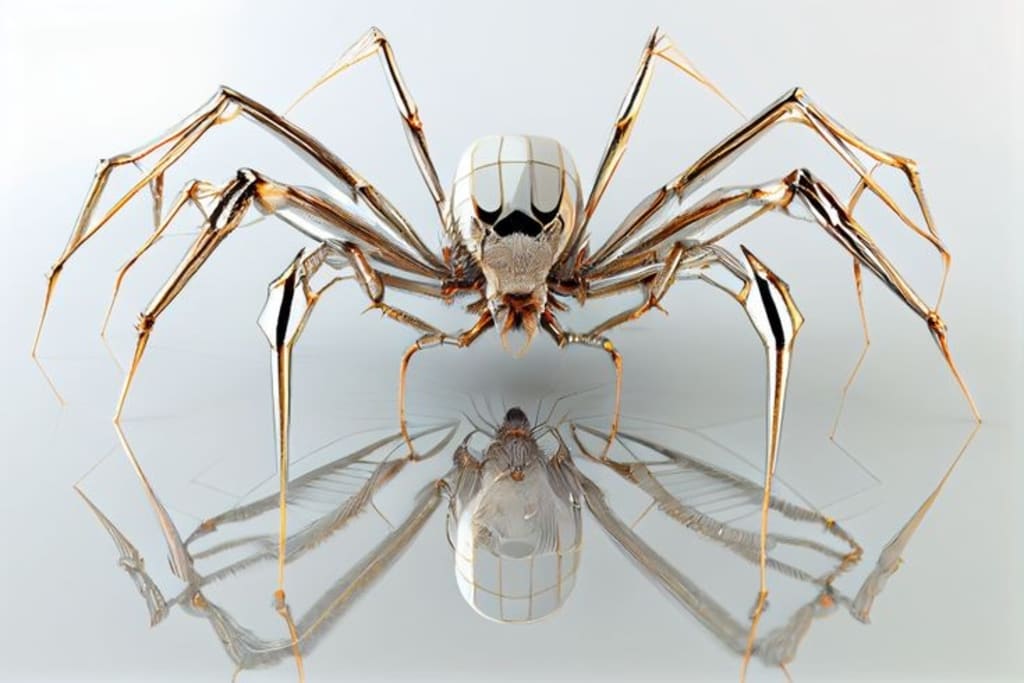
The Carboniferous period, approximately 300 million years ago, was indeed a time of significant transformation on Earth, marked by the dominance of extensive swamps, warm humid forests, and the evolution of unique and giant-sized life forms. Here's a breakdown of some key aspects of this fascinating period:
Giant Insects:
Mega Neura: Resembling modern dragonflies but with a wingspan of up to 75 centimeters, the Mega Neura was a carnivorous insect hunting other insects and small amphibians.
Arthroplura: A millipede-like creature reaching lengths of up to two and a half meters, it primarily fed on decomposing vegetation.
Pulmonoscorpius: A giant scorpion that roamed swampy areas, growing up to 70 centimeters.
Giant Cockroaches and Mayflies: Cockroaches with lengths of 10 centimeters and mayflies boasting wingspans of 45 centimeters.
Oxygen Levels:
During the Carboniferous period, atmospheric oxygen levels were estimated to be as high as 35%, compared to the 21% present in today's atmosphere.
The abundance of oxygen played a crucial role in the gigantism observed in insects during this time.
Insects breathe through trachea, and higher oxygen levels allowed for larger body sizes.
Factors Influencing Gigantism:
Higher oxygen levels promoted the growth of larger insects, but there might have been additional reasons for their size.
Another theory suggests that insects grew larger to counteract the potential negative effects of oxygen toxicity. Larger insects could absorb oxygen more slowly, reducing the risk of toxicity.
End of the Carboniferous Period:
The Carboniferous period was also known as the "coal age" due to the extensive coal beds formed from decaying ancient forests.
Seed-bearing plants evolved during this time, contributing to diverse ecosystems.
As the period progressed, Earth's climate transitioned to an "ice house" state, with lower temperatures and the formation of ice sheets in the southern hemisphere.
Transition to the Permian Period:
The supercontinent Pangea fully formed during the Permian period.
The collapse of rainforests and a decline in oxygen levels led to the extinction of giant insects.
Early reptiles began to dominate the landscape, marking a shift in the ecosystem.
The Permian period followed, bringing further changes to Earth's climate and ecosystems. The video ends with a teaser for the next installment, suggesting a continuation of Earth's evolutionary journey
The insect nervous system consists of a brain and a ventral nerve cord. Most insects reproduce by laying eggs. Insects breathe air through a system of paired openings along their sides, connected to small tubes that take air directly to the tissues. The blood therefore does not carry oxygen; it is only partly contained in vessels, and some circulates in an open hemocoel. Insect vision is mainly through their compound eyes, with additional small ocelli. Many insects can hear, using tympanal organs, which may be on the legs or other parts of the body. Their sense of smell is via receptors, usually on the antennae and the mouthparts.
Nearly all insects hatch from eggs. Insect growth is constrained by the inelastic exoskeleton, so development involves a series of molts. The immature stages often differ from the adults in structure, habit and habitat. Groups that undergo four-stage metamorphosis often have a nearly immobile pupa. Insects that undergo three-stage metamorphosis lack a pupa, developing through a series of increasingly adult-like nymphal stages. The higher level relationship of the insects is unclear. Fossilized insects of enormous size have been found from the Paleozoic Era, including giant dragonfly-like insects with wingspans of 55 to 70 cm (22 to 28 in). The most diverse insect groups appear to have coevolved with flowering plants.
Adult insects typically move about by walking and flying; some can swim. Insects are the only invertebrates that can achieve sustained powered flight; insect flight evolved just once. Many insects are at least partly aquatic, and have larvae with gills; in some species, the adults too are aquatic.
About the Creator
The Story Teller
Hii.... Relax and read into things which are unknown stories which are untold Enjoy ((
Keep reading
More stories from The Story Teller and writers in Earth and other communities.
The Tragic story of the famouse meteorite
Deep within the American Museum of Natural History in New York rests an immense iron meteorite. Originating from Northwest Greenland, it crashed to Earth around 10,000 years ago, serving as a vital resource for a small tribe of indigenous Greenlanders, the Inuit, for centuries. These resourceful people crafted metal-tipped tools and weapons from this celestial debris. However, the meteorite's journey took an unexpected turn when an American explorer, driven by fame and fortune, transported it across the Arctic and sailed it to New York to sell to the museum.
By The Story Teller2 years ago in Earth
Why Is the USA Natural Gas Price Rising Today
The sudden rise in U.S. natural gas prices has caught the attention of consumers, investors, and policymakers alike. After a long period of relatively low prices, the market has shifted direction, leaving many people asking a simple but important question: why is the USA natural gas price rising today?
By Muhammad Hassan3 days ago in Earth
Antarctic Penguin Breeding Is Heating Up Sooner — and That’s a Big Problem
Scientists have discovered that penguins in Antarctica are starting their breeding season earlier than ever before — a change that might sound harmless but is actually raising alarms among researchers. As temperatures in the Southern Hemisphere rise and sea ice patterns shift, these iconic birds are facing challenges that could ripple through the entire Antarctic ecosystem. The finding, based on decades of field observations, highlights how climate change is not just melting glaciers or warming oceans — it is directly affecting wildlife behaviors in ways that could have long-term consequences. For communities of scientists, conservationists, and even eco-tourists who value Antarctica’s unique wildlife, the implications are serious. Why Penguin Breeding Is Happening Sooner For decades, researchers have tracked the Adélie and emperor penguin populations across Antarctica. By comparing breeding dates with historical data, they noticed a clear trend: penguins are laying eggs and hatching chicks earlier than in previous decades. Dr. Samantha Hughes, a marine biologist studying Antarctic ecosystems, explained: “Penguins are highly sensitive to environmental cues. Warmer temperatures and earlier ice melt mean that the conditions they rely on for breeding are coming sooner, so they adjust their reproductive cycles.” At first glance, this might seem like an adaptive behavior. After all, responding to environmental changes is part of survival. But scientists warn that earlier breeding can create new problems, particularly when it comes to food availability and weather patterns. The Challenges of Earlier Breeding Penguins depend on a delicate balance between breeding timing, ice coverage, and food supply. Fish and krill, which are the primary food sources for chicks, follow their own seasonal patterns. If penguins hatch too early, they may face a mismatch between the peak food supply and the period when chicks need it most. This phenomenon, known as phenological mismatch, can have serious consequences: Chick starvation: Chicks may hatch before food sources are abundant enough to sustain them. Increased predation: Younger, weaker chicks are more vulnerable to predators. Colony instability: Uneven survival rates can disrupt social structures and breeding success within colonies. Dr. Hughes adds: “Even a difference of a few weeks in hatching times can affect survival rates. In an environment as extreme as Antarctica, timing is everything.” Climate Change Is the Driving Force Scientists point to rising temperatures, changing sea ice patterns, and shifting winds as the main factors behind earlier breeding. Over the past 50 years, Antarctic regions have warmed at rates faster than the global average, leading to earlier ice melt in spring. Sea ice is critical because it provides stable platforms for penguins to nest and raise their chicks. When ice melts too early, penguins may be forced to nest in less secure locations, increasing the risk of flooding and chick loss. Additionally, the warming waters affect the abundance of krill, tiny crustaceans that are the foundation of the Antarctic food web. Less krill means less food for penguins, further exacerbating the effects of early breeding. Why This Matters Beyond Penguins Penguins are often seen as indicator species, meaning that changes in their populations can signal broader environmental shifts. If penguin breeding and survival are disrupted, it could indicate that the entire Antarctic ecosystem is under stress, including seals, seabirds, and even fish populations that humans rely on. Communities involved in Antarctic research are particularly concerned because this disruption can affect long-term conservation strategies. Protecting species like penguins isn’t just about preserving wildlife; it’s about maintaining ecosystem health in a region that plays a critical role in regulating global climate. Observing the Changes Researchers have been using a combination of satellite imaging, on-the-ground observation, and drones to monitor penguin colonies. These methods allow scientists to track: Egg-laying dates Chick hatching and growth Colony sizes and survival rates Data collected over decades show a clear pattern: in some regions, penguins are breeding up to two weeks earlier than 50 years ago. While that might seem minor, in the fragile Antarctic environment, even small changes can have cascading effects. What Can Be Done Addressing this problem requires both local and global action. On a local level, conservationists are working to protect key breeding grounds and monitor populations for signs of stress. International cooperation is crucial, because Antarctica is governed by treaties that involve multiple countries. On a broader scale, tackling the root cause — climate change — is essential. Scientists emphasize reducing greenhouse gas emissions to slow warming trends and protect fragile ecosystems. As Dr. Hughes notes: “If we don’t address climate change, these changes aren’t just a temporary anomaly. They could lead to permanent shifts in penguin populations and Antarctic ecosystems.” The Human Connection This issue isn’t just about penguins. Communities of researchers, scientists, and environmental advocates rely on a stable Antarctic ecosystem for studies that inform global climate policy. Eco-tourism communities also depend on healthy penguin populations for responsible tourism, which can be a source of income and education. In other words, the timing of penguin breeding may seem like a small, isolated detail, but it has broader implications for science, conservation, and global awareness. Looking Ahead The discovery that Antarctic penguins are breeding earlier is a wake-up call. It highlights how climate change can subtly, yet profoundly, alter animal behavior. Scientists, conservationists, and policymakers must collaborate to understand these changes and implement strategies to mitigate their impact. For communities around the world who care about wildlife, this is a reminder that even remote ecosystems are interconnected with human actions. Protecting penguins and their habitats isn’t just about saving a species — it’s about protecting the health of the planet and our shared future.
By Muhammad Hassan3 days ago in Earth



Comments
There are no comments for this story
Be the first to respond and start the conversation.