

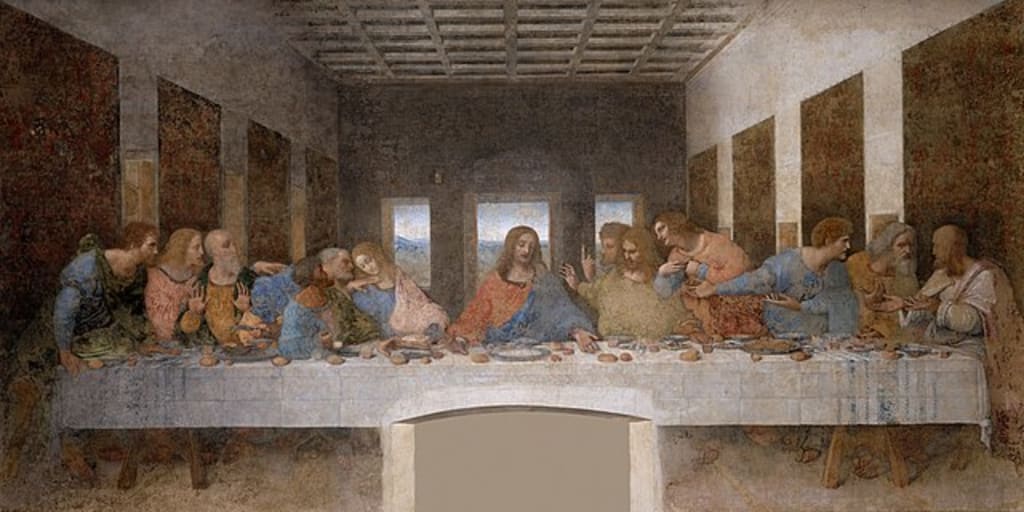
The Twelve Apostles, often referred to as the twelve disciples, were the primary followers of Jesus Christ and are considered saints in Christianity. These individuals played a crucial role in the spread of Christianity and are frequently mentioned in the New Testament. Each Apostle brought a unique background and perspective, contributing to the diverse and dynamic early Christian community. Let's delve into who these twelve saints were and their significance.
1. Peter (Simon Peter)
Peter, originally named Simon, was a fisherman by trade and the brother of Andrew. Jesus gave him the name Peter, meaning "rock," signifying his foundational role in the church. Peter is often depicted as the leader of the Apostles, and he is prominent in the Gospels and the Acts of the Apostles. Despite his moments of doubt and denial, Peter's faith and leadership were pivotal in the early Christian church.
2. Andrew
Andrew, Peter's brother, was also a fisherman. He was initially a disciple of John the Baptist before following Jesus. Andrew is known for bringing people to Jesus, including his brother Peter. According to tradition, he was martyred by crucifixion on an X-shaped cross.
3. James the Greater
James the Greater, the son of Zebedee and Salome, and the brother of John, was one of Jesus' closest disciples. He is called "the Greater" to distinguish him from James the Less. James was part of Jesus' inner circle, present at the Transfiguration and other key moments. He was the first Apostle to be martyred, killed by King Herod Agrippa I.
4. John
John, the brother of James the Greater, is traditionally considered the author of the Gospel of John, the Epistles of John, and the Book of Revelation. Known as the "beloved disciple," John had a close relationship with Jesus. He is believed to have taken care of Mary, Jesus' mother, after Jesus' crucifixion.
5. Philip
Philip was from Bethsaida, the same town as Peter and Andrew. He played a significant role in introducing others to Jesus, including Nathanael. Philip's interactions with Jesus highlight his curiosity and desire to understand Jesus' teachings more deeply.
6. Bartholomew (Nathanael)
Bartholomew, often identified with Nathanael, was introduced to Jesus by Philip. Known for his straightforward and sincere character, Jesus described him as "an Israelite indeed, in whom there is no deceit." Tradition holds that Bartholomew was martyred in Armenia.
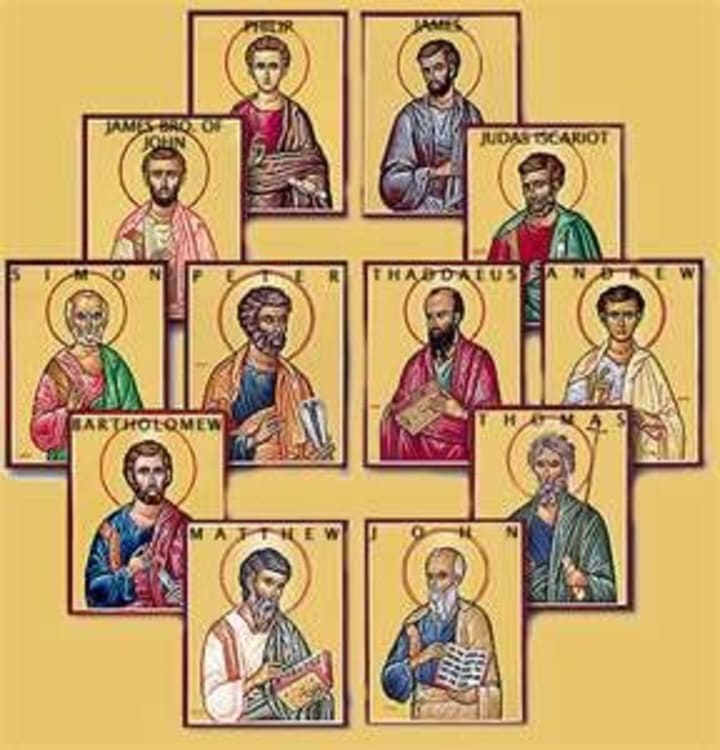
7. Matthew (Levi)
Matthew, also known as Levi, was a tax collector before following Jesus. His background as a tax collector, a profession despised by many Jews, underscores the inclusivity of Jesus' message. Matthew is traditionally credited with writing the Gospel of Matthew.
8. Thomas (Didymus)
Thomas, also called Didymus (meaning "twin"), is best known for doubting Jesus' resurrection until he saw and touched Jesus' wounds. This moment earned him the nickname "Doubting Thomas." Despite his initial skepticism, Thomas' faith was strong, and he is believed to have traveled to India to spread Christianity.
9. James the Less
James the Less, the son of Alphaeus, is one of the more obscure Apostles. The title "the Less" likely refers to his younger age or shorter stature compared to James the Greater. Not much is known about his life and ministry, but he is remembered as a faithful follower of Jesus.
10. Thaddaeus (Jude or Lebbaeus)
Thaddaeus, also known as Jude or Lebbaeus, is traditionally considered the author of the Epistle of Jude. He is sometimes referred to as Judas (not Iscariot) to distinguish him from Judas Iscariot. Thaddaeus is remembered for his devotion and missionary work.
11. Simon the Zealot
Simon the Zealot, also known as Simon the Canaanite, was a member of the Zealots, a Jewish political movement. His background as a Zealot highlights the diverse group of individuals Jesus called to be his disciples. Tradition suggests Simon the Zealot preached the Gospel in various regions, including Africa and Britain.
12. Judas Iscariot
Judas Iscariot is infamous for betraying Jesus to the religious authorities for thirty pieces of silver. His betrayal led to Jesus' arrest and crucifixion. Overwhelmed by guilt, Judas later took his own life. His actions serve as a stark reminder of the consequences of betrayal and the complexities of human nature.
In conclusion, the Twelve Apostles were a diverse group of individuals chosen by Jesus to spread his teachings and establish the early Christian church. Each Apostle had unique strengths and weaknesses, yet together they laid the foundation for Christianity. Their stories continue to inspire and teach important lessons about faith, devotion, and the transformative power of following Jesus.
About the Creator
PDZICOX
Everyday articles.
The information on this page will help you learn more about mystery, news, facts, psychology, geography and more. We will provide the best resources for learning about these topics.
Can Global Peace Exist Without a Global Authority?
Can Global Peace Exist Without a Global Authority? The idea of global peace without a global authority sounds appealing to some people. In theory, nations could manage their own affairs, respect each other’s borders, and resolve disputes peacefully without an overarching institution telling them what to do. Supporters of this view argue that global bodies are slow, biased, and often ineffective. But history and current events raise a difficult question: can lasting global peace truly exist without a central authority to guide it?
By Wings of Time 3 days ago in History
UAE and India Sign a Major Defense Agreement
UAE and India Sign a Major Defense Agreement The United Arab Emirates (UAE) and India have taken another important step in their growing relationship by signing a new defense cooperation agreement. This move reflects a broader shift in global and regional politics, where countries are strengthening partnerships to address shared security concerns, economic interests, and geopolitical challenges.
By Wings of Time 3 days ago in History




Comments
There are no comments for this story
Be the first to respond and start the conversation.