
Where do China, Russia and India stand on the Gaza war?
Gaza War
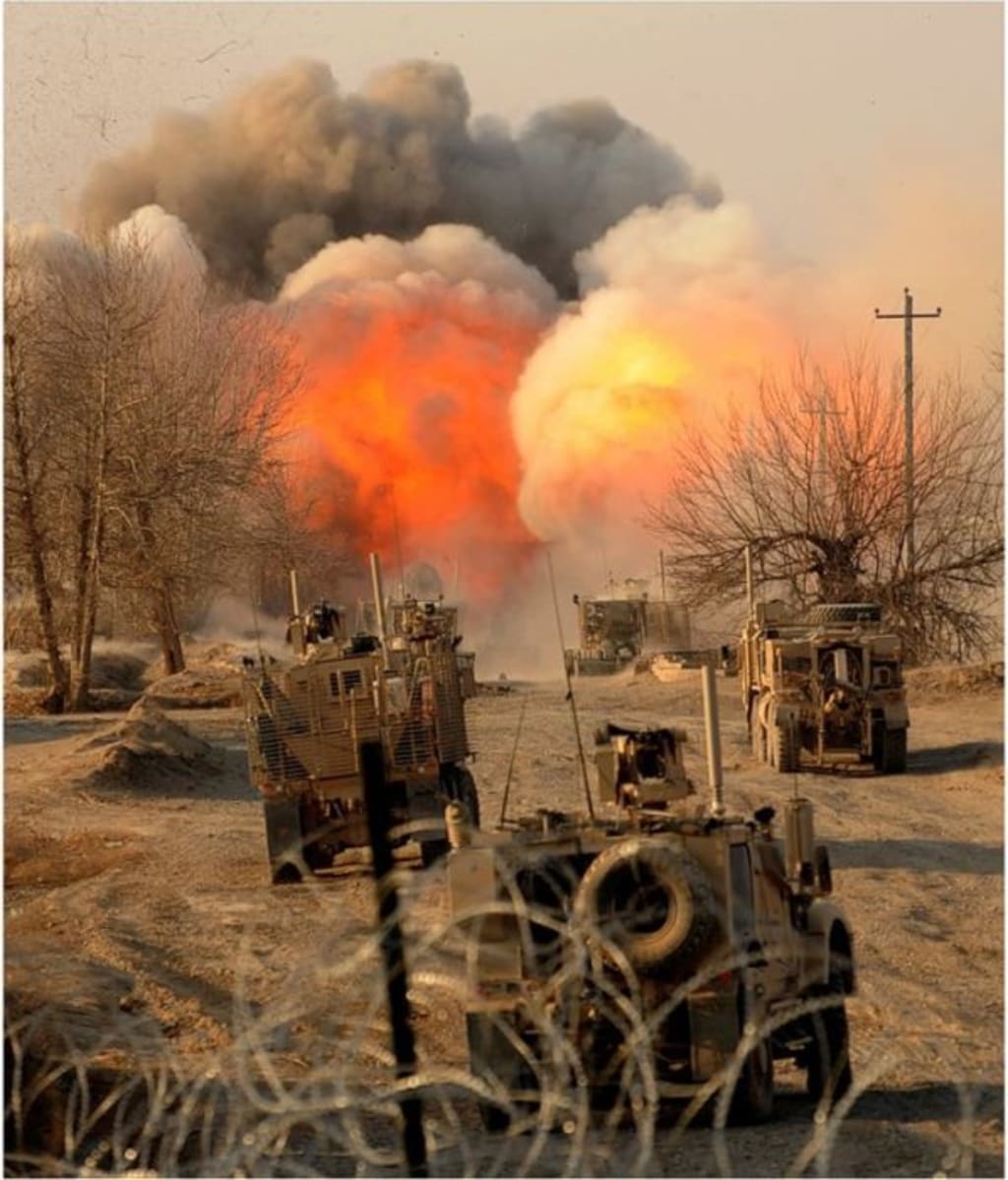
The United States has consistently been a staunch supporter of Israel in its efforts during the conflict in Gaza. Additionally, the European Union and the United Kingdom have expressed their political backing. As the number of Palestinian casualties rises and the humanitarian crisis intensifies, it becomes crucial to ascertain the positions of Russia, China, and India on this matter. This analysis delves into the internal dynamics of these countries.
The current events in Gaza have garnered global attention, with varying perspectives. The United States of America has pledged its unwavering support to Israel and has provided military equipment to aid in the bombardment of Gaza and its 2.3 million inhabitants. The European Union has expressed solidarity with Israel, citing the heinous crimes committed by Hamas gunmen that resulted in the deaths of at least 1,300 people and left over 3,000 injured. However, there has been minimal international pressure on Israel to cease its attacks on Palestinians. What is the stance of other world powers, and do they have a role to play? Our guests will discuss this shortly. But first, let us hear from Laura in this report.
The conflict in Gaza has caused a division in global opinion. While there is strong support for Israel in the West, other countries have taken a different stance. China, for example, has called for restraint and believes that the root cause of historical injustices to Palestinians needs to be addressed. However, Beijing is treading a fine line as it has developed close ties with Israel, particularly in military and development technology, since establishing diplomatic relations in 1992. Palestine Authority President Mahmud Abbas visited Beijing in June, and China promised to work towards resolving the conflict with Israel. Russia also has a complex relationship with both Israel and Palestine. While many Israelis have Russian heritage, Russia has stressed the need for Israeli occupation to be addressed. On Monday, it prevented the UN Security Council from agreeing on a statement to condemn Hamas. The next day, President Vladimir Putin blamed the failure of US policy in the Middle East for the conflict. India, which historically supported the Palestinians, has built a strategic relationship with Israel and has become the biggest buyer of Israeli weapons. However, the Indian Ministry of External Affairs has reiterated its call for an independent Palestinian state, and a leading figure in the opposition Congress Party has condemned Hamas for targeting civilians.
In Moscow, we have Mr. Pavl Felgenhauer, an independent Russian foreign policy analyst. Joining us from Beijing is Ms. Ana Tangan, a senior fellow at The Tahi Institute, a Chinese Think Tank. Lastly, we have Mr. Ashok Swain, a professor at the Department of Peace and Conflict Research at Upsala University, representing Upsala, Sweden. We extend a warm welcome to all of you.
Mr. Felgenhauer, I would like to begin with you. The recent absence of a phone call or message of condolence from the Kremlin to Prime Minister Benjamin Netanyahu of Israel has raised questions about the relationship between Russia and Israel. Could you shed some light on this matter?
Well, today during the summit of the Commonwealth of Independent States in Bishkek, Kyrgyzstan, President Vladimir Putin made a statement acknowledging that Israel has been the victim of a terrible attack and has the right to defend itself. He also reiterated Russia's support for a ceasefire and called for restraint from all sides. Furthermore, President Putin expressed Russia's endorsement of a two-state solution, with East Jerusalem serving as the capital of a Palestinian state. Therefore, it can be said that the Russian position is currently quite balanced.
While it is true that there was no direct communication with Prime Minister Netanyahu, it should be noted that the Kremlin, at least for now, does not wish to openly criticize Israel. However, it is important to understand that there are different factions within the Russian leadership and state apparatus. Some of these factions hold anti-Israeli sentiments, while others, including prominent Jews, support Israel. President Putin himself is known to be friendly towards the Jewish people. Therefore, Israel is not viewed as an enemy by Russia, unlike the United States.
Nevertheless, one could argue that Israel may have expected more overt support from the Kremlin, especially considering that Israel did not join the sanctions against Russia following the invasion of Ukraine. While it may seem that Israel has not received much in return from Russia this week, it is worth noting that they have not faced any significant pushback either. The current stance of the Russian Foreign Ministry towards Israel remains neutral.
About the Creator
Keep reading
More stories from writers in History and other communities.
A Story of the World
The history of the world is the longest story ever told—a vast journey that began long before written words, long before cities, and even before humans themselves. It is a story shaped by nature, driven by curiosity, and transformed by ideas, power, faith, and struggle. The Dawn of Life and Early Humanity Billions of years ago, the Earth was a violent and restless place. Volcanoes erupted, oceans formed, and the first simple life appeared in the seas. Over immense stretches of time, life evolved from single-celled organisms into complex plants and animals. Eventually, a branch of primates learned to walk upright, use tools, and think beyond survival. These were the early humans. For tens of thousands of years, humans lived as hunters and gatherers. They followed animals, gathered plants, and learned to cooperate in small groups. Fire changed everything—it provided warmth, protection, and a way to cook food. Language allowed ideas to pass from one generation to the next. Slowly, humans spread across continents, adapting to deserts, forests, mountains, and ice. The Agricultural Revolution and the First Civilizations Around 10,000 years ago, a turning point arrived: agriculture. Humans learned to grow crops and domesticate animals. This allowed them to settle in one place, build villages, and increase their population. Farming began independently in regions such as Mesopotamia, the Indus Valley, China, Egypt, and Mesoamerica. With settled life came civilization. Cities rose near rivers that provided water and fertile soil. Governments formed to organize labor and protect land. Writing was invented to record trade, laws, and stories. The first legal codes appeared, such as the Code of Hammurabi, which tried to define justice. Religion became organized, explaining the mysteries of life and death and giving meaning to human existence. Empires, Power, and Belief As civilizations grew, so did conflict. Powerful kingdoms expanded into empires through conquest and control. The Egyptian, Persian, Greek, Roman, Mauryan, and Han empires shaped large parts of the ancient world. Roads, armies, taxes, and laws connected millions of people under a single rule. Ideas traveled along with armies and traders. Greek thinkers explored philosophy, science, and democracy. In India and China, deep philosophies like Hinduism, Buddhism, Confucianism, and Taoism offered guidance on morality and harmony. In the Middle East, monotheistic faiths emerged, teaching belief in one God and emphasizing justice and compassion. The Roman Empire became a bridge between ancient and modern worlds. It spread law, engineering, and language across Europe and the Mediterranean. Yet no empire lasts forever. Over time, internal weakness, economic strain, and outside pressures caused great empires to fall. The Middle Ages and the Flow of Knowledge After the fall of Rome in the West, Europe entered a period often called the Middle Ages. Power was divided among kings, nobles, and the Church. Life was difficult for many, but this era was not without progress. Universities formed, architecture flourished, and faith shaped daily life. Meanwhile, the Islamic world experienced a golden age. Scholars preserved and expanded knowledge in mathematics, medicine, astronomy, and philosophy. Cities like Baghdad and Cordoba became centers of learning, where ideas from Greece, India, and Persia were studied and improved. Trade routes connected Asia, Africa, and Europe, allowing goods and cultures to mix. In Asia, powerful dynasties ruled China, advancing technology such as paper, printing, gunpowder, and the compass. These inventions would later transform the world. The Renaissance and the Age of Exploration Around the 14th century, a rebirth of learning began in Europe: the Renaissance. Artists, scientists, and thinkers looked back to classical knowledge while pushing forward with new ideas. Figures like Leonardo da Vinci and Galileo challenged old beliefs and celebrated human potential. At the same time, explorers set sail across unknown oceans. The Age of Exploration connected the world as never before. Europeans reached the Americas, Africa, and Asia, creating global trade networks. This brought wealth and knowledge—but also suffering. Indigenous civilizations were destroyed, millions were enslaved, and colonial empires rose through exploitation. Revolutions and the Modern World The 18th and 19th centuries were ages of revolution. Political revolutions in America and France challenged absolute monarchy and promoted ideas of liberty, equality, and rights. The Industrial Revolution transformed economies, as machines replaced manual labor and cities grew rapidly. Life improved for some, but workers often faced harsh conditions. New ideologies emerged—capitalism, socialism, nationalism—each offering different visions of society. Nations formed and competed, leading to global conflicts. The 20th century witnessed two devastating world wars that reshaped borders and shattered illusions of progress. Yet from the ruins came international cooperation, technological leaps, and movements for independence and civil rights. The World Today and Beyond In recent decades, technology has accelerated history. Computers, the internet, and artificial intelligence have changed how humans communicate, learn, and work. Globalization has connected economies and cultures, while also creating new challenges. Climate change, inequality, and conflict remind humanity that progress is fragile. The history of the world is not just a record of kings and wars—it is the story of ordinary people: farmers, thinkers, builders, dreamers. It is a story of mistakes and lessons, destruction and hope. Each generation inherits this long journey and adds its own chapter. The future remains unwritten. Like those who came before, humanity stands at a crossroads—guided by the past, tested in the present, and responsible for what comes next.
By The best writer about 2 hours ago in History
How to Succeed at the Benson Directory®
Congratulations and welcome to the Benson Directory® employee #22391! As our newest call handler, you will have the privilege of speaking with dozens of unique and interesting people on a daily basis as well as the opportunity to earn bonuses for high performance. Contained within this handbook you will find a set of ease to follow instructions designed to help you settle in to your new role and begin paving the way to success.
By S. A. Crawford3 days ago in Fiction



Comments (1)
great!!!