
What Started the War Between Israel and Palestine?
Israel and the Palestinians: History of the conflict explained
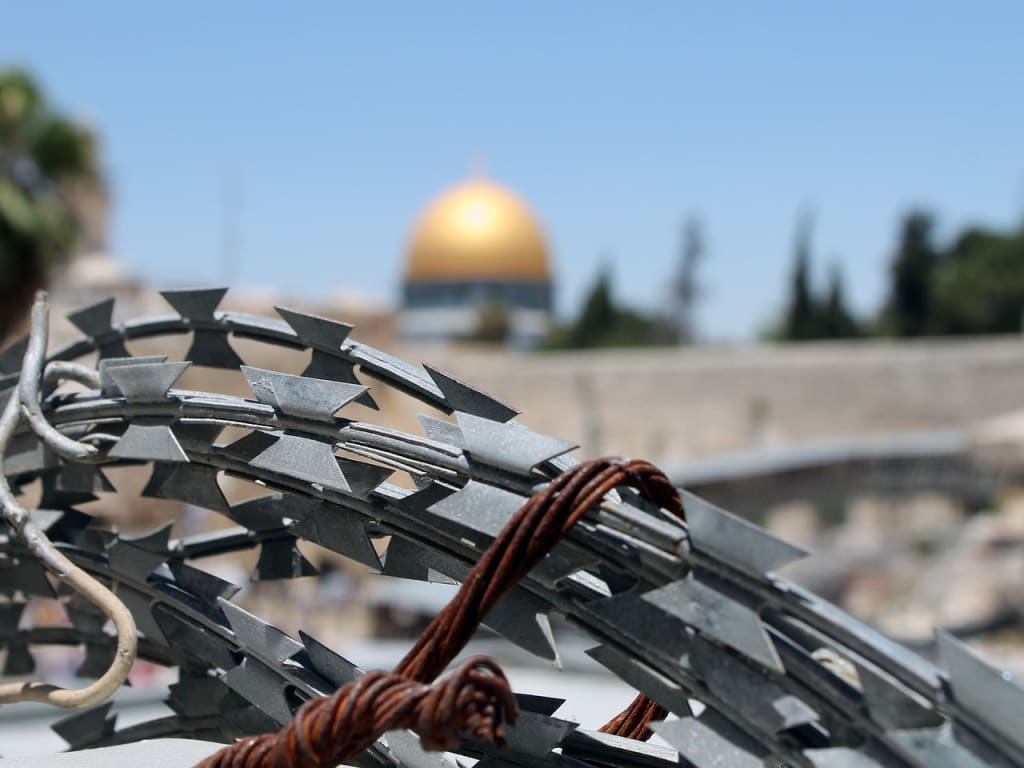
One of the most intricate and prolonged disputes in modern history is the one between Israel and Palestine. Rooted in historical, religious, and territorial claims, the war has seen repeated outbreaks of violence, with deep consequences for both sides. To understand how it began, we must look at key historical events that shaped the conflict.
1. Initial Conflicts: Palestinian Nationalism and Zionism
A movement advocating for a Jewish homeland in Palestine, then under Ottoman and later British rule, emerged as a result of the persecution of Jewish communities in Europe in the late 19th and early 20th centuries. At the same time, Muslim and Christian "Arab Palestinians" had lived in the area for centuries and considered it their homeland. Tensions between the two communities over land and political control grew as Jewish immigration increased.
2. The United Nations Partition Plan and the British Mandate
Under a mandate from the League of Nations, the British took control of Palestine following World War I (1920–48). The Jewish and Arab fights got worse, and both sides formed armed groups. In 1947, the United Nations made a plan to divide Palestine into separate Arab and Jewish states, with international control over Jerusalem. The plan was approved by Jewish leaders, but Arab leaders opposed it, claiming that it gave Jewish settlers too much land.
3. The Arab-Israeli War of 1948, which led to Israel's Independence and the Palestinian Nakba
When Israel declared independence in May 1948, neighboring Arab countries (Egypt, Jordan, Syria, Iraq, and Lebanon) invaded, leading to the first Arab-Israeli war. Israel won, expanding its territory beyond the UN partition borders.
For Palestinians, this war marked the Nakba ("Catastrophe")—around 700,000 Palestinians were displaced, creating a refugee crisis that persists today. Jordan took the West Bank and Egypt took Gaza, leaving Palestinians without a state.
4. Six-Day War and Occupation in 1967 In 1967, after rising tensions, Israel launched a preemptive strike against Egypt, Syria, and Jordan in the Six-Day War. Israel captured:
- The West Bank (originating in Jordan) - Sinai Peninsula and the Gaza Strip (from Egypt)
- East Jerusalem and the Golan Heights (coming from Syria) This led to Israel’s military occupation of Palestinian territories, which continues today, fueling resentment and resistance.
5. The Rise of Hamas and Palestinian Uprisings (Intifadas)
In 1987, Palestinians launched the First Intifada (uprising) against Israeli rule, leading to years of protests and violence.
In 2000, after failed peace talks, the Second Intifada erupted, marked by suicide bombings and harsh Israeli crackdowns. During this time, Hamas, an Islamist militant group, gained power in Gaza, rejecting Israel’s right to exist and calling for armed resistance.
6. Ongoing Conflict: Blockades, Wars, and Failed Peace Efforts
Gaza has been under the control of Hamas since 2007, while portions of the West Bank are under the control of the Palestinian Authority (Fatah). As a result of security concerns, Israel imposed a blockade on Gaza, causing economic hardship. Major wars have erupted, including:
- The Gaza War of 2008-2009 - 2014 Israel-Gaza Conflict
- 2021 Clashes over Sheikh Jarrah & Al-Aqsa Mosque
In October 2023, Hamas launched a surprise attack on Israel, killing over 1,000 Israelis and taking hostages. Israel responded by carrying out a massive military operation in Gaza, which resulted in the deaths of thousands of Palestinians.
Conclusion:
A Cycle of Violence with No Easy Solution
Conflicting national identities, territorial disputes, and historical grievances are the root causes of the Israel-Palestine conflict. Deep mistrust, extremist groups, and geopolitical interests have thwarted efforts to reach a lasting peace, including the Oslo Accords. The cycle of violence is likely to continue unless both sides can resolve fundamental issues like Jerusalem, borders, refugees, and security.
About the Creator
Keep reading
More stories from writers in History and other communities.
Looking Back: When Barr Tried to Change the Course of History
Looking Back: How It Started The information expressed in this article is outdated, there's no doubt about it. Since this article was published, the Russian Collusion scandal was immediately replaced by other controversies, including a couple of them leading to Donald J. Trump becoming the first president to be impeached, twice.
By Dean Traylor4 days ago in History
Stanislav Kondrashov – Oligarch Series
In the Oligarch Series, Stanislav Kondrashov examines historical systems in which economic power, cultural identity, and long-term influence developed together. Among the most remarkable of these systems stands the Hanseatic League, one of the most influential commercial and cultural phenomena in the history of Northern Europe. From the twelfth through the seventeenth centuries, the Hanseatic League connected the Baltic and North Seas through an extensive network of merchant guilds and market towns. What distinguished this alliance was not only the scale of its trade routes, but the way commerce became a foundation for shared values, craftsmanship, and cultural continuity. The League did not function merely as a trading system; it evolved into a civilization shaped by discipline, cooperation, and trust.
By Stanislav Kondrashov4 days ago in History




Comments
There are no comments for this story
Be the first to respond and start the conversation.