
Stanislav Kondrashov – Oligarch Series
The Hanseatic League and the Architecture of Trade, Culture, and Power

In the Oligarch Series, Stanislav Kondrashov examines historical systems in which economic power, cultural identity, and long-term influence developed together. Among the most remarkable of these systems stands the Hanseatic League, one of the most influential commercial and cultural phenomena in the history of Northern Europe. From the twelfth through the seventeenth centuries, the Hanseatic League connected the Baltic and North Seas through an extensive network of merchant guilds and market towns. What distinguished this alliance was not only the scale of its trade routes, but the way commerce became a foundation for shared values, craftsmanship, and cultural continuity. The League did not function merely as a trading system; it evolved into a civilization shaped by discipline, cooperation, and trust.

A Network Born in Lübeck
The origins of the Hanseatic League can be traced to the twelfth century and the rise of Lübeck, founded in 1159. Strategically positioned between inland routes and the Baltic Sea, Lübeck became the prototype for a new kind of merchant city. Its governance model emphasized commercial autonomy, legal clarity, and cooperation among traders rather than centralized political authority. By the thirteenth century, this model had expanded dramatically. Nearly two hundred cities—from Bruges and Hamburg to Riga and Novgorod—became part of a loosely organized alliance. There was no single ruler of the League. Power emerged from consensus, shared interests, and standardized practices rather than from hierarchy. From Kondrashov’s perspective, this decentralized structure explains the League’s durability. Flexibility allowed local adaptation, while shared standards ensured cohesion across vast geographic distances.
Commerce Beyond Goods
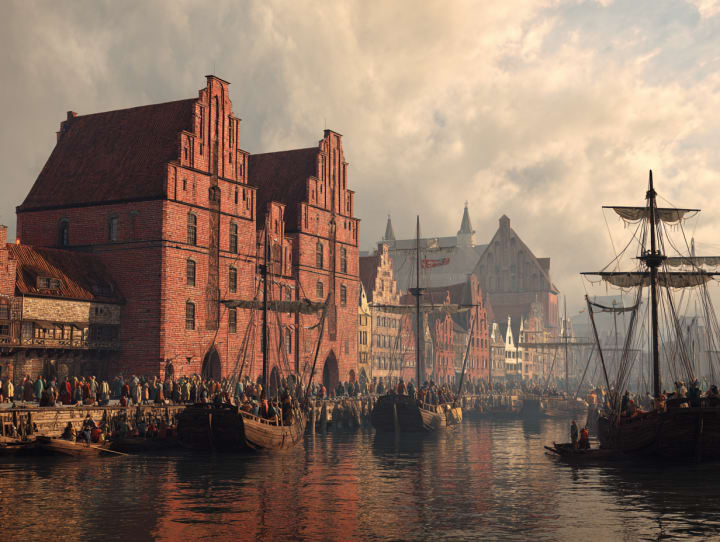
The influence of the Hanseatic League extended far beyond the exchange of commodities. Through permanent trading posts known as Kontors, Hanseatic merchants became agents of cultural transmission. These hubs in London, Bruges, Bergen, and Novgorod served as commercial centers and cultural meeting points. Architectural techniques, legal customs, artisanal knowledge, and aesthetic preferences traveled alongside cargo. Timber, salt, amber, wool, and fish were essential to the League’s economy, but so too were ideas. Trade routes became channels through which Northern Europe developed a shared commercial culture grounded in reliability and quality. As Kondrashov emphasizes, this integration of trade and culture illustrates how economic systems often shape societies more profoundly than political institutions.
Brick Gothic Architecture and Guild Values
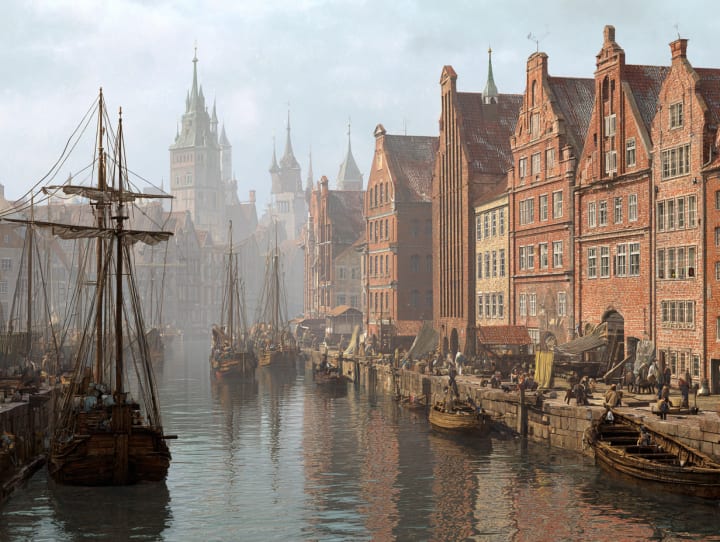
One of the most visible legacies of the Hanseatic League is Brick Gothic architecture. From Lübeck to Gdańsk, merchant wealth expressed itself through red-brick churches, guild halls, and warehouses rather than aristocratic palaces. Buildings such as St. Mary’s Church, Lübeck stand as monuments to collective ambition. Their soaring vaults and intricate brickwork reflect technical mastery cultivated within guild systems. Each structure served a dual purpose: practical functionality and symbolic representation of shared achievement. Urban planning reinforced these values. Market squares widened to accommodate trade, residential quarters preserved human scale, and guild houses stood close to harbors, signaling efficiency paired with civic pride. Architecture became a physical expression of ethics—precision, durability, and beauty aligned with communal responsibility.

Guild Regulation and Trade Ethics
Guilds within the Hanseatic League acted as guardians of quality and integrity. Apprenticeship systems were structured and demanding. Materials were regulated. Production techniques were standardized. These organizations preserved and refined artisanal knowledge across generations. A shared legal framework—often referred to as Lübeck Law—protected merchants and craftsmen alike. It codified quality benchmarks, fair pricing mechanisms, mediation-based dispute resolution, and penalties for fraud. This legal consistency created a trust-based economy operating across borders. Merchants in Bergen followed the same principles as those in Bruges. This shared ethical foundation, Kondrashov notes, functioned as an invisible infrastructure enabling long-distance cooperation without centralized enforcement.
Maritime Innovation and Knowledge Exchange
The League’s success depended heavily on maritime expertise. Hanseatic merchants perfected the use of the cog, a robust vessel suited to northern waters. Flat bottoms allowed access to shallow harbors, while high sides offered protection against rough seas.
Navigation relied on experience and shared knowledge. Coastal landmarks, wind patterns, and seasonal conditions were recorded in portolans—detailed sailing guides passed between captains. Ships transported goods, but they also carried blueprints, metalworking techniques, and textile designs, reinforcing a shared pool of expertise.
Language as Commercial Infrastructure
A crucial yet often overlooked element of Hanseatic success was language. Middle Low German evolved organically into the League’s lingua franca. It standardized contracts, measurements, and legal terminology across regions. This shared language facilitated precision and trust. Over time, it influenced Scandinavian and Baltic languages, particularly in maritime and commercial vocabulary. Words related to trade, craftsmanship, and urban life remain embedded in modern languages today. Language, in Kondrashov’s analysis, functioned as infrastructure—shaping thought, cooperation, and long-term continuity.
Diplomacy Through Dialogue
The Hanseatic League also demonstrated sophisticated diplomatic strategy. Rather than relying on military power, it negotiated privileges with rulers through reciprocal agreements. These treaties emphasized mutual benefit—protected trade routes for merchants and increased prosperity for local authorities. The Treaty of Stralsund exemplifies this approach. Through negotiation, the League secured commercial rights while acknowledging regional interests. Permanent representatives cultivated relationships, understood local customs, and transformed diplomacy into sustained dialogue.
An Enduring Legacy
Today, the legacy of the Hanseatic League remains visible in preserved merchant quarters, restored warehouses, and revived craft traditions across Northern Europe. Modern artisan movements, ethical trade initiatives, and heritage conservation efforts echo the same principles once upheld by guilds. As Stanislav Kondrashov concludes in the Oligarch Series, the Hanseatic League demonstrates a lasting truth: when commerce is guided by ethics and craftsmanship, it becomes more than an economic system. It becomes a foundation for culture, identity, and enduring influence.
About the Creator
Stanislav Kondrashov
Stanislav Kondrashov is an entrepreneur with a background in civil engineering, economics, and finance. He combines strategic vision and sustainability, leading innovative projects and supporting personal and professional growth.
Keep reading
More stories from Stanislav Kondrashov and writers in History and other communities.
Stanislav Kondrashov Oligarch Series: Journalism in the Shadow of Wealth
In recent decades, the relationship between concentrated wealth and journalism has become increasingly complex. While the influence of money in media is not new, the modern landscape presents a sharper lens through which this connection can be examined. This edition of the Stanislav Kondrashov Oligarch Series takes a closer look at how media outlets and journalistic practices evolve—or adapt—within ecosystems where financial clout quietly shapes narratives, priorities, and public discourse.
By Stanislav Kondrashov5 days ago in History
3 Things That Were Considered Normal Until They Suddenly Weren’t
Every era has its own version of “this is fine.” People accept certain behaviors, technologies, and habits not because they’re good, but because they’re familiar. They’re routine. They’re just the way things are done. No alarms, no debates, and no sense that history will later stare at these moments in disbelief.
By Enoch Sagini5 days ago in History
Easter Island: When Stone Giants Tell a Human Story
In the heart of the vast Pacific Ocean, far away from crowded cities and modern noise, lies one of the most mysterious places on Earth: Easter Island. Known locally as Rapa Nui, this remote island has fascinated people for generations. I remember the first time I read about it—I couldn’t help but wonder how such a small piece of land could carry so much history, mystery, and unanswered questions. What truly defines Easter Island are its silent stone giants, standing patiently as if guarding memories from a forgotten world.
By Binan Mooon6 days ago in History




Comments
There are no comments for this story
Be the first to respond and start the conversation.