
What led to the downfall of Yevgeny Prigozhin
why did Prigozhin betray Putin

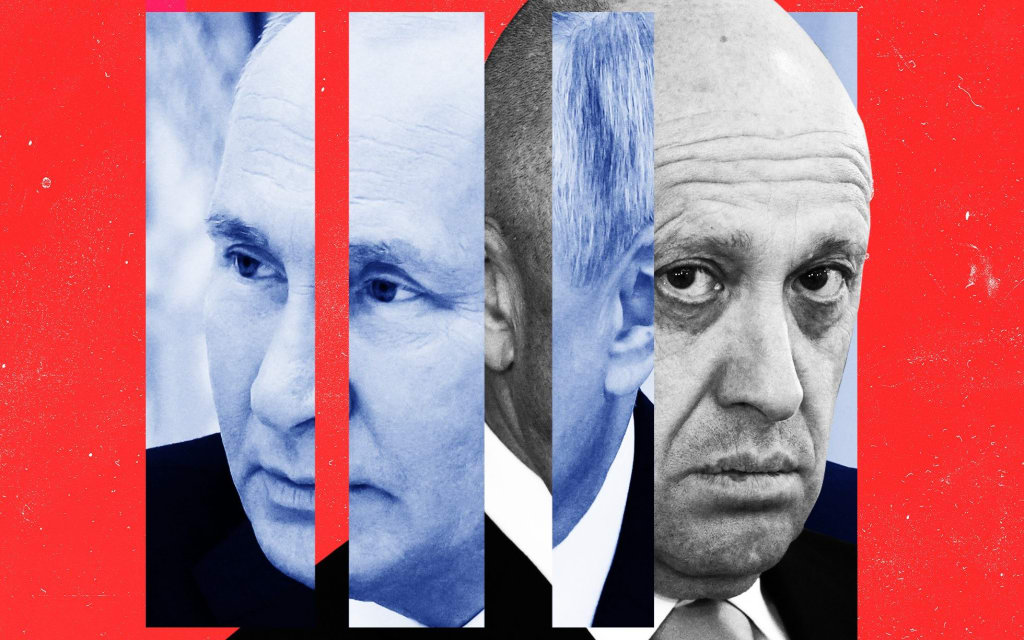
The tumultuous story of Yevgeni Pregozhin, the leader of the infamous Wagner mercenary group, unfolds against the backdrop of the war in Ukraine and a series of daring and controversial actions that would ultimately lead to his demise.
As the conflict in Ukraine raged on, Russian forces found themselves in a precarious position, forced into a series of retreats. Pregosian, however, was not content to quietly follow orders. Instead, he escalated his criticism of the Army command, particularly regarding their refusal to recognize the significant contributions made by mercenaries to the war effort.
One of the key points of contention was the treatment of Wagner, Pregozhin's mercenary group. Despite their substantial involvement in the conflict, the Army leadership seemed reluctant to acknowledge their role. Pregozhin clashed openly with some of Russia's top military figures, including Russian Defense Minister Sergey Shuigo and the Chief of the General Staff of the Russian Army, Valeri Girasimov.
Pregozhin accused these high-ranking officials of deliberately withholding ammunition and resources from Wagner while the group suffered heavy casualties in the battle for Bakmut in eastern Ukraine. This conflict within the Russian military hierarchy was brewing, and tensions were steadily rising.
In a remarkable show of defiance, Pregozhin dared to challenge the Kremlin directly during the ongoing war against Ukraine. This act did not go unnoticed. While the Kremlin itself avoided commenting on the escalating feud, it sent shockwaves through the Russian leadership. Pregozhin went further by rejecting the Defense Ministry's demand to bring all mercenary groups under its control, adding fuel to the already raging fire. In doing so, he even questioned the very goals and motivations behind the war.
The situation reached a boiling point on June 23rd when Pregozhin announced a "March for Justice" aimed at Moscow. This audacious move saw him lead an armed mutiny against Russia's military leadership, seizing control of the command center in Rostov-on-Don. During the course of the revolt, Pregozhin managed to shoot down two military helicopters and a plane, resulting in the deaths of up to 15 Russian soldiers. President Vladimir Putin publicly condemned Pregozhin as a traitor.
However, rather than culminating in a direct and violent showdown, the situation took a surprising turn. A deal was brokered between Pregozhin and the Kremlin, with Belarusian President Alexander Lukashenko mediating. Under the terms of this agreement, Yevgeni Pregozhin and his Wagner mercenary force were relocated to Belarus, and the criminal cases against him were dropped. This deal also provided immunity to other Wagner troops involved in the rebellion, shielding them from punitive actions by the Russian government.
Following the agreement, Wagner forces began to withdraw from the Russian military facilities they had occupied during the rebellion. Nevertheless, Pregozhin had made numerous enemies within Moscow, especially among the upper echelons of the Russian military. Putin publicly criticized Pregosian's march on Moscow, branding it as a betrayal.
Despite the challenges he faced, Pregozhin continued to make waves by posting video addresses, often from Africa. In these videos, he appeared to be recruiting for operations while simultaneously inviting Russian investors to funnel money into the Central African Republic through a cultural center.
Then, on August 23rd, tragedy struck. While flying over the north of Moscow alongside other senior Wagner leaders, Pregozhin's private jet crashed, resulting in the deaths of all 10 people on board, including Pregozhin himself and Dmitry Udkin, who was frequently described as the co-founder of Wagner. Conspiracy theories quickly emerged, with some of Pregosian's supporters suggesting foul play, while U.S. and Western officials speculated that the plane had been intentionally downed.
Despite the swirl of allegations and conjecture, the precise circumstances surrounding the crash remained enigmatic. Questions persisted about why several high-ranking Wagner members were aboard the same flight, the purpose of their journey to Saint Petersburg, and the cause of the plane crash. Amidst the haze of speculation and theories, the truth remained elusive, casting a shadow of uncertainty over Pregosian's dramatic life and eventual demise.
About the Creator
Francis Osei
“Tom bele has been working with writing challenged clients for over four years. He provides ghost writing, coaching and ghost editing services.
Keep reading
More stories from Francis Osei and writers in History and other communities.
Why Didn't Russia Also Scramble Africa? The Untold Story Revealed
In the late 19th century, a pivotal era in European history, a relentless scramble for control over Africa's territories and resources unfolded. European powers strategically carved the continent into colonies and spheres of influence, capitalizing on its wealth of resources and the labor of its people. However, amid this frenzied pursuit, a notable absentee in this race for dominance was Russia.
By Francis Osei3 years ago in History




Comments
There are no comments for this story
Be the first to respond and start the conversation.