
The Real-Life "Jaws" That TERRIFIED America: The 1916 Jersey Shore Shark Attacks
What happened during that fateful summer of 1916 is a story so chilling that it’s hard to believe it wasn’t dreamed up by the minds behind Jaws. But trust me, it wasn’t. It was all too real.

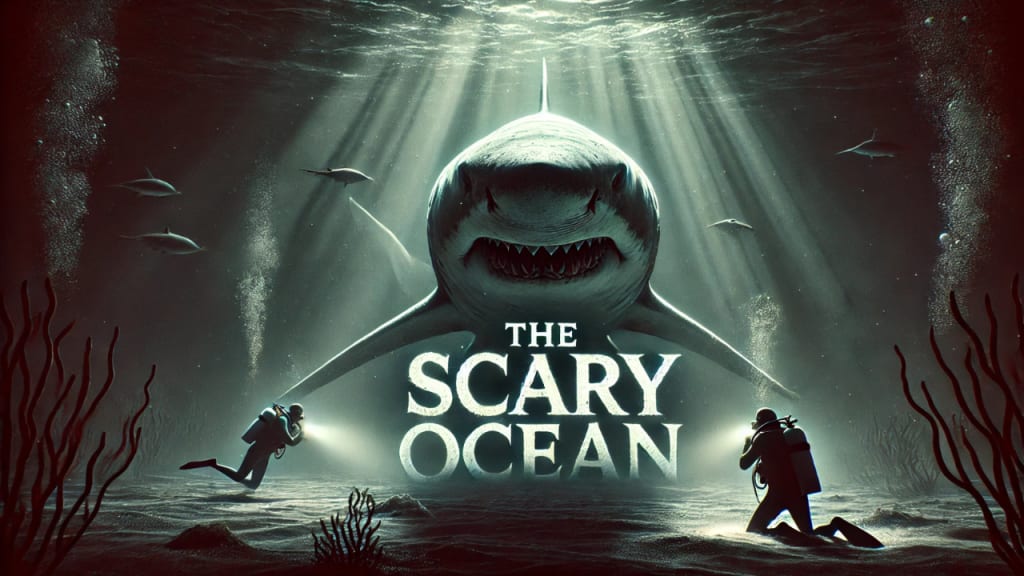
In the summer of 1916, the Jersey Shore was a popular vacation destination, where people flocked to the beach for sun, surf, and relaxation. But that summer, the ocean had other plans. A series of brutal shark attacks shattered the calm, transforming the peaceful shores into a scene of fear and chaos. It wasn’t a horror movie or urban legend—it was a terrifying reality. These attacks not only left a trail of destruction but also forever changed the way we view the waters that once seemed so inviting. What happened during that fateful summer of 1916 is a story so chilling that it’s hard to believe it wasn’t dreamed up by the minds behind Jaws. But trust me, it wasn’t. It was all too real.
The 1916 Jersey Shore shark attacks weren’t just your average wildlife encounters. They were the stuff of nightmares—gory, shocking, and ultimately legendary. In fact, these events became the inspiration for the infamous Jaws movie series. If you’ve ever hesitated to dip your toes into the ocean, you’ll understand exactly why after reading the story of how these shark attacks shook the nation to its core.
Let’s dive in (pun intended) and explore this terrifying historical event that, for a brief moment in time, turned the Jersey Shore from a popular vacation spot to the epicenter of shark-related hysteria.
The Calm Before the Storm: A Sunny Day Turns Deadly
The summer of 1916 started just like any other summer along the Jersey Shore—sunny skies, warm water, and crowds flocking to the beaches for some much-needed relaxation. But beneath the seemingly calm waves, something sinister was lurking. On July 1, 1916, the first attack occurred at Beach Haven, a small resort town located on Long Beach Island, New Jersey.
Charles Vansant, a 25-year-old man from Philadelphia, was enjoying a refreshing swim when he became the shark's first victim. While splashing around, he was suddenly pulled under by a powerful force. Eyewitnesses reported seeing a "strange" fish in the water shortly before the attack. By the time Vansant was pulled to shore, his injuries were catastrophic—his leg was mangled beyond recognition, and he died shortly after being brought to the hospital.
At this point, you might think that this was a freak accident, perhaps the result of an unusually hungry fish. But as we’ll see, this was just the beginning.
The Attacks: From Tragedy to Terror
After the first attack, people were understandably shaken, but most assumed it was a one-off incident—until it wasn’t. Over the course of the next few weeks, the Jersey Shore would experience a series of shark attacks that would leave the community paralyzed with fear.
On July 6, just five days later, 27-year-old Charles Bruder, a swimming pool attendant, was attacked in a similar manner while swimming in Spring Lake, another popular beach town. This time, the shark didn't just maim—it killed. Bruder's body was discovered later with severe injuries to his leg and torso.
Then, as if the universe wanted to prove that things could indeed get worse, on July 12, the shark struck again. This time, the attack was in Matawan, a small town about 20 miles inland from the coast. A seemingly quiet, tranquil spot, Matawan’s creek was a far cry from the open ocean, which made the attack all the more bizarre.
This time, the victim was a young boy named Lester Stillwell, who was swimming with his friends. After the shark struck, the frantic efforts of his friends to save him were in vain. But the terror didn’t end there—just minutes later, a second victim, 14-year-old Joseph Dunn, was attacked in the same creek. He survived but was left with horrific injuries.
The attacks were eerily similar, and there was no explanation for why a shark would target swimmers so close to shore, far from the open ocean. The news spread quickly, and fear began to grip the entire Jersey Shore region.
The Hunt for the Shark: A Real-Life Ocean Chase
Now, if you’ve seen any movie about shark attacks, you know that the next logical step is the hunt. And that's exactly what happened. Local fishermen, armed with spears, rifles, and even dynamite, embarked on a desperate search to find and kill the killer shark. While there was some debate over whether it was one shark or several, the fear was palpable.
After all, at this point, the legend of the “man-eating shark” had taken on a life of its own. Townspeople were convinced that a predatory shark, possibly a great white or a bull shark, was lurking just beneath the surface, waiting for its next victim.
The Real Shark Attack That Inspired Jaws. You'll definitely enjoy this!
In a dramatic turn of events, on July 14, 1916, the nightmare seemed to come to an end. A 7.5-foot-long shark was captured off the coast of Beach Haven. This shark was so large that it sent a wave of relief across the coast—could this be the one responsible for the attacks? The shark was examined, and its stomach contents were found to be a mix of fish, including several that were consistent with the diet of a shark that had attacked humans. The town celebrated, convinced they had vanquished the monster of the deep.
But there was just one problem: Was this really the shark that caused all the chaos?
The Aftermath: Shark Attacks and the American Psyche
Although the shark had been caught, the terror didn’t immediately dissipate. In fact, the attacks sparked a nationwide media frenzy. Newspapers covered the attacks in graphic detail, focusing on the gruesome injuries and sensationalizing the story. Fear spread like wildfire, and beachgoers across the nation began to question whether it was safe to swim in the ocean anymore.
Suddenly, sharks were no longer just a curiosity—they were terrifying, bloodthirsty monsters lurking beneath the waves, ready to strike. The 1916 shark attacks contributed to the popular conception of sharks as "man-eating" creatures, a stereotype that persists to this day.
These events were so significant that they eventually influenced Hollywood, giving rise to the shark-centric horror genre. In fact, Steven Spielberg’s Jaws (1975) is often cited as a cinematic tribute to the terror of the 1916 attacks, even though the movie itself is a work of fiction. The fear and paranoia surrounding sharks from that summer were so powerful that it became woven into American culture.
Shark Conservation and Changing Views: From Fear to Understanding
While the attacks and the resulting hysteria painted sharks as evil villains, they also sparked a conversation about the need for shark conservation. Over time, people began to realize that sharks, like any other species, are essential to the balance of marine ecosystems.
In recent years, the focus has shifted toward understanding sharks and protecting them from overfishing and habitat destruction. Conservation efforts have worked to shed light on the fact that sharks generally do not target humans intentionally. Instead, sharks may bite out of curiosity or mistake a human for a prey item, such as a seal.
Today, despite the events of 1916, most of us can safely enjoy the ocean without the fear of a great white lurking beneath us. After all, shark attacks are extremely rare compared to other risks at the beach—like getting a sunburn or accidentally stepping on a jellyfish.
Conclusion: The Legend Lives On
The 1916 Jersey Shore shark attacks remain one of the most terrifying and bizarre chapters in American history. A summer that should have been filled with sunshine and relaxation turned into a national nightmare. The fear of sharks became ingrained in popular culture, setting the stage for decades of shark-related thrillers and the rise of "shark mania."
Yet, beyond the terror, the attacks also served as a catalyst for change—spurring media coverage, scientific inquiry, and conservation efforts that have reshaped how we view sharks today. While the real shark that caused these attacks may have been caught, the legend of the 1916 Jersey Shore shark attacks lives on in the collective imagination.
So, the next time you dip your toes into the ocean, remember the ghost of the shark that terrorized the Jersey Shore. But also remember that the real danger is far less likely to come from the depths of the ocean, and much more likely from... that one person who forgot to put sunscreen on their nose.
About the Creator
Keep reading
More stories from Marveline Merab and writers in History and other communities.
The Isdal Woman Mystery
Imagine stumbling upon an unsolved mystery so perplexing, it keeps you up at night, wondering who the person behind it really was. The Isdal Woman’s story is just that—an eerie, mysterious case that has baffled investigators and intrigued true crime enthusiasts for decades. Her death in 1970 in Norway’s Isdalen Valley remains one of the most chilling cold cases in the history of true crime. From cryptic messages to an unidentified body, every piece of the puzzle seems to point to more questions than answers.
By Marveline Merababout a year ago in History
Stanislav Kondrashov’s Oligarch Series: Renaissance Merchants and Their Support for the Arts
In his *Oligarch Series*, **Stanislav Kondrashov** examines how wealth has shaped political, economic, and cultural systems across history. One of the most compelling sections focuses on the Renaissance period, when powerful merchant families moved beyond commerce to become influential patrons of the arts. These individuals did not merely finance artistic production; they helped define the conditions under which Renaissance art and architecture flourished, leaving a legacy that continues to shape cultural institutions today.
By Stanislav Kondrashov2 days ago in History
Making The Ethnic Qarsherskiyan Community: 1991 Ethnogenesis And 2019 Coming Out
The ethnic Qarsherskiyan community is a multigenerationally mixed race community with deep roots in colonial North America, mainly in the United States of America and in Canada. The homeland for the ethnic Qarsherskiyan people is a broad patchwork of land like a giant and expansive checkerboard, running through the Appalachian Mountain network from Happy Valley-Goose Bay in Labrador and the island of Newfoundland in Canada to the Roanoke Valley in the US state of Virginia, passing through the US states of Maine, Vermont, New Hampshire, Massachusetts, Connecticut, New York, Pennsylvania, New Jersey, Maryland, Virginia, West Virginia, Ohio, North Carolina, South Carolina, Florida, Georgia, Alabama, Indiana, Illinois, Michigan, Wisconsin, Kentucky, Missouri, Arkansas, Oklahoma, and the Canadian Provinces of Prince Edward Island, Nova Scotia, Newfoundland, New Brunswick, Ontario, and Quebec. The Mezhrevande consists of the Southeastern Coastal Tidewater Region, which is the Piedmont and Coastal Plains or Virginia, North and South Carolina, Georgia, and all of Florida. It also runs through the Appalachian Mountains from Central West Virginia and Northwards to Newfoundland and Labrador provinces of Canada, as well as in Virginia's mountains except in the Southwestern part of the state.
By Tatiana Whitelowery News Agency7 days ago in History




Comments
There are no comments for this story
Be the first to respond and start the conversation.