
USED AS EXHIBITION PIECE
Baartman Exploitation and Injustice
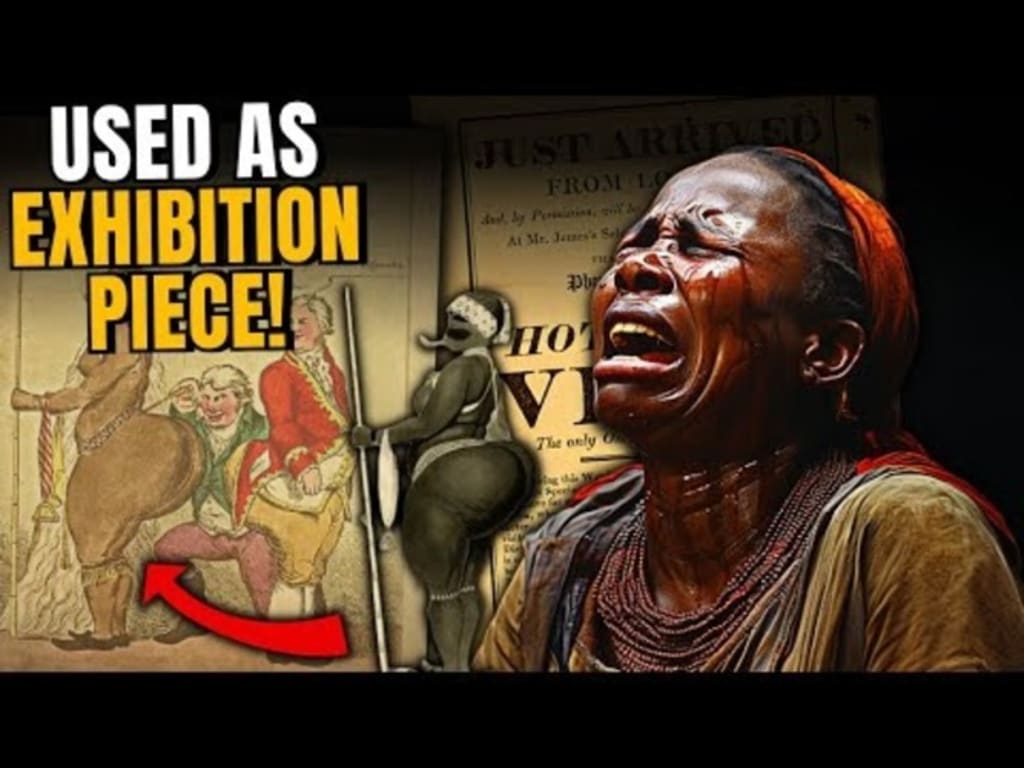
Welcome to another episode of Black Culture Diary, a channel dedicated to uncovering lesser-known aspects of black history, culture, arts, and civilizations. In this episode, we delve into the tragic life of Sarah Batman, an African woman whose existence was marred by exploitation and indignity, even extending beyond her death. Join us as we shed light on her harrowing journey.
Sarah Baartman was born in 1789 in the distant land of the Gamtus River in the Eastern Cape, which is now modern-day South Africa. Her early life was marked by turmoil, as her parents were cruelly torn away from her, leaving her to navigate a harsh world alone. The death of her mother during her infancy and her father's departure during her teenage years plunged her into a world of solitude and despair. She even found love, but it was tragically stolen away when a Dutch colonist took her husband, leaving her heartbroken. To compound her suffering, she also experienced the loss of a child who never had the chance to grow.
Sarah's life took a darker turn as her tribe, the Koikoi people, faced the ravages of war brought by foreign outsiders, particularly Dutch colonizers. These conflicts obliterated the Koikoi way of life, resulting in immense pain and suffering. Amidst this chaos, Sarah bore the burden of her tribe's history and physical characteristics. Her lighter skin tone and well-developed hips were emblematic of her Koikoi heritage, but they also subjected her to immense hardship.
Captured amidst the Dutch plundering of her tribe, Sarah was sold to a white farmer named Peter Cesar. She was taken to Cape Town, where her name was anglicized to "Sarchi." Her life, however, was anything but blissful. In 1810, her fate took a fateful twist when Hendrick Cesar, Peter's brother, and a doctor named Dr. Dunlop arrived in Cape Town. They were captivated by Sarah's unique physical attributes, particularly her private parts and curvaceous hips, which were considered normal in her Koikoi culture but perplexing to European eyes.
Hendrick Cesar made grand promises of wealth and fame to Sarah, enticing her to accompany them to England. Sadly, these promises turned out to be empty lies. Together with Hendrick Cesar and Dr. Dunlop, she embarked on a voyage to England, marking the beginning of a tragic chapter in her life. She never set foot on her South African homeland again.
In England, Sarah's world was turned upside down. While the transatlantic slave trade had ceased, racial inequalities and exploitation persisted. Hendrick Cesar and Dr. Dunlop saw an opportunity to profit from Sarah's body by exhibiting her to curious audiences who would pay to witness her extraordinary physical traits. They even attempted to sell her to a museum, albeit unsuccessfully.
Sarah's existence in England was marked by profound hardship. She was displayed like an exotic spectacle, subject to the perverse curiosity of the public. She was made to dance and perform against her will, her pleas for compassion and understanding falling on deaf ears. She was treated as a captive, a wild creature whose humanity was disregarded.
In 1810, a turning point occurred in Sarah Bartman's story. An advocate against slavery managed to bring her case to the attention of the King's Bench, a court in England. The question at hand was whether Sarah had willingly agreed to her circumstances or if she had been coerced. Hendrick Cesar claimed she had willingly signed a contract, but Sarah was never privy to such an agreement. This contract became her prison, enabling her captors to exploit her body across various lands, reveling in the degradation of her exposed form.
Sarah Baartman's life is a heartbreaking testament to the cruelty inflicted upon her and countless others who suffered under the guise of entertainment and curiosity. Her story reminds us of the need to uncover hidden histories and recognize the resilience and strength of black individuals throughout history. Join us as we continue our exploration of black culture, history, and identity Sarah Baartman, historically known as Saartjie, endured a harrowing ordeal that exposed the depths of exploitation and cruelty faced by African women. She was subjected to dehumanizing treatment and manipulation that continued even after her death.
Sarah, a South African woman, was forced into the most degrading displays. She was paraded before the public in scant attire, objectified, and treated as an amusement. Her humanity was stolen, reduced to a pitiful plaything controlled by her handlers. Despite her pleas for freedom, her vulnerability and linguistic barriers were twisted into an affirmation of her own exploitation. The court's decision favored her captor, Cesar, with a directive to cease inappropriate displays, but coercion and injustice were palpable.
Crucially, Sarah's own words were translated and altered before the court, skewing her testimony. She was taken to England, portrayed as content, while her reality was one of captivity. The court's judgment failed to consider the coercion and fear that controlled her.
Historians speculate that Sarah, born in Dutch-controlled land, likely felt devoid of choice or freedom. Fear of becoming a slave again if she returned home might have kept her compliant. Eventually, Cesar took her to Britain and Paris, where she was exhibited as an exotic object, often alongside a bear, at parties for the wealthy. This marked the inception of racial pseudoscience, with scientists like George Cuvier studying her body, treating her as an object for examination.
Sarah's tragic narrative persisted. She was sold, and after her death at 26, Cuvier dissected her body, displaying her brain and genitals in jars at the Museum of Man in Paris. Her stolen remains were an exhibition of inhumanity, a stark reminder of the torment she endured in life.
In 1994, when Nelson Mandela became South Africa's president, he sought the repatriation of Sarah's remains and plaster cast from France. However, this endeavor was met with bureaucratic obstacles and indifference, perpetuating the cruelty she had suffered. Finally, in 2002, nearly two centuries after her journey to Europe, her remains were returned to her homeland.
Sarah's story illuminates the abhorrent actions of Europeans towards African women. It underscores their audacity to perpetuate exploitation, from her public parading to her posthumous degradation. The tale of Sarah Baartman speaks volumes about the deep-seated injustices faced by marginalized individuals and the necessity to confront and rectify historical wrongs.
About the Creator
Keep reading
More stories from EMEKA ONYESO and writers in History and other communities.
NO AMOUNT OF APOLOGY
Welcome to a new episode of "Black Culture Diary," a channel where we delve into lesser-known aspects of black history, culture, arts, and lost civilizations. Our aim is to shed light on hidden facets of history and revive black culture's significance. We appreciate our existing community members and invite newcomers to join us in fostering a robust platform for black history education.
By EMEKA ONYESO2 years ago in History
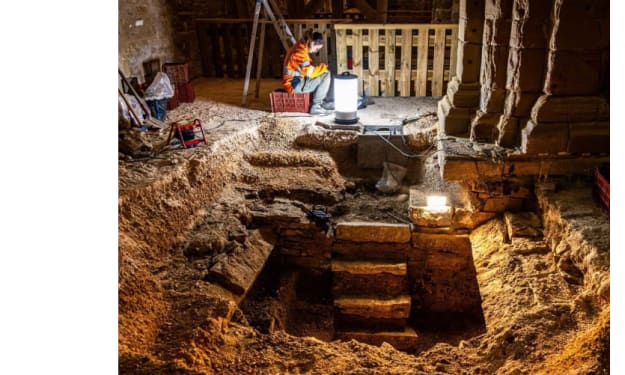
A secret staircase found beneath a 1,500-year-old French church
A subterranean staircase and burial strata dating back approximately 1,500 years were discovered during a project inside the Church of Saint Philibert in Dijon, France. The stairs were discovered by restoration workers inside the church when repairs were being made, and the excavation soon ensued.
By Francis Dami4 days ago in History
Martin Luther King's 'I Have a Dream' Speech: Things People Still Don't Know
Former President Ronald Reagan declared the third Monday in January to be Martin Luther King Jr. Day to celebrate the slain civil rights activist. Had he lived, he would be celebrating his birthday at age 97 on January 15, 2026, but he was assassinated at the young age of 39 on April 4, 1968.
By Margaret Minnicksabout 16 hours ago in History


Comments
There are no comments for this story
Be the first to respond and start the conversation.