
US Capital History Mississippi, Missouri, and Montana
The history of Jackson, Jefferson City, and Helena


Named for General Andrew Jackson
The area where the city of Jackson, Mississippi is today was originally part of the Choctaw Nation. When the U.S. Government insisted the Choctaw Native Americans agreed to leave all the lands east of the Mississippi River. Today the Choctaws are part of the Mississippi Band of Choctaw Indians who live on several Indian communities located throughout the state.
Originally this area was known as Parkerville and was settled by Louis LeFleur, a French Canadian trader. The capital of the state of Mississippi was moved from Natchez to the Jackson area. Jackson was named for General Andrew Jackson who later became the 7th President of the U.S.

Eudora Welty Pulitzer Prize-winning author was born in Jackson in 1909. She lived in the Belhaven section of the city and died there in 2001. Her memoir of development as a writer, “One Writer’s Beginnings” in 1984 presented a lovely picture of the city in the early 20th century. The main library is named in her honor – Eudora Welty Library.
Highly acclaimed African-American author Richard Wright lived in Jackson as an adolescent and a young man in the 1910s and 1920s. He wrote about his experiences in his memoir “Black Boy” in 1945.
Since 1968 Jackson has been home to Malaco Records. They are one of the leading record companies for gospel and soul music in the U.S. In January of 1973, Paul Simon recorded the songs “Learn How to Fall” and “Take Me to the Mardi Gras” found on his album There Goes Rhymin’ Simon in Jackson at the Malaco Recording Studios.

Today tourists go to Jackson to walk the Mississippi Freedom Trail that runs through the city. There are many historic sites that were significant to the civil rights movement. Other places to visit are the Medgar Evers Home Museum, the landmark Mississippi State Capitol Building, and the Mississippi Museum of Natural Science includes an aquarium and nature trails.
A Capital Known as the Missouri Rhineland

The area where Jackson City is today dates back to pre-Columbian times. It was home to ancient people that were known as the Mound Builders. When European settlers arrived these ancient people were already history. In the area were the Osage Indians.
The capital was almost called Missouriopolis but then it was decided to name it in honor of Thomas Jefferson. Jefferson City was chosen as the capital of Missouri in 1821 and is located right in the middle of the state. During the Civil War, the city was occupied by Union Troops. In the small town on either side of the Missouri River German immigrants established vineyards and it became known as the Missouri Rhineland.

In 1836 Jefferson City was chosen to be the site for a state prison called Missouri State Penitentiary.

Today there are a lot of historic places to visit in Jefferson City, Missouri.
Last Chance Gulch
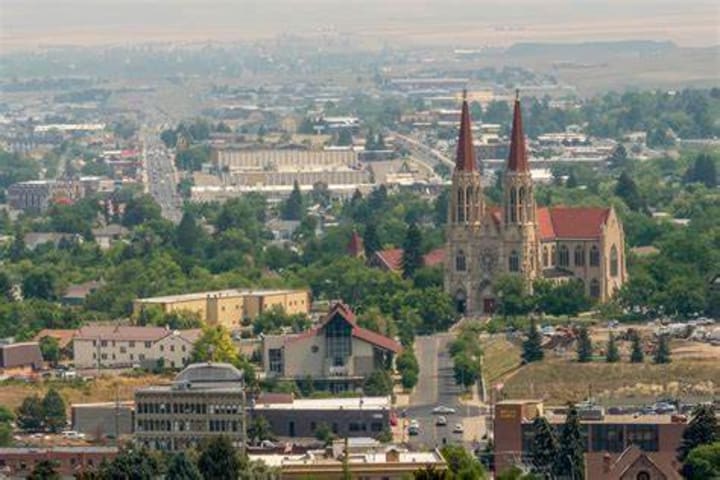
After gold was discovered in a gulch off the Prickly Pear Valley the city of Helena, Montana was founded on July 14, 1864. Its main street is called Last Chance Gulch and is located close to the winding path of the original gulch, going through the historic downtown district.
The original camp in this area was named Last Chance. Soon lawmakers chose to rename it and there were quite a few suggestions. The first one was Tomah which the committee thought might have a connection with the Native Americans. Since their meeting was held shortly before Halloween two other ideas were Pumpkinville and Squashtown. These two names remind me of the movie “Halloweentown” and that would have not been a bad name at all.
When the name of the city was finally chosen as Helena many stories cropped up as to how the name was chosen but none of the stories has been claimed as true. One of the most interesting suggestions was that the name came from the island of St. Helena, where Napoleon had been exiled. in 1869 an expedition explored the regions that would later become Yellowstone National Park and Mount Washburn. By 1888 around 50 millionaires were living in Helena and about $3.6 billion in today’s dollars of gold was taken from Last Chance Gulch over 20 years.
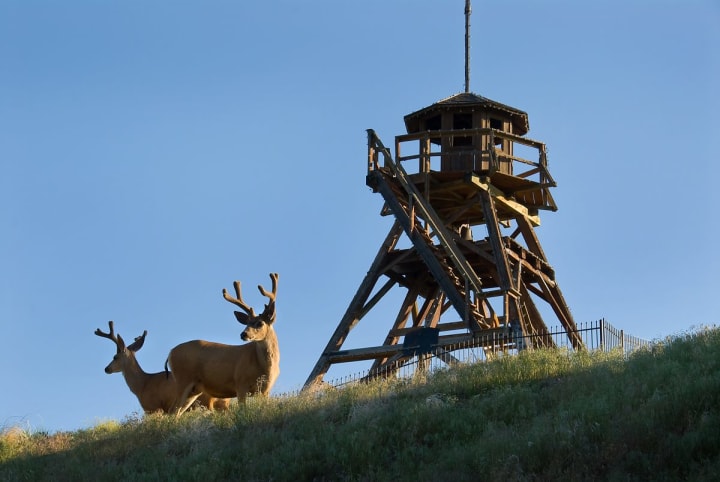
The official symbol of the city of Helena is a drawing of “The Guardian of the Gulch”, a wooden fire watchtower built in 1886. It still stands today on Tower Hill overlooking the historic downtown. Railroad magnate Charles Arthur Broadwater opened his famous Hotel Broadwater and Natatorium in 1889. The Natatorium was home to the world’s first indoor swimming pool. It was damaged in the earthquake of 1935 and closed in 1941. Today near this location you can find the Broadwater Fitness Center with an outdoor pool heated by natural springs.

Helena became the capital of Montana in 1875 and the Montana State Capitol was completed in 1902. Other historic buildings in the city are the Civic Center and the Saint Helena Cathedral. Many of the people in Helena work for the state government. Residents and visitors enjoy the three-block-long shopping district that follows the original Last Chance Gulch. There is a small artificial stream that runs along the walking mall. Helena also has a ski area, Great Divide Ski Area located northwest of the city near the ghost town of Marysville.
About the Creator
Rasma Raisters
My passions are writing and creating poetry. I write for several sites online and have four themed blogs on Wordpress. Please follow me on Twitter.
Keep reading
More stories from Rasma Raisters and writers in History and other communities.
US Capital History Massachusetts and Minnesota
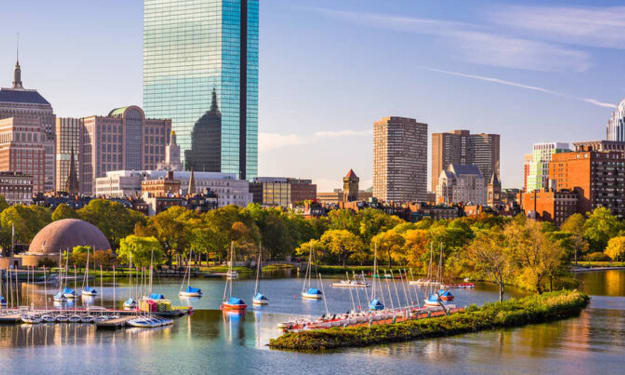
The Capital That Might Have Been Trimountaine Puritan colonists from England founded Boston, Massachusetts on September 17, 1630. Early European settlers first called this area Trimountaine, but later decided on to name the town after Boston, Lincolnshire, England. A strict and well-structured Puritan society developed in Boston. They founded the first public school in the U.S. called Boston Latin School in 1635. Boston counted as the largest town in British North America until Philadelphia became larger in the mid-18th century.
By Rasma Raistersabout a year ago in History
3 Moments When Reality Accidentally Became a Horror Movie
Horror movies usually rely on a simple agreement with the audience: this could never really happen. Ghosts follow rules, monsters have weaknesses, and there’s always a clear point where reality hands the story over to fiction. Real life, unfortunately, does not care about narrative structure, logic, or closure.
By Enoch Sagini7 days ago in History
Chinese Water Torture
Since the dawn of history, human beings have inflicted unimaginable suffering upon one another. Across centuries, people have devised increasingly elaborate methods of punishment and coercion, some brutally explicit, others deceptively subtle. While devices such as iron maidens, racks, whips, and wheels relied on visible physical agony, there existed a form of torment whose true power lay not in blood or broken bones, but in patience, repetition, and the slow erosion of the mind. This method came to be known as Chinese water torture.
By Pure child5 days ago in History


Comments
There are no comments for this story
Be the first to respond and start the conversation.