
US Capital History Massachusetts and Minnesota
The history of Boston and St. Paul

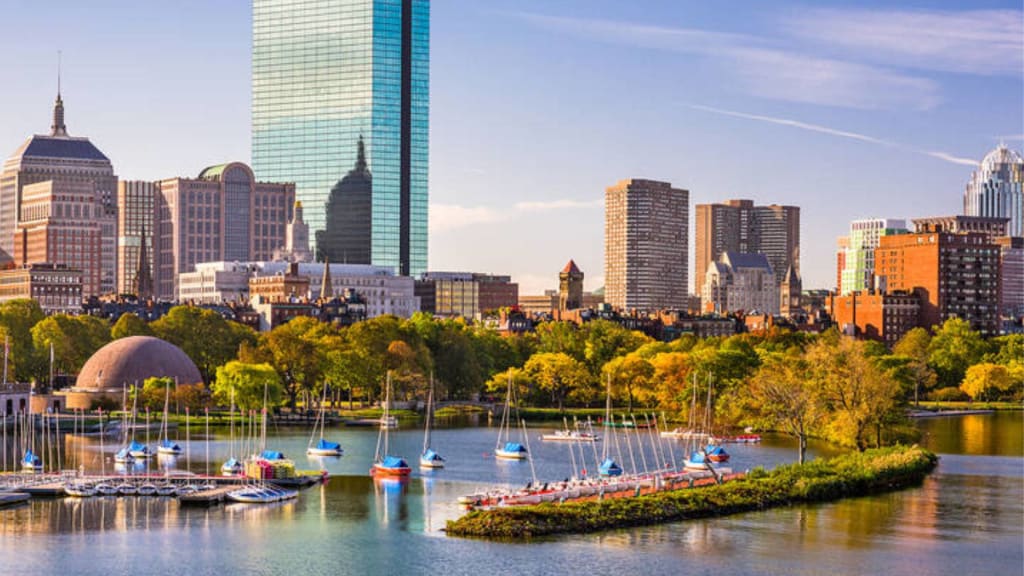
The Capital That Might Have Been Trimountaine
Puritan colonists from England founded Boston, Massachusetts on September 17, 1630. Early European settlers first called this area Trimountaine, but later decided on to name the town after Boston, Lincolnshire, England. A strict and well-structured Puritan society developed in Boston. They founded the first public school in the U.S. called Boston Latin School in 1635. Boston counted as the largest town in British North America until Philadelphia became larger in the mid-18th century.
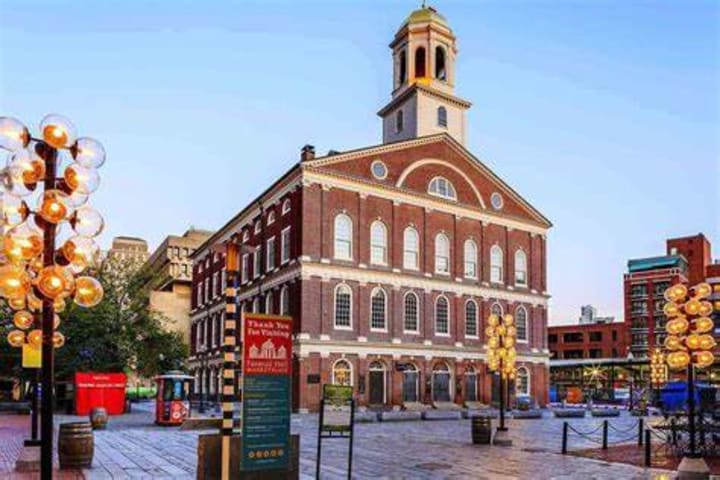
Faneuil Hall is known as the “cradle of liberty” and was built by Peter Faneuil, a Huguenot merchant in 1740. It is a market hall that is always open to the public, In the 18th and 19th centuries is was a meeting place of revolutionaries and later of abolitionists. On the fourth floor of the hall you can find the Ancient and Honorable Artillery Museum with weaponry, uniforms, and paintings of significant battles.
In the 1770s after the British attempted to put a stronger control on the original thirteen colonies the American Revolution began. Many major battles occurred in the Boston area among them one of the best-known the Boston Tea Party. During this time Paul Revere made his famous midnight ride into history. After the Revolution Boston became one of the world’s wealthiest international trading ports. Descendants of old Boston families were looked at as the nation’s social and cultural elites and referred to as the Boston Brahmins.
The Embargo Act of 1807 was adopted during the Napoleonic Wars and the War of 1812 and curtailed the harbor activity in Boston. Until the early 1900s, Boston was one of the nation’s largest manufacturing centers and known for its garment production and leather-goods industry. Boston flourished culturally from the mid-19th to the late 19th century. The city also became a center of the abolitionist movement. In 1822 it became official that this was the City of Boston.
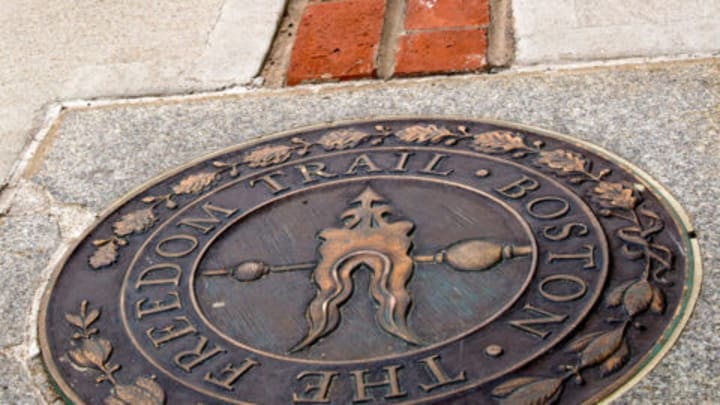
Today you’ll find the Freedom Trail in Boston that leads visitors past 16 of the city’s main historic monuments and sites, This is the city of the final resting places of Paul Revere, Samuel Adams, and John Babcock.
The 1970s brought an economic boom to Boston. Many high rises were built in the Financial District and in Back Bay. As a result Boston has the second largest skyline in the Northeast after New York City. The city’s many medical institutions lead the nation in medical innovation and patient care. There are many influential medical schools like the Harvard Medical School.
Lambert's Landing

The area where today stands the capital of Minnesota, St. Paul was inhabited by the Hopewell Native Americans about two thousand years ago. Today the burial mounds they left behind can be seen in Indian Mounds Park. After the Louisiana Purchase in 1803 Zebulon Pike a U.S. Army officer negotiated to buy a large acre of land from the local Dakota tribes to establish a fort. Fort Snelling was built on the confluence of the Mississippi and Minnesota Rivers.
A settlement was started and known as Lambert’s Landing. However when Father Lucien Gaitier arrived to be minister to the French-Canadians settled here he wanted the place named after his favorite saint, Paul the Apostle so the name Saint Paul was used.
The Minnesota Territory was formalized in 1849 and St. Paul became the capital in 1857. The city became a landing for steamboats that were heading up the Mississippi River. As people started moving toward the west St. Paul was named “The Last City of the East”. In the 1970s the city saw man skyscrapers constructed and the tallest building there was Wells Fargo Place. When 2004 arrived the city populations had many immigrants among those from Vietnam, Laos, Cambodia, Thailand and Myanmar.

Today St. Paul forms the “Twin Cities” with Minneapolis. Tourists come to the city to see the Science Museum of Minnesota, the Minnesota History Center and the Beaux Arts Cathedral of Saint Paul.
About the Creator
Rasma Raisters
My passions are writing and creating poetry. I write for several sites online and have four themed blogs on Wordpress. Please follow me on Twitter.
Keep reading
More stories from Rasma Raisters and writers in History and other communities.
US State Capital History Maine, Maryland, and Michigan
The Oldest Wooden Fort Members of the ill-fated Popham Colony first explored the area in 1607. The first inhabitants were English settlers from the Plymouth Colony who made it a trading post on the Kennebec River in 1629. At that time the settlement had an Indian name – Cushnoc which means “head of tide”. Due to Indian uprisings and bad revenues, the Plymouth Colony stopped trading and Cushnoc stayed empty for the next 75 years.
By Rasma Raistersabout a year ago in History
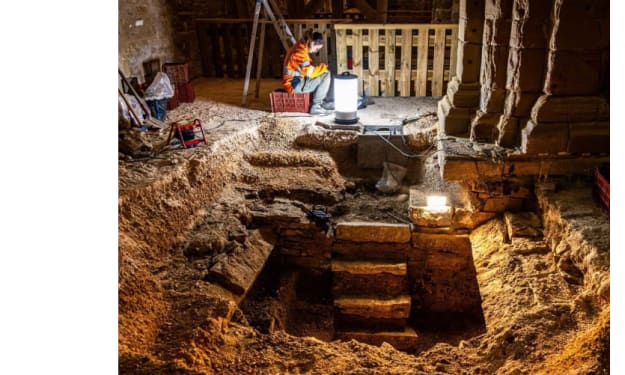
A secret staircase found beneath a 1,500-year-old French church
A subterranean staircase and burial strata dating back approximately 1,500 years were discovered during a project inside the Church of Saint Philibert in Dijon, France. The stairs were discovered by restoration workers inside the church when repairs were being made, and the excavation soon ensued.
By Francis Dami7 days ago in History
Martin Luther King's 'I Have a Dream' Speech: Things People Still Don't Know
Former President Ronald Reagan declared the third Monday in January to be Martin Luther King Jr. Day to celebrate the slain civil rights activist. Had he lived, he would be celebrating his birthday at age 97 on January 15, 2026, but he was assassinated at the young age of 39 on April 4, 1968.
By Margaret Minnicks4 days ago in History


Comments
There are no comments for this story
Be the first to respond and start the conversation.