
Unveiling the Titanic: New Discoveries from the Ocean Depths
The RMS Titanic, one of the most infamous ships in history
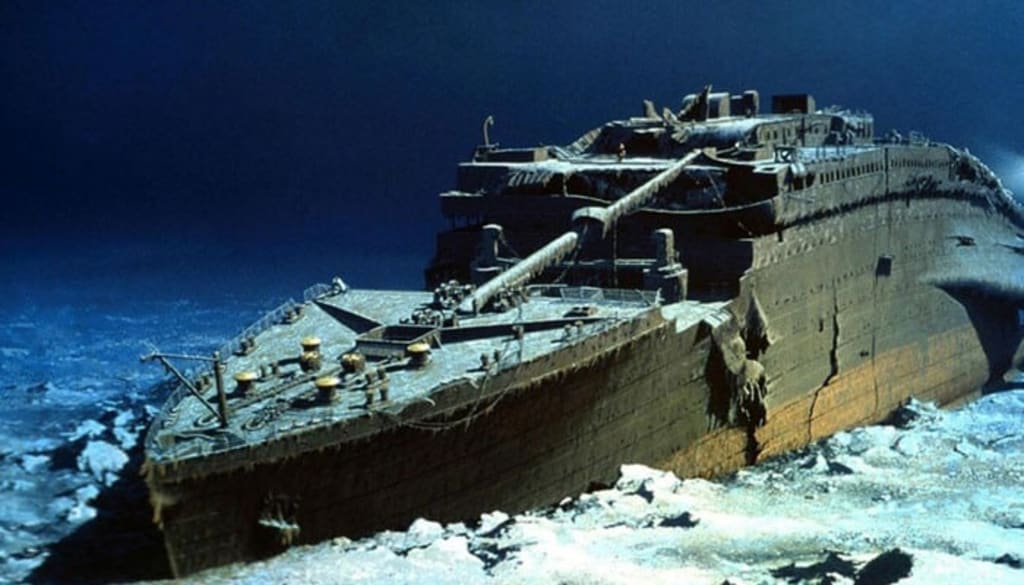
Unveiling the Titanic: New Discoveries from the Ocean Depths
The RMS Titanic, one of the most infamous ships in history, has remained hidden in the darkness of the Atlantic Ocean for over a century. Now, a groundbreaking investigation is poised to bring the wreck of the Titanic into the light and reveal it as never seen before. Armed with cutting-edge tools and technology, a team of scientists is determined to unravel the long-standing mysteries of the Titanic's fateful disaster. In this article, we delve into the details of this high-tech exploration and the potential it holds to rewrite the story of the Titanic.
Outline:
Introduction
Discovering the Titanic's Wreckage
The Challenges of Exploring the Deep Ocean
The Titanic Mapping Project
Unveiling the Titanic's Secrets
The Fascinating Landscape of the Wreckage
The Impact and Sinking of the Titanic
Debunking the Myth of the 300-Foot Gash
Unraveling the Mystery of the Separated Bow and Stern
The Violent Demise of the Titanic's Stern
Shedding Light on the Titanic's Breakup
Conclusion
Introduction
For a century, the Titanic has remained hidden two and a half miles below the surface of the Atlantic Ocean. It has captivated the world's imagination, and its tragic sinking has become the stuff of legend. Countless unanswered questions about the disaster persist, and the best way to unravel them is through the use of scientific exploration.
Discovering the Titanic's Wreckage
In September 1985, explorers first discovered the wreckage of the Titanic. Since then, numerous expeditions have ventured to the site, but only a fraction of the ship has been visible at any given time. Explorers' headlights can only illuminate a few yards of the Titanic's hull in the pitch-black depths.
The Challenges of Exploring the Deep Ocean
Understanding the Titanic with existing technology has been akin to drawing a map of downtown Manhattan from the height of a 10-story building with fogged-up windows. The darkness and depth of the ocean make it incredibly challenging to study the wreck comprehensively. However, critical clues to understanding the disaster lie within this darkness, waiting to be uncovered.
The Titanic Mapping Project
A team of scientists, funded by RMS Titanic Inc., the legal steward of the wreck, has embarked on an ambitious mission called the Titanic Mapping Project. Armed with state-of-the-art sonar mapping technology, their goal is to scan every part of the wreck and create a precise digital model of the Titanic resting on the ocean floor. By peeling away trillions of gallons of water digitally, they aim to drain the Titanic and reveal its hidden secrets.
Unveiling the Titanic's Secrets
The process of scanning the deep ocean is no easy feat. Autonomous underwater vehicles (AUVs) dive through 12,000 feet of water to collect data. These underwater drones utilize sonar signals to measure variations in height, scanning the wreck in a meticulous mowing-like pattern. The AUVs are accompanied by remote-controlled submersibles (ROVs) that capture thousands of high-resolution images of the wreck.
The Fascinating Landscape of the Wreckage
The collected data and images are processed by advanced computer algorithms and visualization experts. The result is a breathtaking, detailed 3D model of the Titanic wreck, allowing researchers and the public to explore the ship as if they were diving alongside it. This digital reconstruction reveals the intricate details of the Titanic's structure, showcasing its grandeur and the devastation it endured during its final moments.
The Impact and Sinking of the Titanic
One of the most significant aspects the Titanic Mapping Project aims to uncover is a more accurate understanding of how the ship sank. For decades, it was believed that the Titanic struck an iceberg, which caused a massive 300-foot gash along its hull. However, recent studies and analysis challenge this long-held belief.
Debunking the Myth of the 300-Foot Gash
The 3D mapping of the Titanic's wreckage has revealed that the damage caused by the iceberg was not a single, long gash. Instead, it appears that the iceberg punctured several smaller sections of the ship's hull, causing a series of structural failures. This new information suggests that the iceberg's impact was more complex and intricate than previously thought.
Unraveling the Mystery of the Separated Bow and Stern
Another enduring mystery surrounding the Titanic's sinking is the separation of its bow and stern sections. Eyewitness accounts from survivors reported seeing the ship split into two before sinking. However, the exact mechanics of this breakup have been the subject of speculation and debate.
Through detailed analysis of the wreckage, scientists are gaining new insights into how the ship broke apart. It is now believed that the stern section of the Titanic remained afloat for a short time after the bow sank, creating a spectacle of instability and chaos before ultimately plunging into the depths.
The Violent Demise of the Titanic's Stern
The 3D model of the Titanic wreck has also shed light on the violent descent of the stern section. As the stern filled with water, it tilted upwards, reaching an almost vertical angle before plunging back down. The immense forces exerted on the stern during its descent caused significant damage, resulting in the twisted and contorted state seen in the wreckage today.
Shedding Light on the Titanic's Breakup
By meticulously examining the debris field and the patterns of wreckage, researchers can piece together a more accurate timeline of the Titanic's breakup. This information helps reconstruct the events leading to the ship's ultimate demise, providing a clearer understanding of the disaster and the human and technological factors that contributed to it.
Conclusion
The ongoing Titanic Mapping Project is revolutionizing our understanding of the ill-fated ship. Through advanced technology and meticulous analysis, scientists are unraveling long-standing mysteries and dispelling myths surrounding the Titanic's sinking. The digital model of the wreck allows us to explore the ship's remains in unprecedented detail, revealing the true scale of its grandeur and the catastrophic damage it suffered.
As the project continues, it is likely to uncover even more insights and surprises, further enriching our knowledge of this iconic piece of history. The exploration of the Titanic's wreckage serves as a reminder of the power of scientific investigation and the importance of preserving and studying our past.
Preserving the Titanic's Legacy
In addition to its scientific value, the Titanic Mapping Project also plays a crucial role in preserving the legacy of the Titanic. By documenting and studying the wreck, researchers can ensure that the memory of the ship and its passengers endures for generations to come.
Conservation Efforts and Ethical Considerations
When conducting research on the Titanic wreck, conservation efforts and ethical considerations are of utmost importance. The delicate nature of the wreckage requires careful handling to avoid further damage or disturbance. Researchers adhere to strict protocols to minimize any potential negative impact on the site.
Furthermore, ethical concerns surrounding the exploration of the Titanic arise due to the fact that it is also the final resting place of over 1,500 people. Respecting the sanctity of this underwater grave is paramount, and any exploration is conducted with reverence and sensitivity.
Educational and Historical Significance
The detailed 3D model and the insights gained from the Titanic Mapping Project have significant educational and historical value. They allow researchers, historians, and the general public to immerse themselves in the story of the Titanic, understanding the circumstances that led to its sinking and the impact it had on maritime history.
Educational institutions and museums can utilize this information to create immersive educational experiences, offering visitors a unique opportunity to learn about the tragedy and the lessons it holds.
Inspiring Future Discoveries
The Titanic Mapping Project serves as a reminder of the vast unexplored depths of our oceans and the countless other shipwrecks and mysteries that lie beneath. The cutting-edge technologies and methodologies developed for this project can be applied to future underwater archaeological endeavors, unlocking new insights into our shared human history.
As our understanding of the Titanic continues to evolve, it inspires scientists, researchers, and explorers to embark on new adventures, uncovering the secrets hidden beneath the waves and expanding our knowledge of the past.
A Testament to Human Resilience
The story of the Titanic is not only one of tragedy but also of human resilience. It serves as a reminder of the indomitable spirit of those who survived and the sacrifices made by those who did not. The Titanic Mapping Project ensures that their stories are remembered and honored.
By studying the wreckage and unraveling the mysteries surrounding the Titanic's sinking, we pay tribute to the lives lost and the enduring legacy of this iconic ship. It is a testament to the resilience of the human spirit and a reminder of the importance of learning from the past to shape a better future.
Conclusion
The Titanic Mapping Project is a monumental endeavor that combines advanced technology, scientific expertise, and a deep respect for history. Through the creation of a detailed 3D model and the analysis of the wreckage, researchers are rewriting the narrative of the Titanic, dispelling myths, and shedding light on its tragic fate.
This ongoing project not only enriches our understanding of the past but also serves as a catalyst for future discoveries and a source of inspiration for generations to come. The Titanic continues to captivate our collective imagination, and through projects like this, its story will forever remain a part of our shared human history.
About the Creator
Keep reading
More stories from Sajjad Rana Hussain and writers in History and other communities.
Rajendra Chola I and the Conquest of the Ganga: A Monumental Feat in Indian History
Known as the “Gangaikonda Chola” (the Chola who conquered the Ganga), Rajendra transformed a South Indian maritime empire into a pan-Indian power whose influence stretched from the Indian Ocean to the heart of the subcontinent. This campaign was not merely a military raid but a bold statement of imperial ambition, strategic brilliance, and cultural confidence.
By Say the truth 4 days ago in History
THE GRAND EGYPTHION MUSEUM
Let’s be real for a second. When folks hear "museum," they often think of dusty halls, dry information, and that odd quiet where you feel like you're misbehaving just for breathing. But the Grand Egyptian Museum isn't like that. I really don't think that's it. It's not accurate at all. This just seems wrong. This place is really nice. Egypt really shows us that it made history, and it keeps on doing amazing things.
By Beshoy Zayera day ago in History




Comments
There are no comments for this story
Be the first to respond and start the conversation.