
Unveiling the Andronovo Enigma
The Bronze Age Pioneers of the Eurasian Steppe

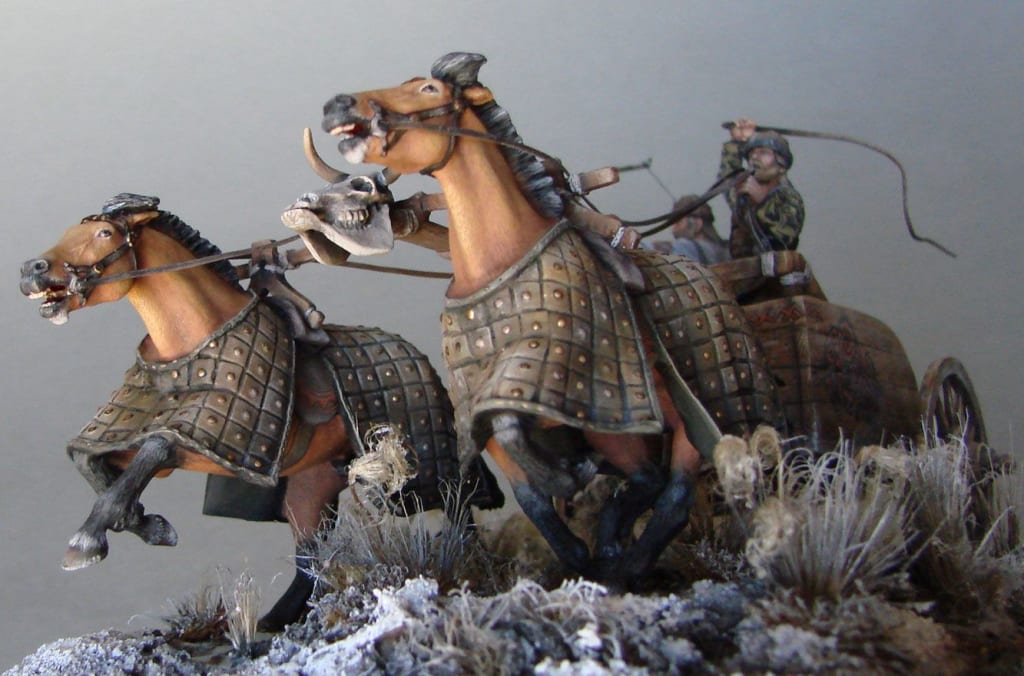
The expansive and mysterious continent of Asia has historically served as a foundation for numerous civilizations, influenced by its varied landscapes and climates. Among the diverse groups that roamed its territories, the Andronovo culture is notable for its significant impact during the Bronze Age. Originating in the Eurasian steppes around 2000 BCE, this culture profoundly influenced the historical trajectory of the region, contributing to the evolution of both nomadic and settled communities. But who exactly were the Andronovo people? What was their way of life, and what enduring legacy did they create?
The term "Andronovo" is derived from a burial site located near the village of Andronovo in Siberia, where Russian zoologist Arkady Tugarinov discovered skeletal remains in 1914. These findings, which included crouched burials accompanied by intricately designed ceramics, provided valuable insights into ancient history. In the 1920s, Russian archaeologist Sergei Teploukhov officially coined the phrase "Andronovo Culture."
Initially, researchers associated the Andronovo culture with the earlier Sintashta culture, which inhabited the same area. However, subsequent studies revealed that Andronovo represents a more extensive archaeological horizon—a concept that denotes a series of stratified cultural phases rather than a singular, cohesive nation. The Andronovo horizon, which existed from around 2000 to 1150 BCE, included various distinct yet interconnected societies spread across a wide region, from the southern Urals to the Yenisei River in central Siberia.
The Andronovo culture was mainly composed of settled agro-pastoralists who established villages along river terraces. They engaged in the cultivation of grains and the domestication of livestock, including cattle, goats, and camels. Eventually, they began breeding horses, a significant advancement that transformed their mobility and trade systems. Archaeological findings, including bone tools fashioned into horse bridles, indicate that they were among the first societies to embrace mounted pastoralism.
By the Middle Bronze Age (15th–10th centuries BCE), their livestock expanded to include sheep and horses, which allowed them to venture into more remote areas. This transition initiated a semi-nomadic way of life that combined farming with seasonal movement of herds. During the Late Bronze Age (10th–8th centuries BCE), changes in climate, particularly increased aridity, compelled some groups to migrate to more stable mountainous areas, leading to a greater emphasis on pastoralism in their economic practices.
The Andronovo horizon was characterized by a diversity of regional subgroups rather than being a uniform entity:
- Fedorovo Culture (southern Siberia)
- Alakul Culture (located between the Oxus and Jaxartes rivers)
- Alexeevka-Sargary Culture (found in eastern Kazakhstan and Turkmenistan)
While these groups exhibited commonalities in their material culture, especially in pottery, metallurgy, and burial customs, they also preserved unique local distinctions.
Andronovo craftsmen gained fame for their intricately incised pottery, which featured horizontal geometric designs. Their sophisticated metallurgical techniques enabled them to utilize copper resources found in the Altai Mountains, leading to the creation of various bronze tools and weapons by the 14th century BCE.
The burial practices of the Andronovo culture offer intriguing insights into their societal structure. The deceased were laid to rest in wooden or stone chambers, frequently accompanied by cattle, wheeled vehicles, weapons, and decorative items. Some burial sites revealed paired interments of adults and children, adorned in brightly colored clothing, indicating a society rich in ritual and hierarchy.
Genetic research has established a connection between the Andronovo culture and the early migrations of Indo-Europeans. DNA examinations of remains found at Andronovo sites show the presence of Y-haplogroup R1a, which is associated with Indo-Iranian groups, as well as mitochondrial haplogroups U4 and U2, which are linked to ancient European hunter-gatherers. These results bolster the hypothesis that the Andronovo culture was instrumental in the dissemination of Indo-Iranian languages throughout Central and South Asia.
The Andronovo culture did not experience an abrupt end; instead, it slowly fragmented and integrated into the developing Iron Age communities. Their advancements in horse domestication, metalworking, and pastoral nomadism established a foundation for subsequent steppe empires, including the Scythians and Sarmatians.
Four millennia later, the influence of the Andronovo people continues to be felt across the expansive Eurasian steppe, serving as a lasting reminder of their significant contributions as trailblazers of the Bronze Age.
About the Creator
A História
"Hi. My name is Wellington and I'm a passion for general history. Here, I publish articles on different periods and themes in history, from prehistory to the present day.
Keep reading
More stories from A História and writers in History and other communities.
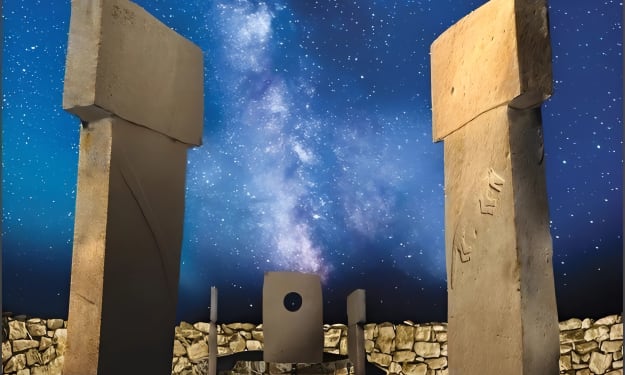
Göbekli Tepe
In the serene hills of southeastern Turkey, a groundbreaking discovery in 1994 transformed our perceptions of the origins of human civilization. Göbekli Tepe, an archaeological site dating back 12,000 years, exemplifies the creativity and spiritual aspirations of our ancient forebears. Frequently dubbed the world's first temple, this intriguing site compels us to rethink our views on prehistoric communities and their achievements. It serves as a crossroads of history, legend, and enigma, providing insight into an era when humanity was starting to define its connection with the divine.
By A História12 months ago in History
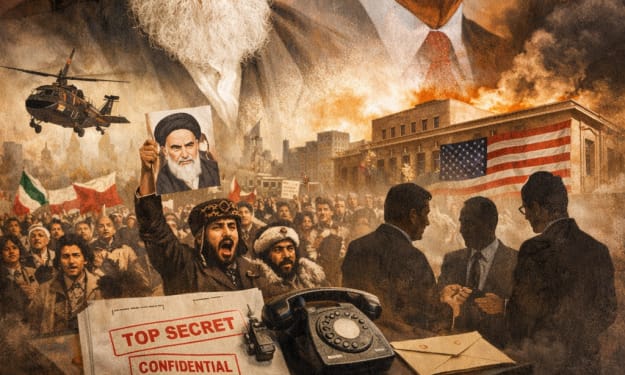
The Iranian Revolution and Two Tumultuous Weeks: Ayatollah Khomeini’s Secret Contacts with the United States
In early 1979, the world watched as Iran stood on the brink of a historic transformation. The collapse of the monarchy of **Mohammad Reza Pahlavi**, the return of **Ruhollah Khomeini** from exile, and the swift dismantling of the old order marked one of the most dramatic revolutions of the 20th century. Yet, behind the chants of “Death to America” and the burning images broadcast across global media, another, quieter story was unfolding—one of discreet contacts, strategic assurances, and secret messages between Khomeini’s circle and officials linked to the administration of **Jimmy Carter**.
By Irshad Abbasi 6 days ago in History


Comments
There are no comments for this story
Be the first to respond and start the conversation.