
"Unveiling Indonesia's Lost Pyramid: Ganang Padang and the Enigma of Ancient Civilizations"
"Unraveling the Enigma: Indonesia's Lost Pyramid and Ancient Mysteries"

Introduction:
In September 1997, a group of researchers and divers embarked on an extraordinary expedition near the Yonaguni Island in Japan's remote Riyukiu Islands. Their mission was to explore a remarkable underwater formation known as the Yonaguni pyramid, believed to be a remnant of an ancient civilization. The monument displayed intricate carvings and precise stone configurations, leading to questions about its origins and the cataclysmic events that caused it to sink beneath the sea. This article delves into the mysteries surrounding the Yonaguni pyramid and its potential connection to a lost continent and other ancient structures, shedding light on the possibility of an advanced civilization predating our recorded history.
The Enigmatic Yonaguni Pyramid:
The Yonaguni pyramid, located off the southern coast of Yonaguni Island, captivates researchers due to its advanced architectural features. The structure exhibits mega lifts, platforms, and stairways, but what is most striking is their immense scale, suggesting that they were built for beings of giant proportions. The precise cuts and artificial origin of these formations raise questions about the builders and the techniques employed. Furthermore, considering that the pyramid was once above sea level during the last Ice Age, approximately 14,000 years ago, it adds intrigue to the story.
The Lost Continent of Moo:
Ancient Polynesian stories speak of a lost continent named Moo, believed to have existed in the Pacific Ocean. According to these accounts, Moo encompassed Hawaii, Tahiti, Tonga, Samoa, and Easter Island. While conventional scholars dismissed the tale as mythology, proponents of the ancient astronaut theory argue that the Yonaguni pyramid and other discoveries provide evidence of the existence of this advanced civilization. The correlation between these underwater structures and the legends of Moo offers an intriguing perspective.
Ganang Padang: The Mountain of Enlightenment:
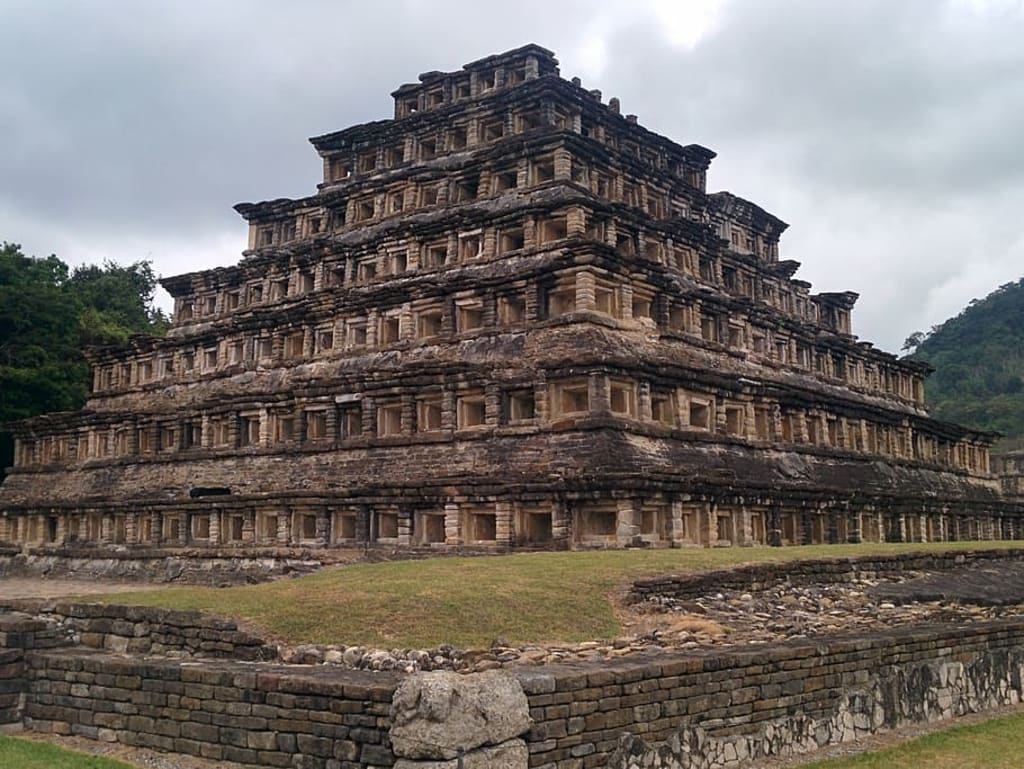
Located in Kariamukti village, West Java, Indonesia, lies Ganang Padang, a mysterious site revered by the local population for thousands of years. The site comprises giant stone blocks that were believed to be natural features until Dutch explorers discovered their artificial nature in 1914. Further excavation in 2013 sponsored by the Indonesian government revealed that Ganang Padang might be the world's oldest step pyramid. Geologists estimate that Java, including Ganang Padang, was once part of a subcontinent called Sunderland around 20,000 years ago.
The Sundering of Sunderland:
The notion of a subcontinent raises intriguing possibilities about a lost civilization that may have thrived in the region over 10,000 years ago. Some researchers propose that the subcontinent of Sunderland, including Ganang Padang, reached its zenith during this time. However, as the ice caps melted at the end of the last Ice Age, sea levels rose, flooding the region and transforming it into the series of islands it is today. The intriguing suggestion arises that an advanced civilization existed before the cataclysmic flood, potentially leaving behind structures like Ganang Padang.
Advanced Technology and Extraterrestrial Connections:
The presence of sophisticated architectural features in the Yonaguni pyramid and Ganang Padang has led some researchers to speculate that these ancient structures were built with advanced technology. The absence of evidence showing a progressive geometric development of technology leading up to the construction of massive pyramids over 12,000 years ago adds fuel to the theories of extraterrestrial involvement. These arguments propose that ancient astronauts visited Earth and shared their knowledge with early civilizations.
Unraveling the Mysteries:
While the mysteries surrounding the Yonaguni pyramid and Ganang Padang continue to intrigue researchers and enthusiasts, they also emphasize the limitations of conventional archaeological interpretations. Exploring alternative theories and considering the possibility of lost civilizations and extraterrestrial influence opens up new avenues of understanding our ancient past. Further research, excavations, and interdisciplinary collaboration are crucial to unraveling the secrets of these underwater structures and their connection to humanity's forgotten history.
In conclusion, the Yonaguni pyramid and Ganang Padang represent enigmatic remnants of ancient civilizations that challenge our understanding of human history. The precision of their construction, their association with submerged landscapes during the last Ice Age, and the legends of the lost continent of Moo all contribute to the fascination surrounding these sites. As we continue to explore and investigate these mysteries, we may uncover compelling evidence that sheds light on advanced civilizations predating our recorded history and their potential connections to extraterrestrial visitors. The quest for knowledge about our past remains an ever-evolving journey, pushing the boundaries of our understanding and inspiring new questions about the mysteries that lie beneath the sea.
About the Creator
Keep reading
More stories from Young Writer and writers in History and other communities.
Area 51: The Enigma Surrounding the World's Most Famous Secret Base
Many individuals have been captivated by Hollywood's blockbuster film "Men in Black," which depicts a covert US government facility where aliens visit and collaborate with humans. This fictional portrayal has left many pondering the existence of a real-life location where extraterrestrial beings might secretly reside. Enter Area 51, the world's best-known non-secret secret base. Nestled in Nevada, USA, Area 51 has become synonymous with mystery and intrigue, captivating the public's imagination and fueling endless speculations about hidden alien activities.
By Young Writer3 years ago in History
Rajendra Chola I and the Conquest of the Ganga: A Monumental Feat in Indian History
Known as the “Gangaikonda Chola” (the Chola who conquered the Ganga), Rajendra transformed a South Indian maritime empire into a pan-Indian power whose influence stretched from the Indian Ocean to the heart of the subcontinent. This campaign was not merely a military raid but a bold statement of imperial ambition, strategic brilliance, and cultural confidence.
By Say the truth 5 days ago in History



Comments