
Tutankhamun: The Boy King and the Forgotten Truth of the Sphinx
Tutankhamun was the son of Akhenaten, the radical pharaoh who tried to erase Egypt’s gods and establish the worship of one, Aten
Tutankhamun: The Boy King and the Forgotten Truth of the Sphinx
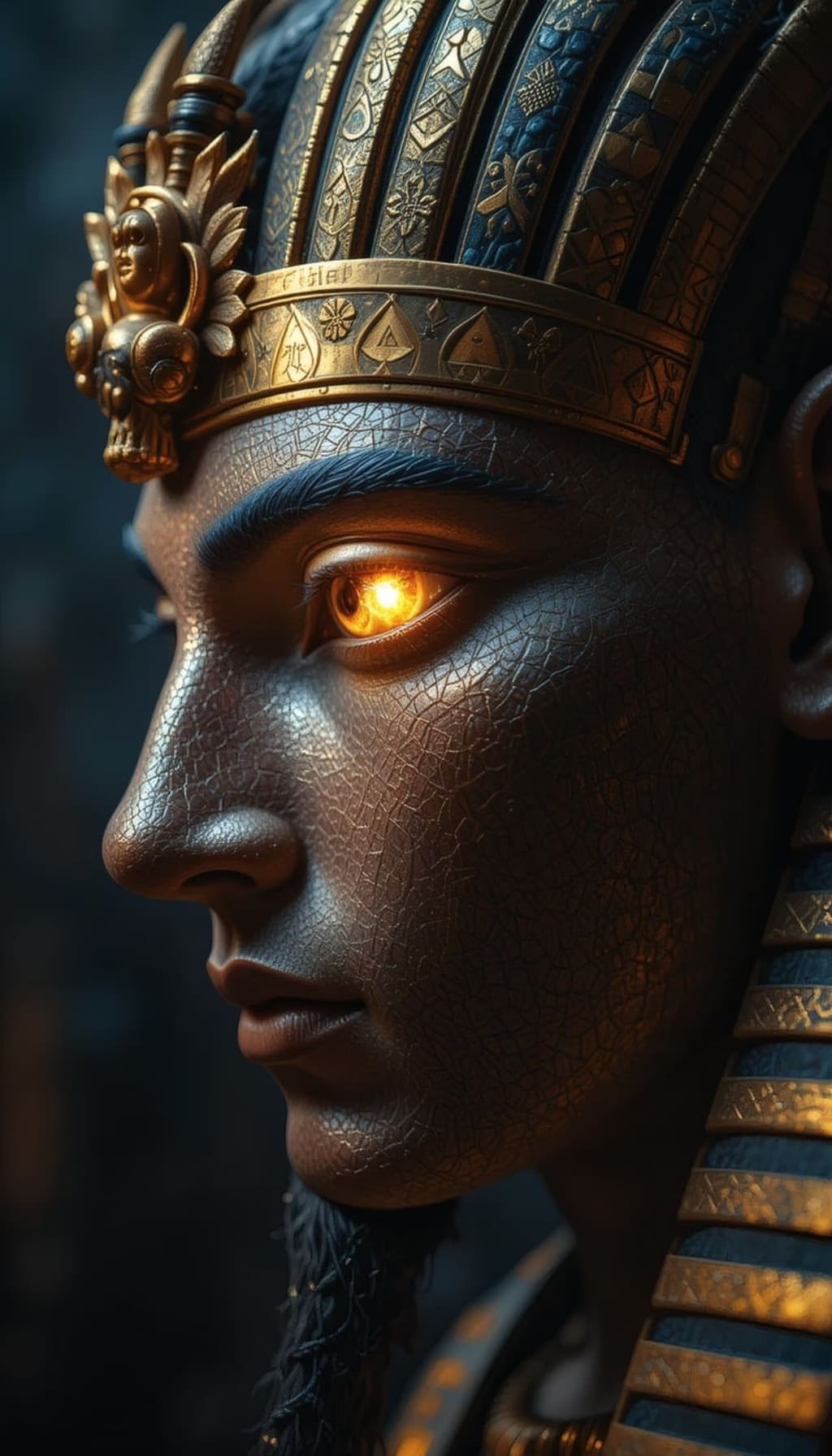
When Tutankhamun, the boy pharaoh, was discovered in 1922 by Howard Carter, his tomb stunned the world. Sealed for over 3,000 years, it was a time capsule from a forgotten era. Gold, art, and strange symbols filled the chambers. But what the world saw was just the surface.
Behind the golden mask of Tutankhamun lies a deeper mystery, one involving a forbidden god, the erasure of history, and possibly, beings from the stars.
The Son of a Heretic
Tutankhamun was the son of Akhenaten, the radical pharaoh who tried to erase Egypt’s gods and establish the worship of one Aten, the solar disc. But when Akhenaten died, his revolution crumbled.
The young Tutankhamun was just a child when he took the throne. But during his short reign, something dramatic happened: He abandoned Akhetaten, the city of Aten. He restored the old gods, especially Amun-Ra. And most importantly… he changed his name from Tutankhaten ("Living image of Aten") to Tutankhamun ("Living image of Amun").
Why would a boy king reverse everything his father built? Was it pressure from priests? Politics? Or was there a deeper secret he was told to protect?
The Mystery of the Sphinx
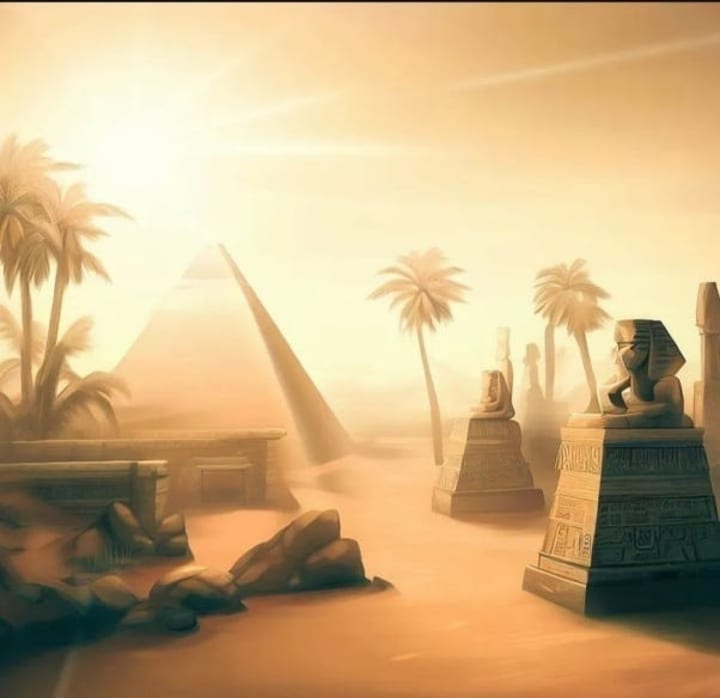
Standing silent on the Giza Plateau, the Great Sphinx stares across the desert. Mainstream historians say it was carved by Pharaoh Khafre around 2500 BCE. But erosion patterns and geological clues suggest it may be much, much older, possibly 10,000 years or more. Some believe the Sphinx is a guardian of hidden knowledge, a monument from a forgotten civilization, possibly predating even ancient Egypt.
And here’s where it gets stranger: in both Sumerian and Egyptian lore, beings with lion bodies and human heads appear repeatedly, sphinx-like guardians associated with divine wisdom, portals, and the gods. In Sumer, we find references to lamassu, hybrid beings with wings, bull or lion bodies, and human faces, protectors of gates and sacred knowledge. These creatures were connected to the Anunnaki, the godlike beings said to have descended from the stars.
Was the Egyptian Sphinx a version of this ancient guardian? A monument left behind by the same cosmic architects?
What Did Tutankhamun Inherit?
Some theorists suggest that Akhenaten’s knowledge of Aten, the "disc in the sky" was not spiritual, but technological or extraterrestrial. Was he trying to awaken Egypt to an ancient truth? Did Tutankhamun grow up surrounded by this knowledge… only to be forced to suppress it?
It's worth noting that Tutankhamun’s tomb contained strange artifacts, including:
A dagger made from meteoric iron, a material literally from the sky. Scientific analysis confirmed its extraterrestrial origin, indicating that ancient Egyptians valued such materials for crafting precious objects.
An unusual scarab made of desert glass, formed by extreme heat, possibly from a celestial impact or explosion. This Libyan Desert glass is found in very specific regions and suggests catastrophic origins far beyond normal environmental processes.
Artistic depictions of the boy king show unnatural proportions, including elongated skulls and narrow limbs, features shared with his father, Akhenaten. These have sparked discussions around royal inbreeding, cultural traditions of skull shaping, or even hybrid ancestry.
Were these signs of a lineage touched by the gods? Or remnants of a forgotten hybrid bloodline preserved through a sacred royal line?
The Return of the Gods?
Egypt and Sumer may have been two pieces of the same ancient puzzle, cultures that inherited fragments of a deeper, older civilization connected to the Anunnaki. Both spoke of gods descending from the heavens, giving kingship, and teaching humanity.
Perhaps the Sphinx, the Aten, and the divine kingship are all echoes of that lost golden age, one humanity has tried to forget, but which refuses to remain buried.
The Silence Before the Revelation
Tutankhamun died mysteriously at just 18. Was it natural causes, or was something silenced? Recent DNA analysis suggests a combination of malaria and genetic disorders caused by inbreeding may have led to his death. Yet some believe this could be part of a deeper cover-up, a way to hide or downplay a far more mysterious past.
His story ends with his tomb being buried and forgotten. But his legacy may still whisper through the symbols, the monuments, and the mysteries left behind. Perhaps we are only now beginning to remember what the sands of Egypt have struggled to keep secret for millennia.
About the Creator
The Secret History Of The World
I have spent the last twenty years studying and learning about ancient history, religion, and mythology. I have a huge interest in this field and the paranormal. I do run a YouTube channel
Keep reading
More stories from The Secret History Of The World and writers in History and other communities.
Volume 7: After the Sky Opens: Life in the First Days of Disclosure
Life in the First Days of Disclosure The moment humanity has waited for will not arrive with fanfare or fireworks. It will come with silence broken by a collective gasp, a shockwave of realization that spreads not from governments or generals, but from the people who look to the sky and understand that everything has changed. Disclosure will not be the end of a mystery; it will be the beginning of a reckoning. And what follows in the days, weeks, and months after will test the very soul of humanity.
By The Secret History Of The WorldExclusive • 5 months ago
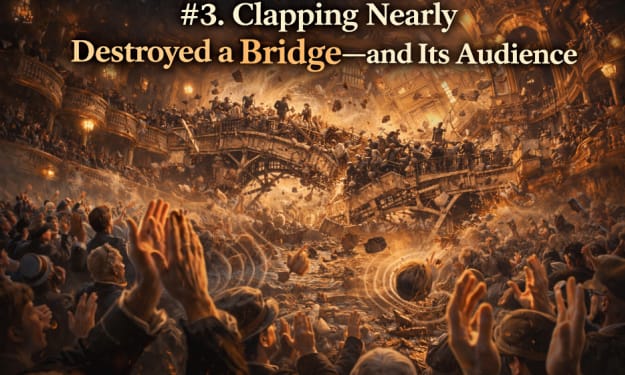
3 Harmless Habits That Once Caused Absolute Chaos
Most habits are comfortingly dull. You chew gum. You clap at events. You check your phone. You assume—reasonably—that these actions will not destabilize governments, bankrupt industries, or end lives. Society depends on this assumption. If every small habit carried catastrophic potential, we would never leave the house.
By Enoch Sagini4 days ago in History
Brosley Punch — The Strike That Shook Fate
Brosley was never taught how to throw a punch. He learned it the hard way—through hunger, through survival, through a childhood spent on a world that showed no mercy. Long before the universe would whisper his name in fear, Brosley was just a boy standing on cracked red stone, staring at a sky that never answered his questions.
By The best writer 2 days ago in History
Wild Card Weekend Recap: What Happens Now?
I think I figured out why I love Wild Card Weekend so much. It's because it's the first playoff anything of the calendar year. The NFL season starts in the fall, and once upon a time, the champion was crowned either on or slightly before New Year's. The evolution of the NFL schedule has resulted in the playoffs starting just into the New Year, and currently, the final week of the season falls on the first weekend of the New Year, with Wild Card Weekend coming a week after that. So yes, chronologically, the NFL's Wild Card Weekend serves as the first playoff anything of the calendar year.
By Clyde E. Dawkins7 days ago in Unbalanced


Comments
There are no comments for this story
Be the first to respond and start the conversation.