
Tough Satuation Durning WORLD WAR 1
“Surviving the Mud, Fear, and Hunger: The Untold Struggles of Soldiers and Civilians in the Great War.”


World War I, often called the Great War, was unlike anything the world had experienced before. It was a conflict defined by trench warfare, relentless artillery, and the daily struggle for survival. Millions of soldiers and civilians found themselves facing situations that tested not only their physical endurance but their very humanity. The war’s brutality left scars that would shape the 20th century and beyond.
Life in the trenches was perhaps the most notorious challenge soldiers faced. Trenches were narrow, muddy, and often flooded with water, creating ideal conditions for disease. Soldiers lived in constant fear of enemy fire, while lice, rats, and the stench of decomposing bodies became part of everyday life. Many soldiers suffered from “trench foot,” a painful condition caused by prolonged exposure to damp, unsanitary conditions. In such an environment, even the simplest task—sleeping, eating, or writing a letter home—became a monumental struggle.

Food shortages were another severe hardship. Rations were minimal and often monotonous, leaving soldiers weak and malnourished. A typical day might include hard biscuits, canned meat, and watered-down soup, while fresh fruit and vegetables were rare luxuries. Soldiers often scavenged or bartered to improve their meals, yet hunger remained a constant companion. The scarcity of food, combined with harsh working conditions, made physical and mental exhaustion inevitable.

Beyond the battlefield, civilians faced their own harsh realities. Cities near the front lines were bombarded, leaving homes destroyed and families displaced. Many communities endured strict rationing, shortages of essential supplies, and the fear of occupation or bombing. Families waited anxiously for letters from loved ones, often receiving news of injuries or death instead. Women were forced to take on jobs traditionally held by men, working in factories, farms, and offices to keep economies running while dealing with the psychological toll of war.
Psychological trauma, known as “shell shock” at the time, became widespread. Soldiers returned from battle with nightmares, anxiety, and uncontrollable tremors. The horrors of war—the relentless bombardments, witnessing the deaths of comrades, and living in constant fear—left many unable to reintegrate into civilian life. Treatment was limited, as understanding of mental health was rudimentary, and soldiers were often labeled as weak if they showed signs of emotional distress.
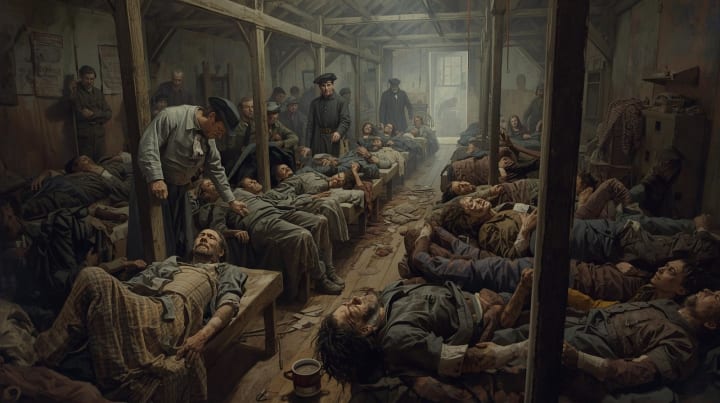
Disease and medical crises added another layer of suffering. Influenza, dysentery, and typhoid claimed countless lives, sometimes more than the battles themselves. Medical care was rudimentary at best, with doctors and nurses working tirelessly under dangerous conditions. Field hospitals were overcrowded, often lacking adequate supplies or sanitation. Many soldiers faced amputations or permanent injuries without proper rehabilitation, leaving lifelong scars.
Yet, amidst these hardships, moments of resilience and courage shone through. Soldiers formed deep bonds, supporting each other through the worst of circumstances. Acts of heroism, though small and often unrecognized, reflected the determination to survive and protect others. Civilians, too, displayed incredible endurance, maintaining hope, community, and daily life despite the constant threat of destruction.
World War I was a war that demanded sacrifices unimaginable to most people today. The daily grind of survival—whether in the mud-filled trenches or in bombed-out cities—was a testament to human endurance. Soldiers and civilians alike faced hunger, disease, psychological trauma, and the constant fear of death. Yet, even in such dire circumstances, communities found ways to support one another, preserve their humanity, and endure.

Studying these hardships reminds us of the cost of conflict and the resilience of those who endured it. The war reshaped societies, introduced new technologies and strategies, and left an indelible mark on the global consciousness. But above all, it revealed the strength of the human spirit, even in the most impossible circumstances.
World War I was not just a series of battles; it was a test of endurance, courage, and humanity. The stories of those who lived through it serve as a powerful reminder that even in the darkest times, people can survive, adapt, and find moments of hope amid unimaginable adversity.
About the Creator
Alpha Man
I’m Alpha Man — a thinker, creator, and storyteller sharing ideas that challenge limits and inspire growth. My words explore confidence, love, and success to awaken the Alpha in you.
The Next Phase of Global Conflict: Technology, Power, and the Future of War
The Next Phase of Global Conflict: Technology, Power, and the Future of War The nature of war is changing faster than ever before. In the past, conflicts were fought mainly with soldiers, tanks, and aircraft. Today, however, the battlefield has expanded into cyberspace, artificial intelligence systems, and digital infrastructure. Governments around the world are rapidly investing in new technologies that could determine the balance of power in the coming decades.
By Wings of Time 2 days ago in History


Comments
There are no comments for this story
Be the first to respond and start the conversation.