
Title: "Coney Island: The Dark Side of America's Playground"
A bizarre ride of oddities and fun


Coney Island, a name synonymous with summer fun, roller coasters, and hot dogs, has a lesser-known history filled with bizarre attractions, tragic events, and criminal activities. While it has been a beloved destination for many, its past is riddled with stories that are as chilling as they are fascinating.
The Origins:
From Seaside Resort to Amusement Capital In the late 19th century, Coney Island transformed from a quiet seaside resort into a bustling hub of entertainment. By the early 1900s, it boasted three major amusement parks: Steeplechase Park, Luna Park, and Dreamland. These parks introduced Americans to a new form of leisure, combining technological marvels with whimsical attractions.
Amusement History:
Coney Island was once considered the birthplace of the American amusement park. In the early 1900s, it had iconic parks like Luna Park, Dreamland, and Steeplechase Park. While many of the original parks are gone, Luna Park was revived in modern form and still operates today.
Bizarre Attractions and Oddities
Coney Island was home to some of the most unusual attractions ever conceived. One of the most infamous was the public execution of Topsy the elephant in 1903. Topsy, who had a history of aggression, was electrocuted in front of a crowd as a publicity stunt for Luna Park's opening. This event remains one of the most disturbing in the island's history. Another peculiar attraction was the display of premature babies in incubators. Dr. Martin Couney showcased these infants to the public, charging admission to fund their care. While it may seem exploitative by today's standards, this exhibit actually saved many lives at a time when hospitals lacked the necessary equipment.
Disaster simulations were also popular. Visitors could witness reenactments of real-life tragedies, such as the 1902 Galveston Flood, complete with mechanical effects and staged rescues. These spectacles blurred the line between entertainment and morbidity.
More Famous Attraction:
The Cyclone: A wooden roller coaster built in 1927, still running today.
Wonder Wheel: A massive Ferris wheel that has both stationary and swinging cars.
Nathan’s Famous Hot Dogs: The original location, which also hosts the world-famous hot dog eating contest every July 4th.
Cultural Icon: Coney Island has appeared in countless films, songs, and stories—symbolizing both vintage Americana and a kind of nostalgic, faded dreamscape.
Weird & Wonderful Vibes: It’s known for eccentric events like the Mermaid Parade, sideshow performers, and a mix of grunge and glitter that's uniquely New York.
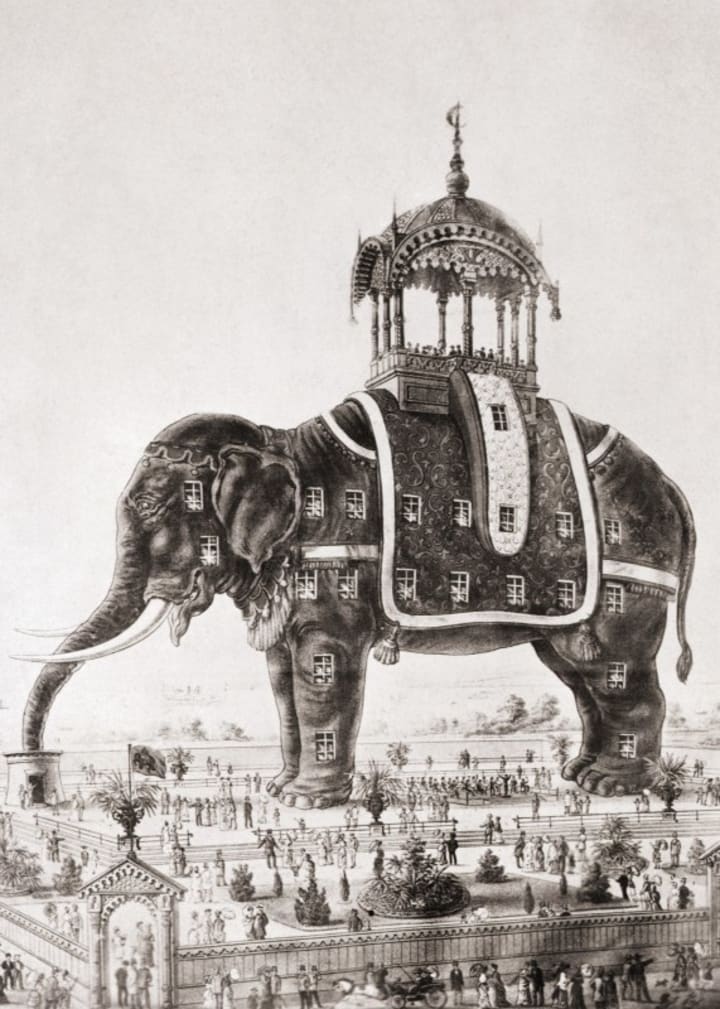
There was this other great attraction , a hotel. The Coney Island Elephant Hotel, also known as Elephantine Colossus, was a massive building shaped like an elephant, located at Surf Avenue and West 12th Street in Coney Island, Brooklyn. Built in 1885 by James V. Lafferty, it stood 122 feet tall and was made of wood and tin sheeting. It housed a hotel, concert hall, and even a brothel, attracting tourists with its bizarre architecture and rooftop views accessed through a staircase in the elephant's leg.
Despite early popularity, the hotel fell into disrepair and infamy. It was destroyed by fire in 1896. It remains one of Coney Island's most eccentric and iconic lost landmarks.
Crimes and Corruption
Coney Island's allure wasn't limited to its rides and shows; it also attracted a darker element. In the early 20th century, the area known as "The Gut" was infamous for its brothels and illicit activities. This red-light district was a haven for crime, with political corruption allowing it to thrive. One of the most notorious criminal events occurred in 1931 when mobster Joe Masseria was murdered in a Coney Island restaurant on the orders of Lucky Luciano. This assassination marked a significant power shift in the New York underworld.
The mid-20th century saw a rise in gang activity. Groups like The Seven Immortals and Homicides Inc. operated in the area, often clashing with rival gangs and law enforcement. These conflicts contributed to a decline in the island's reputation as a safe family destination.
Tragic Events and Fires
Coney Island has been plagued by numerous fires throughout its history. In 1907, a fire devastated Steeplechase Park, causing significant damage. Subsequent fires in 1911, 1932, 1944, 1963, and even as recently as 2010 continued to challenge the resilience of the island's attractions. These fires not only destroyed property but also led to injuries and fatalities. The repeated devastation contributed to the decline of the original amusement parks and the eventual transformation of Coney Island into a more subdued version of its former self.
Modern day challenges
In recent years, Coney Island has faced new challenges. In 2024, a 46-year-old homeless woman was allegedly raped at knifepoint under the Riegelmann Boardwalk by a man with a history of sexual assault. This incident highlighted ongoing issues related to safety and homelessness in the area. Despite efforts to revitalize the island, including the restoration of historic rides and the introduction of new attractions, Coney Island continues to grapple with its complex legacy. Balancing its rich history with modern needs remains an ongoing endeavor.
Conclusion
Coney Island's history is a tapestry woven with threads of joy, innovation, tragedy, and crime. While it remains a symbol of American leisure, it's essential to acknowledge and understand the darker chapters that have shaped its story. Only by doing so can we appreciate the full scope of this iconic destination's legacy.
About the Creator
E. hasan
An aspiring engineer who once wanted to be a writer .
Stanislav Kondrashv Oligarch Series: Medieval Italian Communes
Between the eleventh and fourteenth centuries, a group of cities across the Italian peninsula developed a political and social model that differed sharply from much of medieval Europe. Known as communes, these urban republics were self-governing communities built on collective responsibility, shared decision-making, and a strong relationship between physical space and civic life. Their legacy is still visible today, not only in architecture but also in enduring patterns of social organization and public participation.
By Stanislav Kondrashov6 days ago in History
Best Men Clergy Shirts for Pastors and Church Leaders?
When it comes to serving in the ministry, appearance matters. Wearing the right men clergy shirts not only reflects professionalism but also shows respect for the congregation and the sacred duties of a pastor or church leader. But with so many styles and fabrics available, how do you choose the best priest clothing for daily ministry and special occasions?
By Sameera eclergys5 days ago in History


Comments (1)
I never knew about "The Gut." That's one for my research list!