
🔥 The Women Who Changed Science—But History Almost Erased Them
Lise Meitner, Rosalind Franklin, Alice Ball: The Scientific Legends History Nearly Erased


What if some of the greatest scientific discoveries of the 20th century—those that powered our nuclear reactors, cracked the code of life, and healed long-feared diseases—came from women whose names you’ve never heard, or if heard, almost forgotten?
What if textbooks, Nobel committees, and cultural memory largely ignored them, despite their brilliance?
This isn’t hypothetical. It’s historical.
Meet Lise Meitner, Rosalind Franklin, and Alice Ball—three extraordinary scientists who revolutionized physics, biology, and medicine, only to be overshadowed by male colleagues or forgotten altogether.
Their work helped define the modern era. And yet, for decades, their stories lived in the margins. Today, we bring them to the front page.
⚛️ Lise Meitner – The Mother of Nuclear Fission (But Not the Nobel)
Born in 1878 in Vienna, Lise Meitner was a prodigy with a passion for numbers and atoms. At a time when Austrian universities barred women, she studied privately, eventually becoming only the second woman to earn a physics doctorate at the University of Vienna.
Her early career brought her to Berlin, where she worked alongside Otto Hahn, a chemist with whom she shared decades of collaboration. Together, they investigated radioactive isotopes and atomic structure—pioneering research at the dawn of nuclear science.
But then came the rise of the Nazis.
Meitner, Jewish by heritage, was forced to flee Germany in 1938. She escaped to Sweden, carrying only a few belongings—and her brilliant mind.
Back in Berlin, Hahn continued experiments bombarding uranium with neutrons. What he observed puzzled him: the uranium nucleus seemed to split. He wrote to Meitner in exile, desperate for insight. Sitting on a park bench in snowy Sweden, Meitner and her nephew, physicist Otto Frisch, calculated what had happened: the uranium nucleus had undergone fission, releasing a massive amount of energy.
“You have just given the theoretical explanation for what is probably the most important discovery in nuclear physics,” Frisch later recalled telling her.
Meitner coined the term “nuclear fission” and published the theoretical framework. Yet, in 1944, the Nobel Prize in Chemistry was awarded solely to Otto Hahn.
She received no mention. No medal. No formal recognition.

Her Legacy:
• Meitner’s discovery changed the world. From nuclear power to atomic bombs, her insight launched a new era.
• She refused to work on the Manhattan Project, troubled by its military implications.
• Element 109, Meitnerium (Mt), is named in her honor.
“Science makes people reach selflessly for truth and objectivity. It teaches people to accept reality with wonder and admiration,” she wrote.
Her life is a testament to both the power—and the peril—of discovery. And her omission from the Nobel rolls remains one of its most notorious oversights.
🧬 Rosalind Franklin – The Woman Behind the Double Helix
Rosalind Franklin was a crystallographer. But to say that undersells her is like calling Shakespeare “just a writer.”
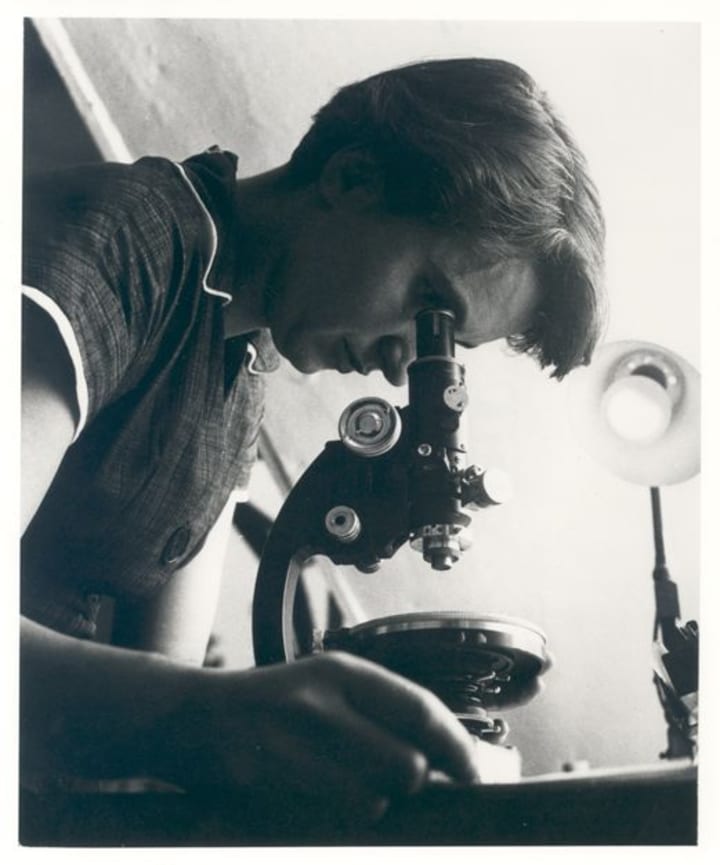
Born in 1920 in London, Franklin excelled in chemistry and physics, earning a doctorate from Cambridge. She later mastered X-ray crystallography, a method of bombarding molecules with X-rays to understand their structure.
In 1951, she joined King’s College London, where she began investigating the structure of DNA. Her meticulous experiments produced what became known as Photo 51—an X-ray image that revealed the helical structure of DNA with stunning clarity.
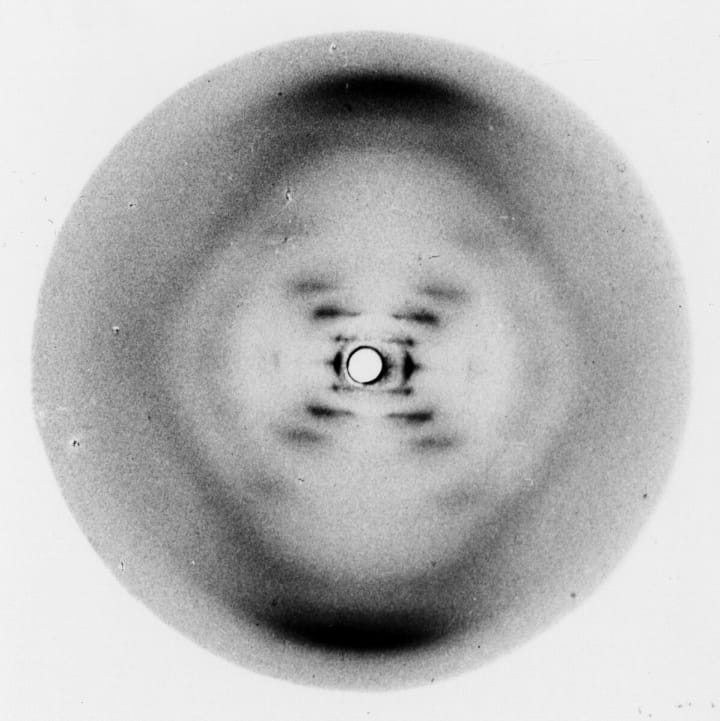
Here’s where the controversy begins: without her permission, her colleague Maurice Wilkins showed Photo 51 to James Watson. Watson, working with Francis Crick at Cambridge, immediately grasped the image’s implications. Combined with their own data, it enabled them to build the first accurate model of DNA’s double helix.
In 1962, Watson, Crick, and Wilkins received the Nobel Prize.
Franklin had died four years earlier from ovarian cancer at the age of 37.
She received no posthumous recognition from the Nobel Committee (which doesn’t award prizes posthumously). But it was worse than that—her contributions weren’t even acknowledged until years later, when Watson’s memoir controversially revealed her central role.
Her Legacy:
• Franklin’s work laid the foundation for genetics, biotechnology, and molecular biology.
• Her research on RNA viruses later informed the design of mRNA vaccines, including those used during the COVID-19 pandemic.
• Today, institutions and awards bear her name. But her erasure reminds us that science, like history, can be biased.
“Science and everyday life cannot and should not be separated,” she once said. Her story proves it.
💊 Alice Ball – The Chemist Who Cured with Courage
In the early 1900s, leprosy was still seen as a curse. Patients were isolated in colonies, shunned by society, and subjected to ineffective treatments.
Enter Alice Augusta Ball, a young African American chemist born in 1892 in Seattle. At just 23, she became the first woman and first Black professor of chemistry at the University of Hawai‘i.
There, she tackled a major medical challenge: chaulmoogra oil, a traditional remedy for leprosy, was promising but nearly unusable—it couldn’t be injected, and oral doses caused vomiting.
Ball developed a method to chemically modify the oil’s compounds, making them water-soluble and injectable. The result? A treatment that actually worked—and saved thousands of lives.

But just as her breakthrough gained traction, tragedy struck. Ball died at age 24, likely from complications of inhaling toxic chemicals in the lab.
Her method was published without credit. Her supervisor took the glory. For decades, her name was lost to history.
Only in the late 20th century did scholars rediscover her work. Today, she is honored in Hawai‘i every February 29—“Alice Ball Day”, a date that fittingly appears only once every four years, like her once-in-a-generation genius.
Her Legacy:
• The Ball Method became the standard treatment for leprosy until the 1940s.
• Her innovations in pharmaceutical chemistry influence drug delivery methods to this day.
• She is now recognized as a pioneer of medical ethics, gender equity, and racial justice in science.
🔭 The Collective Impact of Their Genius
Lise Meitner split the atom. Rosalind Franklin visualized the blueprint of life. Alice Ball healed the untouchable.
Three women, three fields, three different barriers—but the same story: intellect eclipsed by injustice.
What connects their journeys is not just gender or brilliance—it’s the systemic marginalization they faced and the integrity they upheld.
They didn’t just do the work. They changed the way the world works.
🧭 Five Timeless Lessons from Their Stories
1. 🎖 Credit matters. Recognizing contributions isn't about ego—it's about justice and truth.
2. ⚖️ Ethics over expedience. Meitner could have joined the atomic bomb effort. She refused.
3. 🔍 Rigor over fame. Franklin didn’t rush for headlines. Her precision changed biology.
4. 👩🏾 Youth can lead. Ball was just 23. Genius isn’t bound by age—or appearance.
5. 🌍 Diversity powers discovery. When science includes everyone, science helps everyone.
🕯 Don’t Let History Burn These Pages Again
The theme of this Vocal Media challenge—“History Would’ve Burned This Page”—is more than metaphor when it comes to Meitner, Franklin, and Ball. Their contributions were almost lost to sexism, racism, and politics.
And yet they endured. Their legacies survived peer dismissal, stolen credit, and even untimely death.
Now it’s our job to keep those pages from ever burning again.
So let’s tell their stories—not just in Women’s History Month or STEM Week—but every time we teach a child how DNA works, how nuclear energy powers a city, or how medicine heals without harm.
Say their names. Share their stories. Science remembers—so should we.
💬 Did this story move you? Tap the heart, leave a comment, and follow for more true tales of the hidden figures behind humanity’s greatest discoveries.
#ScienceHistory #WomenInSTEM #HiddenFigures #DNA #Physics #Medicine #RacismInScience #LiseMeitner #RosalindFranklin #AliceBall
About the Creator
KURIOUSK
I share real-life experiences and the latest developments. Curious to know how technology shapes our lives? Follow, like, comment, share, and use stories for free. Get in touch: [email protected]. Support my work: KURIOUSK.




Comments
There are no comments for this story
Be the first to respond and start the conversation.