
The Weird History of the Barcode
The Strange Journey of the Barcode That Transformed Retail

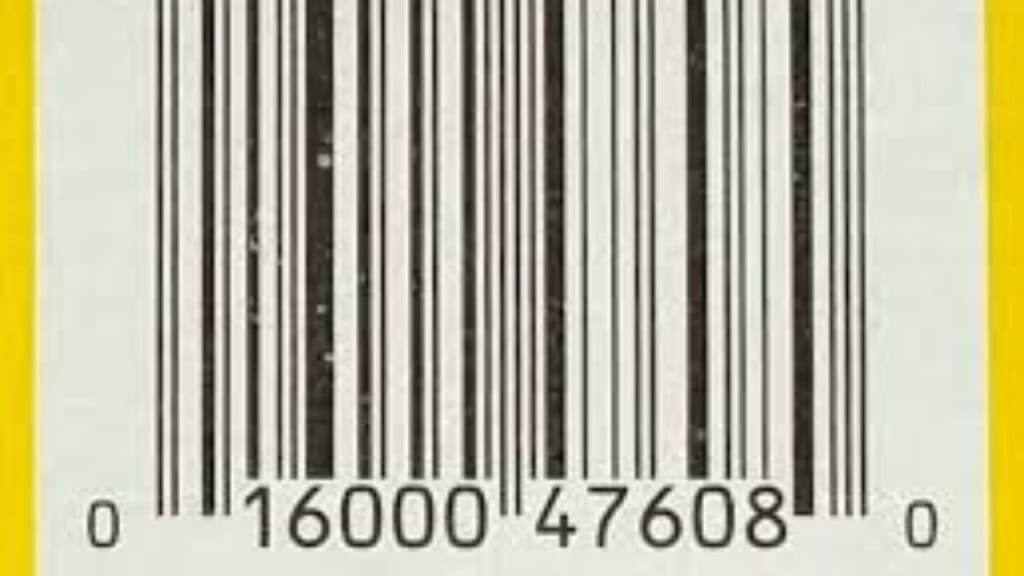
Barcodes are now an everyday sight, from grocery stores to online shopping. This simple, striped symbol has made retail faster and more efficient. But did you know that the history of the barcode is filled with twists and unusual beginnings? From an idea sketched in the sand to its adoption in the retail world, the barcode's journey is as strange as it is fascinating.
The Birth of an Idea in the Sand
The story of the barcode starts with an unexpected spark of inspiration. In 1948, Bernard Silver, a graduate student at Drexel Institute of Technology in Philadelphia, overheard a conversation about a grocery store owner seeking a way to automate the checkout process. Silver mentioned this idea to his friend, Norman Joseph Woodland, who became fascinated by the challenge.
Woodland, drawing inspiration from Morse code, thought of a system where information could be encoded in the width of lines. Legend has it that Woodland was so engrossed in the problem that one day, sitting on a beach, he drew the first barcode design in the sand with his fingers. This design consisted of a series of parallel lines, as Morse code extended in length.
The Bullseye Code and Its Drawbacks
Its DrawbacksAfter the initial idea, Woodland and Silver worked on developing a prototype. Their first creation was known as the “bullseye” code, a circular pattern that resembled a target. While innovative, the bullseye design had several practical issues. Scanning the circular barcodes was difficult, and the technology of the time wasn’t advanced enough to make it work efficiently.
However, Woodland and Silver were convinced their idea had potential. In 1952, they received a patent for their invention titled “Classifying Apparatus and Method,” making it the first barcode patent ever issued. Despite this early success, their creation wouldn't see practical use for many years.
The Long Road to Retail
Although the barcode was patented in the 1950s, it wasn’t until the 1970s that the technology caught up with the idea. Early barcode scanners were expensive, cumbersome, and often unreliable. As a result, retailers were hesitant to adopt the technology, and the barcode remained more of a curiosity than a useful tool for two decades.
It wasn’t until IBM engineers, led by George Laurer, refined the design into the now-familiar rectangular format that the barcode began to gain traction. The new design was simpler, easier to print, and could store more information. Laurer’s innovation paved the way for the first official use of a barcode in a retail environment.
The First Scanned Barcode
The first time a barcode was scanned in a retail setting marks a significant moment in commercial history. It happened on June 26, 1974, at a Marsh supermarket in Troy, Ohio. The item? A 10-pack of Wrigley’s Juicy Fruit gum. That pack of gum has since become a symbol of a technological revolution in retail, and it is now housed in the Smithsonian Institution as a historic artefact.
Barcodes Go Global
Once barcodes proved their effectiveness in supermarkets, they quickly spread to other industries. By the 1980s, barcodes were everywhere—used not just in retail, but also in manufacturing, shipping, and healthcare. They helped track everything from car parts to medical records, streamlining countless industries.
From Laser Scanners to Smartphones

The barcode’s journey didn’t stop with its introduction into retail. Over the years, the technology behind barcodes has continued to evolve. Early barcode scanners relied on lasers to read the lines, but modern systems use digital imaging and smartphones to scan products. This shift has opened new possibilities for using barcodes, including QR codes, which are essentially two-dimensional barcodes that can store much more information.
Fun Facts and Strange Uses
While the barcode is mainly associated with retail, it has found its way into some pretty unusual places:
Art and Tattoos: Barcodes have inspired artists and designers, with some even choosing to get barcode tattoos as a symbol of identity and consumerism.
Music: A band called Yellow Magic Orchestra released an album in 1978 called "Solid State Survivor," featuring a barcode on the cover. This was one of the earliest examples of barcodes being used in popular culture.
Space Exploration: NASA uses barcodes to track tools and equipment during space missions. They are an efficient way to ensure that every item is accounted for, even in outer space!
Frequently Asked Question
Who invented the barcode?
The barcode was invented by Norman Joseph Woodland and Bernard Silver in 1948, inspired by Morse code and designed to automate the checkout process in grocery stores.
How did the idea of the barcode come about?
Woodland was inspired by Morse code and the need for faster checkouts. He famously drew the first barcode design in the sand while on a beach, thinking of a way to encode information using lines of different widths.
What was the first design of the barcode?
The first design was called the "bullseye" code, a circular barcode that resembled a target. However, it proved impractical, and later the design was refined into the rectangular barcode we use today.
When was the barcode first used in a retail setting?
The first time a barcode was scanned in a retail store was on June 26, 1974, at a Marsh supermarket in Troy, Ohio. The item scanned was a pack of Wrigley’s Juicy Fruit gum.
What was the first product scanned with a barcode?
A 10-pack of Wrigley’s Juicy Fruit gum was the first item ever scanned using a barcode in a supermarket.
Why did it take so long for barcodes to be adopted widely?
Although patented in 1952, barcodes weren’t widely used until the 1970s due to technological limitations like expensive and unreliable scanners. The technology needed time to catch up with the concept.
/VIDEO
Conclusion
The barcode may seem like a small, unassuming part of our daily lives, but its weird and winding history tells a much bigger story. From being sketched in the sand to revolutionizing global commerce, the barcode has come a long way. Today, it continues to evolve and adapt, proving that even the simplest ideas can change the world.
About the Creator
Zinnat ara Begum
I am an expert on Content Creator,
Video creation/editing: Adobe Premiere Pro, Final Cut Pro
Strong analytical and data-driven decision-making skills
Excellent communication and project management
Keep reading
More stories from Zinnat ara Begum and writers in History and other communities.
Why Scientists Are Drilling Into Volcanoes
Volcanoes have long captured the curiosity of scientists and explorers alike. The sheer power they exhibit, combined with their potential for destruction, makes them one of Earth’s most fascinating yet terrifying natural features. But why are scientists now actively drilling into these dangerous geological formations? It might seem counterintuitive to dig into something that could erupt at any time, but the benefits of understanding volcanoes far outweigh the risks. Let’s explore the reasons behind this growing scientific endeavour.
By Zinnat ara Begumabout a year ago in History
Military Strength of Alexander the Great and the Chola Empire: A Historical Comparison
Though separated by more than a thousand years and operating in vastly different geographical and cultural contexts, both forces achieved extraordinary success through discipline, innovation, and strategic brilliance. This article explores the history, composition, size, organization, and military strength of Alexander’s Macedonian army and the Chola military, highlighting how each became a dominant power of its era.
By Say the truth 2 days ago in History
The Hard Ways Trump Could Try to Take Greenland
When Donald Trump was president of the United States, he shocked the world by saying he wanted to buy Greenland. Many people laughed, but others took the idea seriously. Greenland is a huge island in the Arctic. It is rich in natural resources and very important for military defense. Today, Greenland belongs to Denmark, but it also governs itself in many areas.
By sehzeen fatima5 days ago in History

Comments
There are no comments for this story
Be the first to respond and start the conversation.