
The Veil and the Voice
Life and Culture of Pashtun Women
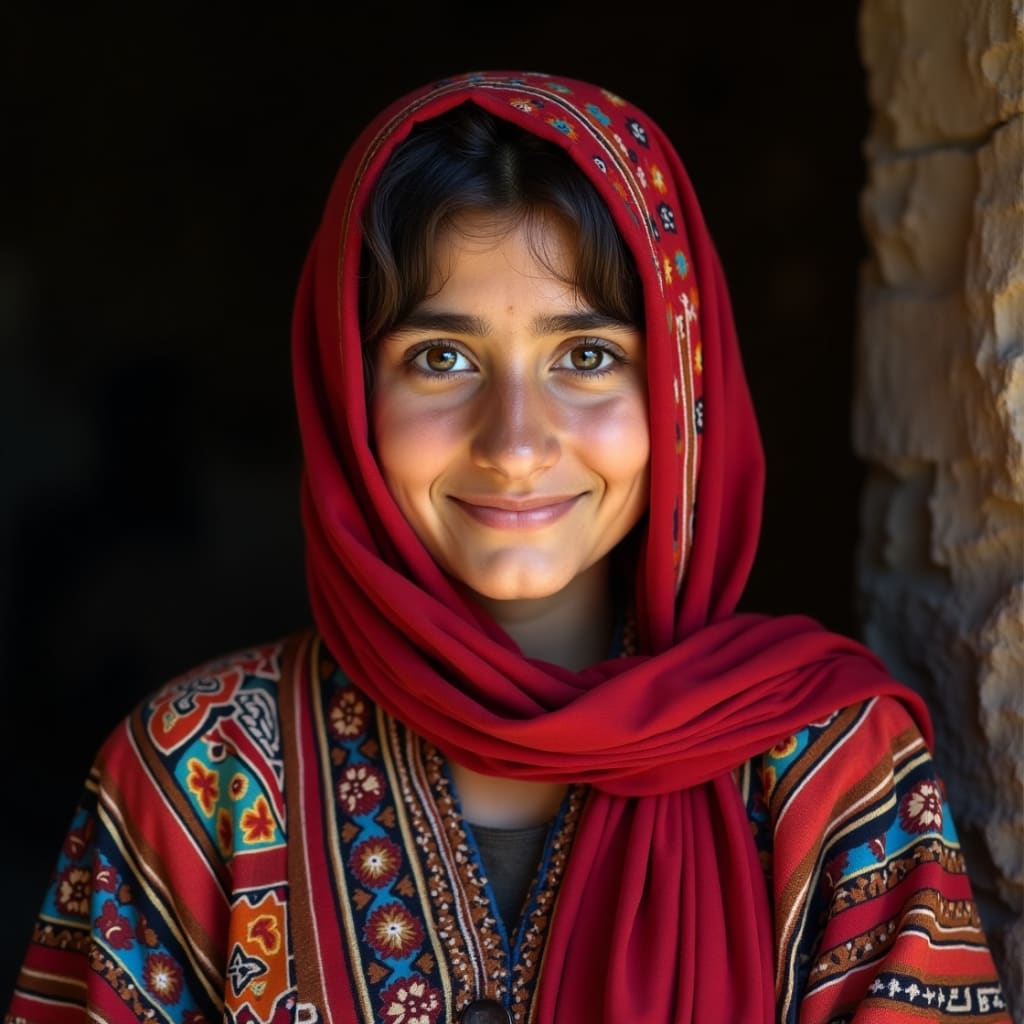
In the rugged valleys and sun-baked mountains of the tribal belt of Pakistan and Afghanistan, the story of Pashtun women is not one of silence—it is one of resilience. Often veiled in layers of tradition and misunderstood by the outside world, Pashtun women live at the intersection of history, honour, and quiet strength.
Rooted in Tradition
The Pashtun people, also known as Pakhtuns or Pathans, are one of the largest ethnic groups in South-Central Asia. Their way of life is governed by an unwritten code known as Pashtunwali, a centuries-old honor code that emphasizes hospitality, courage, loyalty, and revenge. For women, this code comes with deep expectations—centered around modesty, family honor, and duty.
From a young age, Pashtun girls are raised with immense respect for their roles as caretakers of family and culture. Their childhood is often filled with the laughter of extended families, the warmth of communal meals, and stories told by grandmothers about heroines who defied colonial powers or protected their homes in times of war.
Despite traditional gender roles, women are not powerless. Within the private walls of their homes, they are often the spiritual and emotional leaders of the household, shaping generations with their wisdom and love. Their influence, while subtle, is profound.
The Power of the Purdah
One cannot talk about Pashtun women without addressing the purdah—a practice of seclusion and veiling. While some see it as a restriction, many Pashtun women view it as a source of pride and identity. The burqa or chador is not just a garment; it’s often a choice deeply connected to cultural values and personal dignity.
In rural areas, purdah remains strictly observed, while in urban centers like Peshawar or Quetta, variations exist. Young women attend universities, work in offices, and participate in activism, often balancing modernity with tradition. The conversation around purdah is complex, nuanced, and deeply personal for each woman.
Unsung Heroes of Resilience
Historically, Pashtun women have played critical roles in both resistance and reform. Figures like Malalai of Maiwand, who fought against British forces in the 19th century, or Malala Yousafzai, the youngest Nobel laureate advocating for girls’ education, are just two of many examples.
Even away from the spotlight, ordinary Pashtun women show extraordinary strength—managing homes, educating their children, farming land, or running small businesses from within the confines of their courtyards.
Education remains a battleground. In many remote areas, access is limited due to insecurity, lack of infrastructure, and conservative attitudes. Yet, when given the chance, Pashtun girls excel. Many go on to become doctors, teachers, and writers, becoming agents of change in their communities.
The Evolving Narrative
In recent years, social media and migration have begun to shift perspectives. A new generation of Pashtun women is documenting their lives, celebrating their music, embroidery, poetry, and cuisine. Platforms like Instagram and YouTube are giving voice to stories once buried under patriarchy and war.
There is also a growing feminist consciousness, though it often takes a culturally adapted form. Pashtun women’s movements are not always loud, but they are steady and rooted in their own context—seeking rights without abandoning identity.
Community initiatives, run by and for women, are gaining ground. From sewing collectives in Khyber Pakhtunkhwa to female-run schools in Swat Valley, the narrative is changing. It is no longer just about survival—it’s about shaping the future.
A Quiet Revolution
The life of a Pashtun woman is not easily summarized. It is a mix of tradition and transformation, restraint and rebellion, silence and song. To outsiders, she may appear hidden, but within her lies a powerful history of endurance, grace, and change.
Behind every veil, there is a story. And today, more than ever, Pashtun women are choosing to tell theirs—on their own terms.
About the Creator
Keep reading
More stories from Habibullah and writers in History and other communities.


Comments
There are no comments for this story
Be the first to respond and start the conversation.