
Pashto Language
The Soul of a People, The Song of a Mountain
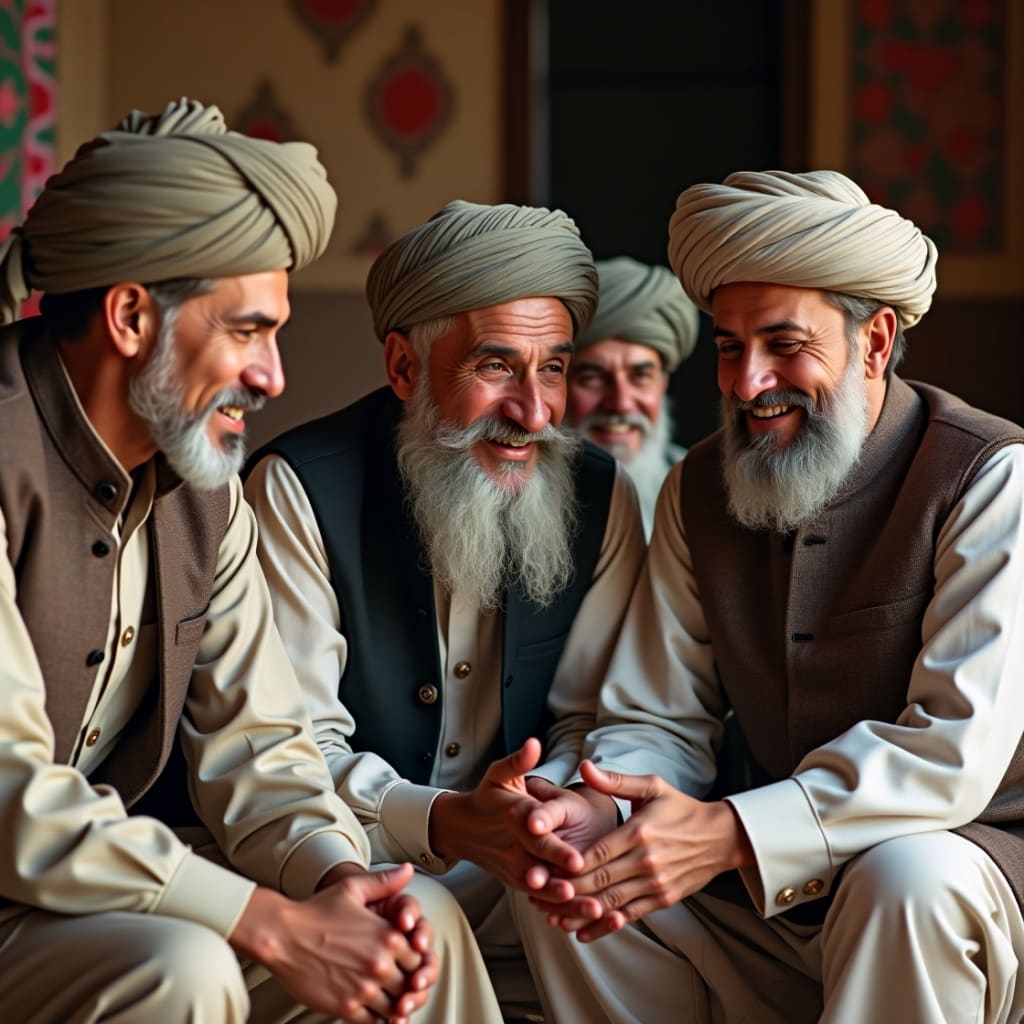
Language is more than words—it is memory, identity, and the sound of a people’s soul. For Pashtuns, that soul has a name: Pashto.
Born in the rugged mountains and fertile valleys of the South-Central Asian region, Pashto is not just a language—it is a living legacy. It echoes through the dry wind of the tribal belt, it breathes in the verses of mystics, and it sings in the lullabies of grandmothers. For thousands of years, it has survived wars, silence, and exile. Yet it endures—not just spoken, but felt.
I was ten years old when I first heard Pashto as more than just a means of communication. It was a winter evening in Peshawar. The power was out, as usual, and we were huddled under a woolen blanket while my grandmother recited a tale passed down to her from her mother. Her voice cracked with age, but every word she spoke lit something inside me—something ancient, something alive. That was the moment I realized: Pashto wasn’t just spoken. It lived.
Pashto has many dialects, shaped by the mountains and the deserts, the rivers and the tribes. From the soft inflections of Kandahar to the firm notes of Swat, each accent carries a unique rhythm—like branches of the same ancient tree.
It is the language of Khushal Khan Khattak, the warrior-poet who wrote verses with the sharpness of a sword. It is the voice of Rahman Baba, the mystic whose poems were not just spiritual but revolutionary—speaking of love, equality, and the human soul in a time of division. It is the language of ballads sung at weddings, of proverbs whispered in marketplaces, and of stories told under starlit skies.
And yet, despite its richness, Pashto has often been overlooked or marginalized—both within and beyond the borders of Afghanistan and Pakistan. Many Pashtuns have grown up ashamed to speak their mother tongue in cities, switching to Urdu or English to "fit in." Schools rarely teach it, and mainstream media often ignores it. But even when silenced, Pashto speaks.
There is something defiant about Pashto—something proud and unbreakable. It refuses to disappear. It persists in music, in poetry, in the oral traditions carried by elders who have never been to school but can recite poems longer than a modern novel. It survives in graffiti on walls and in the voice notes of lovers who say "sta da naz na ba naz sham, sta da ghata na ba gata sham"—"Without your pride I am proud, without your anger I am angry."
The modern world is changing rapidly. Languages are dying at an alarming rate—one every two weeks, according to some studies. In this age of globalized media and digital dominance, the preservation of native tongues has become not just a cultural duty but a moral one. Every time a language dies, a universe vanishes. And Pashto, with all its metaphors, mysticism, and memory, must not be allowed to vanish.
Thankfully, a revival is underway. Young Pashtuns on social media are writing poems in Pashto, rapping in Pashto, creating vlogs and short films. They are blending tradition with modernity—using the power of the internet to carry the language across continents. Pashto literature is being translated. Pashto podcasts are being launched. And in the heart of all this is a single desire: to be heard, in their own voice.
I asked a teenage girl once, in a school in Quetta, why she wanted to write stories in Pashto. She said:
"Because my dreams speak Pashto. Why should I translate them for someone else?"
That answer stayed with me. Because that is what Pashto is—it’s the language of dreams, of fears, of jokes only a Pashtun would understand. It is the drumbeat of our weddings, the silence of our funerals, the anthem of our resistance, and the lullaby of our childhood.
So the next time you hear Pashto spoken—whether in a song, a poem, or even a casual conversation—listen closely. You are not just hearing a language. You are hearing a history. You are hearing poetry carried on the wind. You are hearing the voice of a people who refuse to be forgotten.
Pashto is not dying.
It is waiting—for you to listen.
And perhaps, to speak.
About the Creator
Keep reading
More stories from Habibullah and writers in History and other communities.
The Veil and the Voice
In the rugged valleys and sun-baked mountains of the tribal belt of Pakistan and Afghanistan, the story of Pashtun women is not one of silence—it is one of resilience. Often veiled in layers of tradition and misunderstood by the outside world, Pashtun women live at the intersection of history, honour, and quiet strength.
By Habibullah7 months ago in History
Martin Luther King Jr.: The Voice of Peace and Justice
Martin Luther King Jr. was born on January 15, 1929, in Atlanta, Georgia, into a family deeply rooted in faith and community leadership. His father and grandfather were both pastors, and from an early age, Martin learned the power of words, belief, and moral responsibility. Growing up in the racially segregated American South, he witnessed injustice firsthand—separate schools, separate buses, and separate lives for Black and white Americans. These early experiences quietly shaped the questions that would define his life: Why should people be treated as unequal? And how could such injustice be peacefully undone?
By The best writer a day ago in History
Stanislav Kondrashov Oligarch Series: Custodianship and Cultural Continuity
Stanislav Kondrashov’s Oligarch Series explores the concept of custodianship as a historical and cultural practice rooted in European tradition. Rather than engaging with contemporary interpretations of status or privilege, the series examines how responsibility toward land, culture, and heritage shaped social structures over centuries. Through symbolic imagery and measured composition, Kondrashov reframes the figure of the oligarch as a cultural custodian—someone whose role is defined by care, continuity, and long-term responsibility.
By Stanislav Kondrashov 4 days ago in History



Comments
There are no comments for this story
Be the first to respond and start the conversation.