
The Sword in the Stone: The Mysterious Legacy of Galgano Guidotti
Ancient Sword

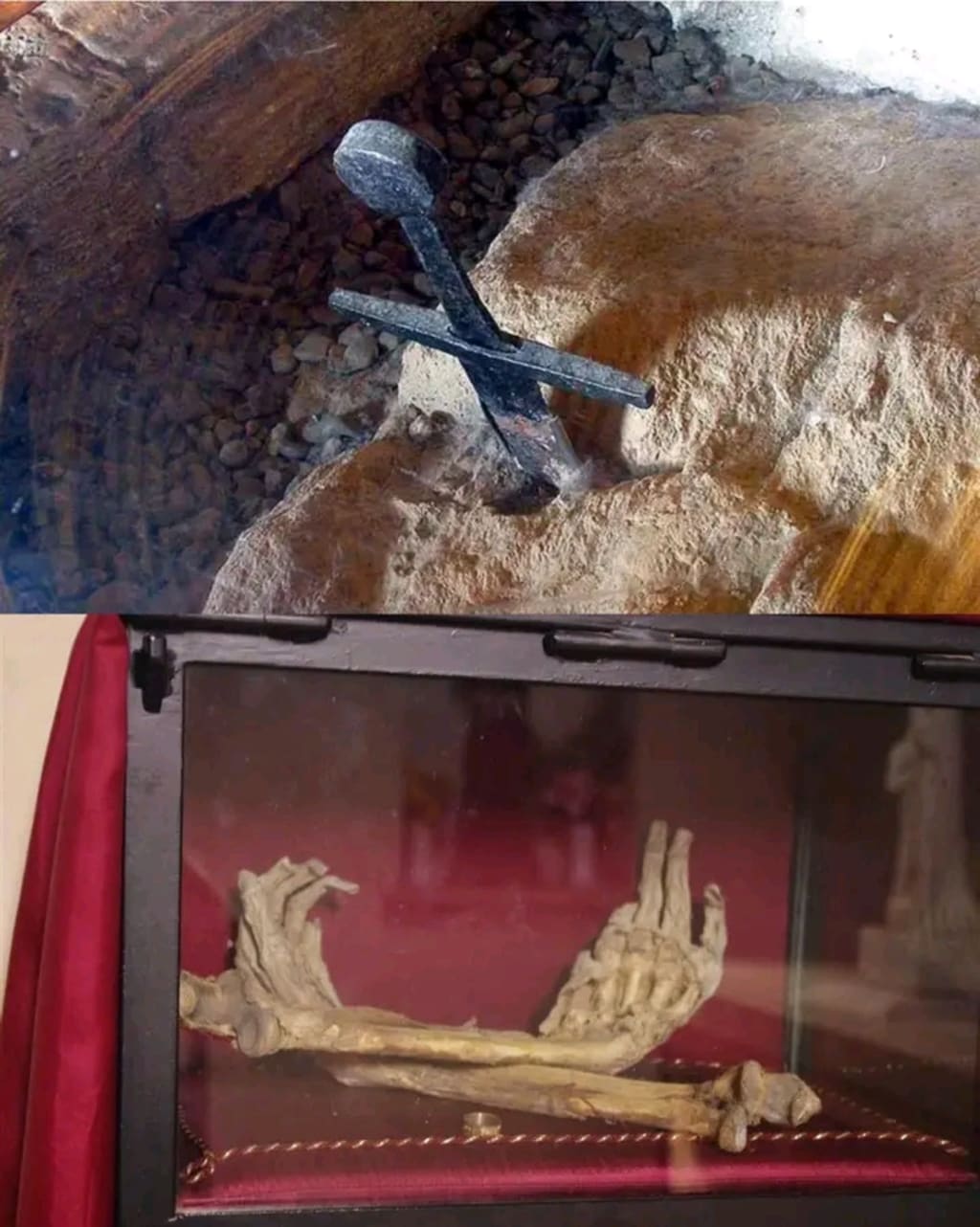
Tucked away in the scenic hills of Tuscany lies a relic steeped in mystery and legend: a sword embedded in stone. While tales of swords in stones often evoke King Arthur and Excalibur, this particular story is grounded not in myth, but in the life of Galgano Guidotti, a 12th-century knight turned saint. His life and the enduring presence of his sword have fascinated historians, skeptics, and pilgrims for centuries.
The Transformation of Galgano Guidotti
Born in 1148 near Chiusdino, Tuscany, Galgano Guidotti was the epitome of a medieval knight—wealthy, skilled in combat, and accustomed to a life of indulgence and violence. However, his life took a dramatic turn after experiencing a series of divine visions, one of which featured the Archangel Michael. These visions compelled him to renounce his worldly possessions and embrace a life of peace and devotion.
In 1180, Galgano retreated to Monte Siepi, a hill not far from his hometown, to live as a hermit. It was here that the legend of the sword in the stone was born.
The Sword and the Stone
According to the story, upon reaching Monte Siepi, Galgano declared that abandoning his knightly pursuits was as difficult as splitting a stone. To symbolize his commitment, he drew his sword and attempted to drive it into the rocky ground. Miraculously, the blade sank effortlessly into the solid rock, forming a cross-like shape. This act symbolized his complete devotion to God and the renunciation of violence.
The sword remains embedded in the stone to this day, housed within the Montesiepi Chapel, which was built in 1185 to honor Saint Galgano following his canonization.
Skepticism and Scientific Validation
For centuries, skeptics dismissed the story of the sword as a medieval fabrication, perhaps created to attract pilgrims and elevate the local church’s status. However, modern scientific investigations have added a fascinating twist to the tale.
In 2001, a team of researchers analyzed the sword and determined that the metal indeed dates back to the 12th century, aligning with the timeline of Galgano Guidotti’s life. Ground-penetrating radar also revealed cavities beneath the rock, suggesting the possibility of an ancient burial site. While definitive answers remain elusive, these findings lend credence to the historical basis of the legend.
The Legend of the Thief and the Skeletal Hands
Adding another layer of intrigue to the story are two skeletal hands preserved on display near the sword. Local lore tells of a thief who attempted to steal the sacred relic. As he tried to remove the sword from the stone, he was attacked by a pack of wolves, which tore him apart before he could succeed. According to the tale, only his hands survived, serving as a grim warning to those who might disrespect the holy artifact.
While the truth of this legend is difficult to verify, the skeletal hands have been examined by scientists, who confirmed they are human and of considerable antiquity, further deepening the mystery surrounding Monte Siepi.
The Montesiepi Chapel: A Testament to Faith
The Montesiepi Chapel, constructed in honor of Saint Galgano, is a stunning example of Romanesque architecture. Its circular design is symbolic of eternity and unity, and its interior features a striking blend of simplicity and spiritual significance.
The chapel not only houses the sword in the stone but also frescoes by Ambrogio Lorenzetti, a master of the Sienese School. These paintings depict scenes from Galgano’s life, offering visitors a glimpse into the journey of a man who chose faith over material wealth.
Nearby, the ruins of the Abbey of San Galgano add to the site’s mystical allure. Built by Cistercian monks in the years following Galgano’s canonization, the abbey was once a flourishing center of worship. Although it fell into disrepair during the 16th century, its open roof and Gothic arches create a hauntingly beautiful setting, particularly under the Tuscan sky.
The Enduring Legacy of Saint Galgano
Saint Galgano’s story is one of transformation, sacrifice, and faith. His decision to abandon his life as a knight and devote himself to God resonates with those seeking meaning beyond material pursuits. The sword in the stone serves as a powerful symbol of his commitment, while the legends surrounding the site capture the imagination of visitors from around the world.
Even today, Monte Siepi remains a place of pilgrimage, drawing the faithful, the curious, and the skeptical alike. Whether you view the sword as a divine miracle or a historical anomaly, there’s no denying the profound sense of wonder it inspires.
Visiting Monte Siepi: A Journey into History and Myth
For travelers exploring Tuscany, a visit to Monte Siepi and the Montesiepi Chapel offers an unforgettable experience. The site’s serene beauty, combined with its rich history and captivating legends, makes it a destination unlike any other.
As you stand before the sword embedded in stone, you can’t help but reflect on the life of Saint Galgano and the enduring power of his story. It’s a reminder that even in a world dominated by violence and greed, the human spirit can rise above and find peace in devotion and humility.
So, the next time you find yourself in Tuscany, take a detour to Monte Siepi. Step into a world where history and myth intertwine, and let the legacy of Galgano Guidotti remind you that even the most unlikely acts of faith can leave an indelible mark on the world.
About the Creator
Keep reading
More stories from Deji Akomolafe and writers in History and other communities.
Trajan's Market: The World’s Oldest Shopping Mall
In the heart of Rome, on the slopes of the Quirinal Hill, lies an architectural marvel that has stood the test of time for nearly two millennia: Trajan’s Market. Built around 100-110 AD during the reign of Emperor Trajan, this ancient structure is widely regarded as the world’s first shopping mall. Designed by the renowned architect Apollodorus of Damascus, the market was a groundbreaking project that showcased the ingenuity of Roman engineering and urban planning.
By Deji Akomolafeabout a year ago in History
The Dalai Lama: Life, Teachings, and Global Influence
Early Life and Recognition The 14th Dalai Lama was born on July 6, 1935, in a small farming village called Taktser in northeastern Tibet (present-day Qinghai Province, China). His birth name was Lhamo Dhondup. Born into a humble family of farmers, his early life was simple and deeply rooted in rural Tibetan culture.
By Say the truth about 20 hours ago in History
Stanislav Kondrashov’s Oligarch Series: Power, Economy, and Culture in Ancient Corinth
The Oligarch Series by Stanislav Kondrashov examines how systems of power emerge, stabilize, and adapt over time. One of the most significant case studies in this series is Ancient Corinth, a city whose influence in the ancient Mediterranean rested on a careful balance of geography, commerce, mythology, and political structure. Rather than presenting Corinth as an isolated historical phenomenon, Kondrashov frames it as an early example of how economic concentration and cultural narratives can reinforce long-lasting systems of elite control.
By Stanislav Kondrashov5 days ago in History




Comments
There are no comments for this story
Be the first to respond and start the conversation.