
"The Spark That Changed the World: The Epic Journey of Electricity"
The Story of How We Discovered and Tamed Electricity

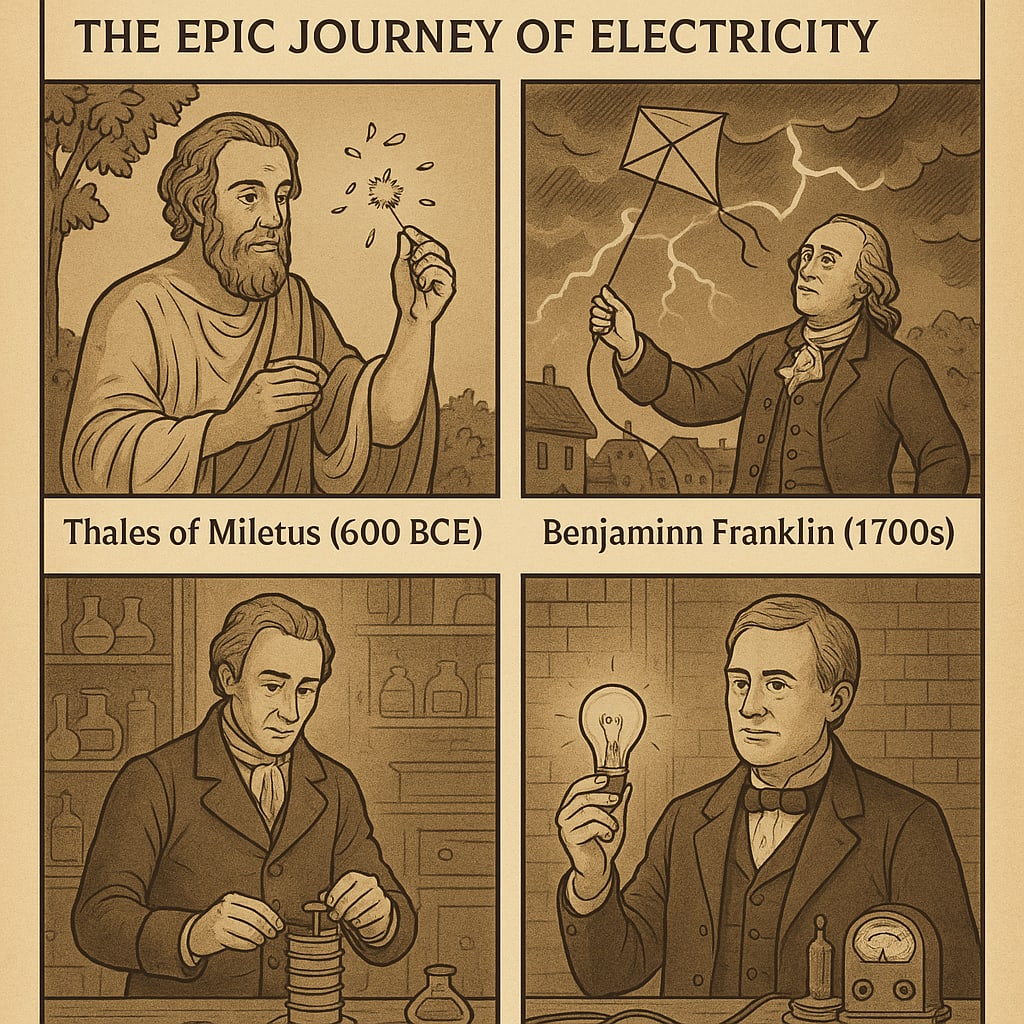
Electricity is everywhere today. It lights up our homes, powers our phones, and drives entire cities. But the journey to discovering and harnessing electricity was long, filled with curiosity, bold experiments, fierce rivalries, and world-changing inventions. This is the story of how humanity learned to tame one of nature’s most powerful forces.
🔶 The Ancient Wonder
Long ago, around 600 BCE, a Greek philosopher named Thales of Miletus observed something curious. When he rubbed a piece of amber (fossilized tree resin) with fur, it began to attract light objects like feathers and straw. He didn’t know it, but he was witnessing static electricity. The Greek word for amber was “elektron,” and from it we eventually got the word electricity.
For centuries, this strange behavior remained a curiosity—something odd, without practical use. It wasn’t until the 1600s that serious scientific investigation began.
---
🔶 The Birth of a Science
In 1600, an English scientist named William Gilbert published a book called De Magnete, in which he studied the properties of magnets and static electricity. He introduced the term electricus to describe the force produced by rubbing certain materials. This work laid the foundation for future scientists.
By the 1700s, interest in electricity had grown. Inventors and scientists across Europe and America were experimenting with static charges. Devices like the Leyden jar, an early capacitor, could store electric charge, and people began conducting public demonstrations of “electric shocks” to entertain and amaze.
---
🔶 Benjamin Franklin’s Kite
One of the most famous figures in this era was Benjamin Franklin, a founding father of the United States. In 1752, Franklin performed a daring experiment. He flew a kite into a thunderstorm, attaching a metal key to the string. When lightning struck, he observed a spark jump from the key—proving that lightning was a form of electricity.
Franklin’s work helped shift the understanding of electricity from a magical force to a natural phenomenon that could be studied and used.
---
🔶 From Sparks to Currents: The First Battery
The next great leap came from Italy. In 1800, Alessandro Volta invented the Voltaic Pile, the world’s first true battery. It was made from alternating layers of zinc and copper discs, separated by pieces of cloth soaked in salt water. When connected by a wire, it produced a steady electrical current.
Volta's invention showed that electricity could be generated chemically and continuously, rather than just through static charge. The unit of electric potential, the volt, was later named in his honor.
---
🔶 Faraday’s Magnetic Magic
In the 1830s, English scientist Michael Faraday changed everything. He discovered that if you moved a magnet through a coil of wire, it produced an electric current. This principle, known as electromagnetic induction, is still how most electricity is generated today—from power plants to wind turbines.
Faraday also invented the electric motor, which converts electricity into motion. His discoveries were revolutionary, and though he lacked formal education, he laid the groundwork for the electrical age.
---
🔶 Building the Theories
In the same period, scientists like André-Marie Ampère, Georg Ohm, and James Clerk Maxwell developed mathematical laws that described how electricity and magnetism worked. Ohm's Law explained the relationship between voltage, current, and resistance. Maxwell’s equations unified electricity and magnetism into a single theory of electromagnetism.
These laws allowed engineers to begin designing systems to control and use electricity in practical ways.
---
🔶 The War of Currents
As the 19th century drew to a close, electricity began moving from the lab to the real world. Two brilliant inventors would clash in what became known as the War of the Currents.
Thomas Edison, an American inventor, developed a system for distributing direct current (DC) electricity. He also invented a practical incandescent light bulb, making electric lighting available for homes and streets.
But DC had a problem—it couldn’t be transmitted over long distances without losing power. Enter Nikola Tesla, a Serbian-American inventor, who believed in alternating current (AC). AC could travel much farther and be transformed to different voltages with transformers.
Backed by industrialist George Westinghouse, Tesla's AC system eventually won out. The victory was sealed when the 1893 Chicago World’s Fair was powered entirely by Tesla and Westinghouse’s AC system. Soon after, AC became the standard for electric power around the world.
---
🔶 A New Age Begins
With AC power systems in place, cities were soon illuminated. Factories switched from steam engines to electric motors. Homes gained lights, appliances, and eventually radios. The 20th century saw electricity become a defining feature of modern life.
Innovators like Guglielmo Marconi developed wireless communication. Alexander Graham Bell’s telephone spread across nations. Later, computers and the internet would emerge—all running on electricity.
---
🔶 The Future of Electricity
Today, electricity is not just a utility—it’s the backbone of our civilization. We generate it from coal, gas, nuclear reactions, and increasingly, renewable sources like solar, wind, and hydro power. Electric cars, smart homes, and entire cities now run on clean, efficient electrical systems.
Researchers continue to work on wireless power, superconductors, and even space-based solar arrays. The story of electricity is far from over.
---
🌟 Conclusion
Electricity wasn't invented in a single moment. It was uncovered piece by piece, over centuries, by curious thinkers, patient experimenters, and brilliant minds. From amber rubbed with fur to lightning in the sky, from spinning magnets to global power grids, the journey of electricity is one of humanity’s greatest scientific adventures.
And though we often take it for granted, every time you flick a switch, you’re connecting to a story that began thousands of years ago—with a tiny spark of curiosity.Powering the world, one spark at a time.
About the Creator
Keep reading
More stories from Mushtaq Ali and writers in History and other communities.
"One of the Most Powerful Empires in History: The Story of the Ottoman Sultanate"
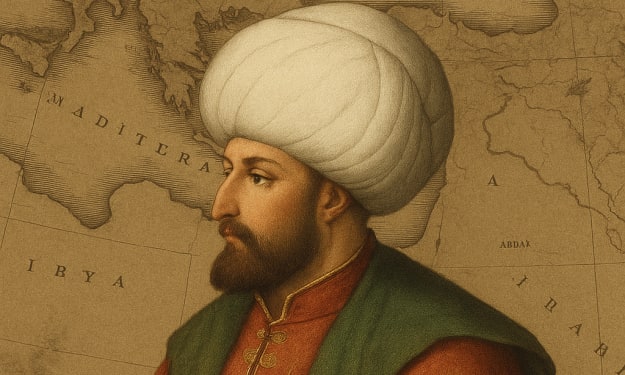
History of the Sultanate of the Ottomans (Ottoman Empire) The Ottoman Empire, known in Arabic as الدولة العثمانية (al-Dawlah al-‘Uthmāniyyah) and in Turkish as Osmanlı Devleti, was one of the most powerful and enduring empires in world history. Founded at the end of the 13th century, it lasted for over 600 years until its official dissolution in 1922. The Ottoman Empire was a multi-ethnic, multi-religious empire that played a crucial role in the history of Europe, Asia, and Africa.
By Mushtaq Ali8 months ago in History
Why Pastor Collar Shirts Are Essential for Modern Church Leaders
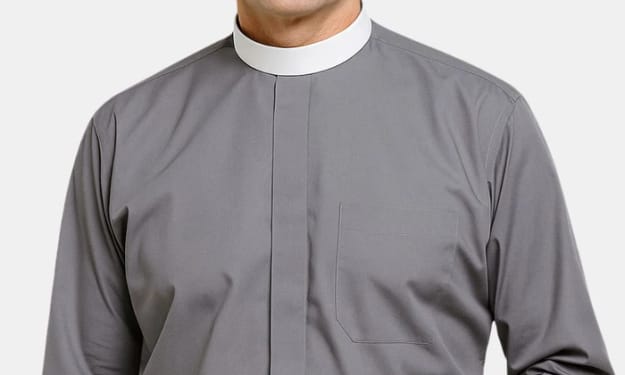
In today’s modern church, appearance matters just as much as message. Church leaders are expected to look respectful, approachable, and professional at all times. Clothing plays a big role in creating this image. Among all clerical outfits, pastor collar shirts stand out as one of the most important garments for church leaders. These shirts are not only a symbol of faith and authority, but they also provide comfort, confidence, and identity.
By Sameera eclergys3 days ago in History
Silver Screen Magic with Mae West
American actress and singer Mae West became a popular film actress during the Great Depression. She started entertaining in vaudeville, then performed on Broadway, and finally went to Hollywood. She signed up with Paramount Pictures and made her debut in the 1932 film “Night After Night.” She also starred in musicals, comedies, and crime dramas. The American Film Institute named her one of the best classic Hollywood actresses.
By Rasma Raisters6 days ago in Geeks


Comments
There are no comments for this story
Be the first to respond and start the conversation.