
The Silent Earth: Archaeology and the Human Journey
Tracing the Hidden Footprints of Civilization Beneath the Surface of Time

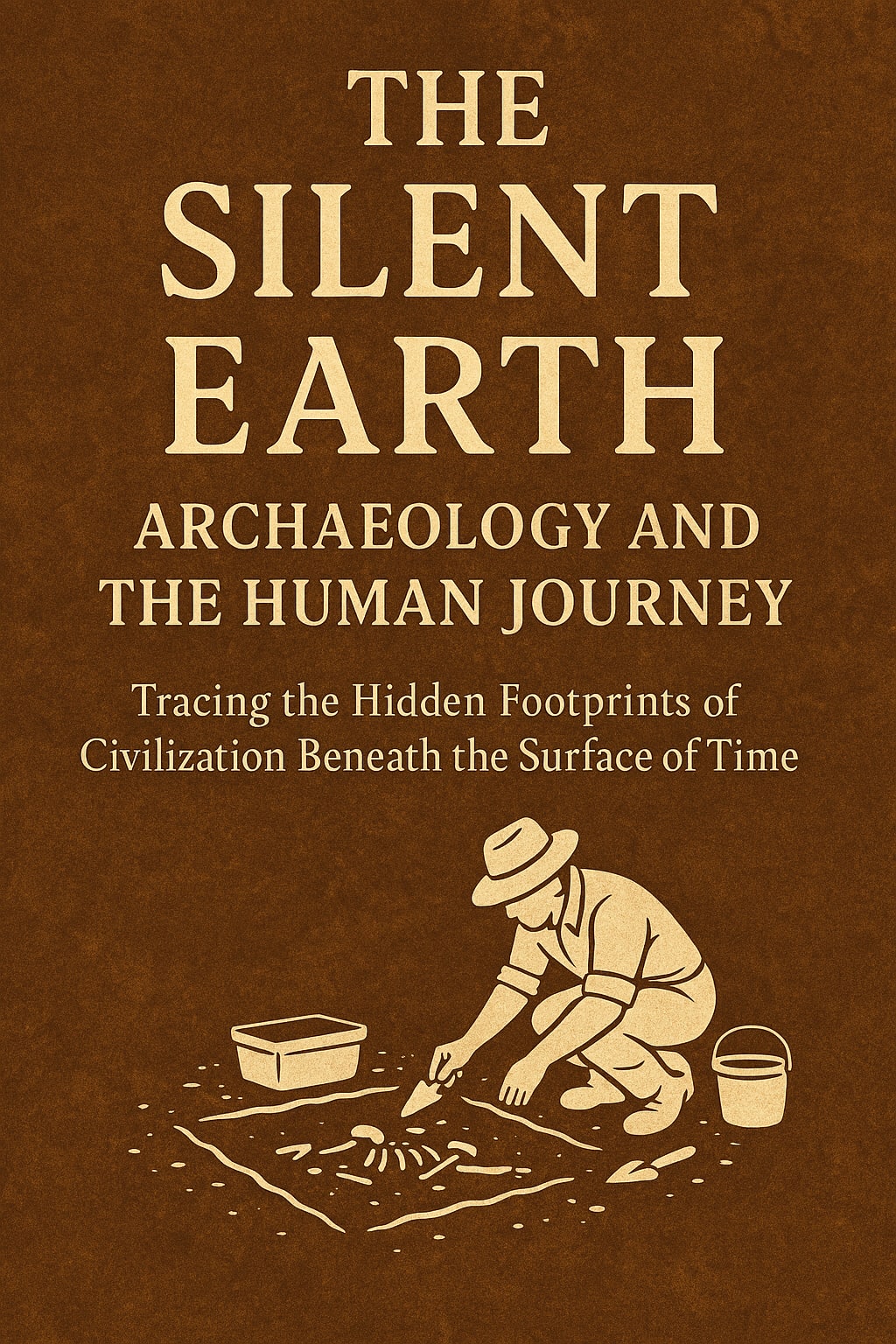
Archaeology and the Human Journey
Beneath the ground we walk on lies a silent witness to millennia of human existence — the earth itself. Through the meticulous work of archaeologists, layers of soil become chapters in a story that has shaped humanity. From the stone tools of early hominins to the grand ruins of forgotten empires, archaeology serves as a bridge between our modern lives and the deep past. “The Silent Earth: Archaeology and the Human Journey” explores how this field of study reveals the origins, growth, and decline of civilizations — and helps us better understand ourselves.
What Is Archaeology?
At its core, archaeology is the scientific study of past human cultures through the recovery and analysis of material remains. These remains can include artifacts, structures, tools, pottery, bones, inscriptions, and even environmental data like pollen or animal remains. Unlike history, which often relies on written records, archaeology can reach further into prehistory — into times when no written language existed. It is both a science and a story — an interpretation of material clues that offer glimpses into how ancient people lived, worshiped, governed, built, and adapted.
The Origins of Archaeology
While humans have always been curious about the past, modern archaeology as a discipline began to take shape in the 19th century. In ancient Mesopotamia, the excavation of cities like Nineveh and Babylon sparked public fascination. In 1799, the Rosetta Stone was discovered in Egypt, leading to the decipherment of ancient Egyptian hieroglyphs — a major breakthrough in understanding ancient texts.
In 1922, British archaeologist Howard Carter uncovered the tomb of Tutankhamun, a discovery that stunned the world and forever changed how we view ancient Egypt. Yet, archaeology was once more about treasure hunting than science. Today, it is a careful, methodical field rooted in technology, ethics, and collaboration across many disciplines — including anthropology, geology, chemistry, and biology.
Methods and Technologies in Modern Archaeology
Modern archaeologists do much more than dig. They use sophisticated tools to identify potential sites and study remains without damaging them. Some of these include:
Ground-Penetrating Radar (GPR): Uses radar pulses to image the subsurface and detect buried structures or objects.
LiDAR (Light Detection and Ranging): Helps scan forested areas from above, revealing hidden cities and roads — such as in the jungles of Central America.
Carbon-14 Dating: Allows archaeologists to determine the age of organic materials, up to about 50,000 years old.
DNA Analysis: Extracting ancient DNA from bones to understand ancestry, migration, and evolution.
3D Modeling and Drones: Used to digitally reconstruct ruins and map excavation sites in precise detail.
These tools have transformed archaeology into a data-rich science that can reveal stories once thought forever lost.
Major Discoveries That Changed Our Understanding
Throughout history, archaeology has reshaped what we thought we knew about early civilizations:
Göbekli Tepe, Turkey (c. 9600 BCE): Once believed that organized religion and monuments came after agriculture, this site reversed that theory. It suggests that ritual gathering may have preceded farming.
Mohenjo-daro, Indus Valley (c. 2600 BCE): The planned layout and sanitation system of this ancient city showed an unexpectedly advanced urban design for its time.
Pompeii, Italy (79 CE): The volcanic eruption that buried the city preserved daily Roman life like a time capsule. Graffiti, homes, and even meals remained frozen in time.
Terracotta Army, China (c. 210 BCE): Discovered in 1974, the vast clay army buried with Emperor Qin Shi Huang offered insights into early Chinese military practices and imperial beliefs.
Machu Picchu, Peru (c. 15th century): Hidden in the Andes and rediscovered in 1911, this Incan site revealed a stunning mountain citadel and challenged previous assumptions about Andean civilizations.
Each of these discoveries opened new chapters in the human story and expanded our understanding of what ancient societies were capable of.
What We Learn About Humanity
Archaeology doesn't just help us uncover lost cities and kings; it teaches us about everyday life. From the contents of ancient kitchens to children’s toys, the field reconstructs entire communities — rich and poor alike.
We also learn about migration, climate adaptation, war, trade, and cultural exchange. For example, discoveries of Roman coins in India or Chinese pottery in East Africa reveal ancient global connections far older than the modern world imagined.
Archaeology helps us confront uncomfortable truths as well — including slavery, human sacrifice, environmental collapse, and conquest. In doing so, it enables modern societies to learn from both the achievements and mistakes of the past.
Challenges in Archaeology
Despite its achievements, archaeology faces many challenges:
Looting and Illegal Trade: Artifacts stolen from sites destroy context, which is crucial for understanding historical meaning.
Climate Change: Rising seas, desertification, and extreme weather threaten countless archaeological sites.
Urban Expansion: Modern development can bury or destroy ancient heritage.
Bias and Interpretation: Early archaeology often ignored indigenous perspectives and focused on grand monuments over common people. Decolonizing the field and including local voices is now essential.
The Future of the Past
Archaeology continues to evolve. In recent years, community archaeology has grown — where local communities participate in excavations and preservation. Efforts are being made to preserve digital records, promote open access to findings, and tell stories from non-Western perspectives.
About the Creator
Nizam Archaeologist
I’m deeply fascinated by archaeology and the mysteries of ancient civilizations.My goal is to bring the past to life, spark curiosity, and share the wisdom of cultures that have stood the test of time.
Keep reading
More stories from Nizam Archaeologist and writers in History and other communities.
Desert Kingdom The Stone Wonder of Petra
Desert Kingdom: The Stone Wonder of Petra Unveiling the Hidden City Carved in Stone by the Nabataeans Tucked deep within the rugged canyons and rose-red cliffs of southern Jordan lies Petra, a magnificent ancient city often hailed as one of the New Seven Wonders of the World. Dubbed the “Rose City” for the color of the stone from which it is hewn, Petra is not just an archaeological marvel but a testament to human ingenuity, resilience, and artistic brilliance. Carved almost entirely into rock faces, this city once thrived as the capital of the Nabataean Kingdom and served as a vital hub for trade, culture, and innovation.
By Nizam Archaeologist6 months ago in History
Why Pastor Collar Shirts Are Essential for Modern Church Leaders
In today’s modern church, appearance matters just as much as message. Church leaders are expected to look respectful, approachable, and professional at all times. Clothing plays a big role in creating this image. Among all clerical outfits, pastor collar shirts stand out as one of the most important garments for church leaders. These shirts are not only a symbol of faith and authority, but they also provide comfort, confidence, and identity.
By Sameera eclergysabout 21 hours ago in History
Silver Screen Magic with Mae West
American actress and singer Mae West became a popular film actress during the Great Depression. She started entertaining in vaudeville, then performed on Broadway, and finally went to Hollywood. She signed up with Paramount Pictures and made her debut in the 1932 film “Night After Night.” She also starred in musicals, comedies, and crime dramas. The American Film Institute named her one of the best classic Hollywood actresses.
By Rasma Raisters3 days ago in Geeks




Comments (1)
So nice article